
by
Annie Gell
Foreigners effectively control Haiti as a kind of protectorate, but have utterly failed to protect the people from the forces of nature, while “the Haitian government is completely absent from the lives of Haitians except for ubiquitous campaign posters.” Billions in aid pledges have made little difference on the ground. “Many Haitians are living just as they were immediately after the earthquake with utterly inadequate access to sanitation, shelter, food, and clean water.”
Haiti's Unnatural Disasters
by Annie Gell
This article previously appeared in Counterpunch.
“Haiti’s extreme vulnerability to environmental stresses directly stems from policies implemented by the Haitian Government.”
Port-au-Prince, Haiti – As hurricane Tomas unleashed its wrath on Haiti, hundreds of thousands of Haitians endured the storm under flimsy tents, tarps and bed sheets located in flood plains and perched on mudslide-prone slopes. Many Haitians lost what little they have left in the world in a completely foreseeable disaster.
Since the earthquake of January 12, there has been a lot of talk in the media about “disaster-prone Haiti” and the “ill-fated Haitian people.” First there was the worst earthquake in Haiti’s history, killing an estimated 300,000 people, seriously injuring even more, and destroying much of Haiti’s capital. Just last month, cholera broke out north of Port-au-Prince. According to official numbers, the body count is over 500, the number of people infected is over 7,000, and these numbers are certain to rise. And last Friday, Hurricane Tomas assailed Haiti with major flooding, mudslides, and winds.
One might lament mother nature’s seeming obsession with inflicting suffering on the Haitian people. This reaction, however, obscures the fact that while the events themselves might be natural, the devastating effects are anything but. Haiti’s extreme vulnerability to environmental stresses directly stems from policies implemented by the Haitian Government and the international community, both before and after the earthquake of January 12.
International aid, trade, debt and governance policies over many decades made Haiti dependent on imported food and materials, crippling the domestic economy. These policies forced Haitian farmers off their land and into the low-lying cities, and encouraged the deforestation of Haiti’s hillsides. The policies also severely curtailed the Haitian government’s ability to provide basic public services to its citizens, including healthcare, housing, and sanitation services. The result is a country and population that is acutely vulnerable to environmental stresses like earthquakes, diseases, and storms.
“While the events themselves might be natural, the devastating effects are anything but.”
Hurricane Tomas and the cholera outbreak have starkly exposed the failures of the international and domestic responses to the earthquake. Almost 10 months after the earthquake, the international community has failed to provide safe, weather-resistant shelter for even a fraction of the approximately 1.3 million internally displaced persons (IDPs) living in tent camps. Most camps lack proper sanitation, leaving hundreds of thousands of people acutely vulnerable to disease.
Despite the generous pledges of billions of dollars in assistance by individuals and countries across the world, only a small percentage of it has reached organizations in Haiti, and only a miniscule fraction of the funds delivered has reached the Haitian people themselves. Many Haitians are living just as they were immediately after the earthquake with utterly inadequate access to sanitation, shelter, food, and clean water.
The Haitian government has not made any significant land available for emergency or transitional housing and the land it has made available is largely unacceptable. The Corail-Cesselesse camp north of Port-au-Prince was supposed to be an example of a planned and successful camp for IDPs who were relocated from dangerous areas. Yet even with hurricane season looming and the widespread knowledge that this area was flood plain and prone to high winds, the Haitian government encouraged thousands of people to set up their homes there. As Hurricane Tomas loomed, the Haitian government and the UN called for a “voluntary evacuation” of this camp and others. The tragic irony is clear: If these people had safer shelters to go to, they would have gone long ago.
“Only a miniscule fraction of the funds delivered has reached the Haitian people themselves.”
Uniting all of these failures is the systematic exclusion of the vast majority of the Haitian people from all levels of decision-making. UN cluster meetings, meant to coordinate the government, NGO, and UN’s rebuilding of Haiti and in theory open to the public, are conducted either in French and English, not in Creole, the only language spoken by over 80% of Haitians. International NGOs have no accountability to the Haitian people. And the Haitian government is completely absent from the lives of Haitians except for ubiquitous campaign posters. The upcoming elections on November 28 promise to not alter this pattern in the least: turnout is expected to be extremely low due to the exclusion of popular parties and a widespread lack of faith in the government.
The Haitian people will continue to disproportionately suffer from natural and unnatural disasters until the policies and practices that make the country particularly vulnerable to environmental stresses are changed. These much needed changes will unfortunately not occur via the upcoming elections. Rather they will only happen by empowering the disenfranchised majority of the Haitian people to take control of their country. The international community and Haitian government must privilege the voices of the Haitian people and allow true democratic participation at all levels to drive the rebuilding Haiti. It is the deliberate choices of the Haitian elite and international community, not mother nature, that has failed Haiti.
Annie Gell is an attorney and a Lawyers’ Earthquake Response Network (LERN) Fellow with the Institute for Justice & Democracy in Haiti and the Bureau des Avocats Internationaux (BAI), a human rights law firm located in Port-au-Prince.

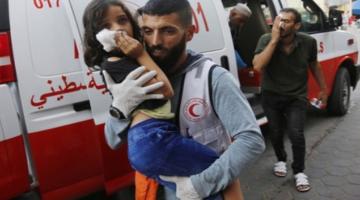 A No-Fly Zone over Gaza would prevent the Israeli Air Force from continuing its war crime against the Palestinian people.
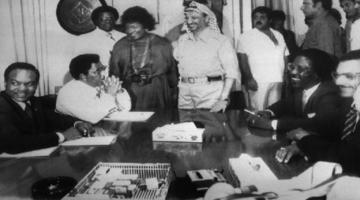 Most of the world's people are in solidarity with Palestine, but Black people in this country have a special bond born of common struggle.
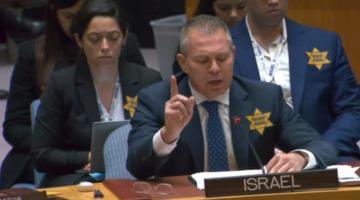 After 120 members of the 193 members of the UN General Assembly called for an immediate ceasefire in Gaza, Israel demonstrated its increasing isolation by declaring the UN illegitimate and irrelevant.
 Any public statement which questions Israel's war against Gaza is potentially met with personal attack and punishment but the stamp of approval from the Biden administration is the real cause of the…
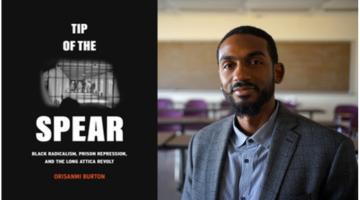 This week’s featured author is Orisanmi Burton. His book is Tip of the Spear: Black Radicalism, Prison Repression, and the Long Attica Revolt


