The murder of four Afro-Ecuadorian boys is another tragic example of the long history of racism in Latin America. The utter disregard for the lives of Black youth and the refusal to seek justice for the deplorable acts committed against them reveals the true nature of those states. Building a region free of imperialist forces that will work to bring peace and stability is how the masses will rid themselves of this unrelenting violence.
The December 2024 murders of four Afro-Ecuadorian boys in Guayaquil’s Las Malvinas neighborhood have laid bare the entrenched racism and neglect faced by Black communities in Ecuador. and Josué Arroyo, of 15 and 14 years of age, Nehemías Arboleda, 15, and Steven Medina 11, disappeared on December 8th, their dismembered bodies discovered days later near a military base. This heinous act has drawn national and international condemnation, with demands for justice and accountability growing louder.
The government’s response—a state of emergency and curfew in Guayaquil and other areas until at least March 3, 2025—has been criticized for its misplaced focus. Rather than addressing the systemic poverty and racism that make (Afro-Ecuadorian) communities vulnerable, the state has doubled down on militarized crackdowns. This heavy-handed approach criminalizes Afro-descendant communities, further perpetuating systemic violence and oppression cycles of violence and mistrust.
This reliance on militarization in Ecuador reflects a broader historical trend of systemic neglect and structural racism. As Afro-Ecuadorian scholar and director of Mujeres de Asfalto, Juanita Frances Boone aptly stated, “In this Ecuador, where racism, inequality, and aporophobia, (fear, contempt, and rejection of people who are poor or disadvantaged) have intensified under the shelter of the State, Black lives continue to be ignored, and impunity grows at the same rate as the cynicism of those who have weaponized power to deteriorate our existence.”
The murders in Guayaquil highlight how Black communities remain marginalized, forced to live in impoverished neighborhoods with inadequate access to education, healthcare, and employment opportunities. The lack of justice for these boys and their families is emblematic of a system that continues to devalue Black lives in Ecuador.
Regional Patterns: Violence Against Black Youth in the Americas
The violence in Ecuador is part of a broader crisis affecting Black youth across Latin America. From Colombia to Brazil, systemic racism, state-sanctioned violence, and socioeconomic exclusion have created environments where Black communities are disproportionately subjected to violence and neglect.
Colombia: The Llano Verde Massacre
In 2020, five Black teenagers in Cali’s Llano Verde neighborhood were brutally murdered while flying kites. Their bodies, showing signs of torture, burns, and bullet wounds, were discovered in a sugarcane field. The massacre revealed how Afro-Colombian communities, already impacted by poverty and displacement, are further endangered by systemic racism and territorial conflicts.
Colombia’s armed groups often target Afro-descendant territories, leaving Black youth caught in the crossfire. As in Ecuador, the state’s response has been insufficient, perpetuating impunity and neglect. The victims’ families in Llano Verde, like those in Las Malvinas, are left to grieve in a system that consistently fails to protect their children.
Brazil: A Generation Under Attack
In Brazil, violence against Black youth is nothing short of an epidemic. Amnesty International reported in 2017 that every 23 minutes, a young Black person between 15 and 29 is killed. Most of these deaths occur in urban favelas, where systemic poverty and state violence collide.
Police killings are a leading cause of death for Black youth in Brazil, reflecting the state’s militarized approach to public security. In Rio de Janeiro, over 800 people were killed by police in 2016 alone, a trend that continues today. A recent report from The Times described how police operations frequently target Black neighborhoods, leaving residents terrified and further marginalized.
Black women, particularly mothers, bear the brunt of this violence, often leading the fight for justice while enduring immense physical and emotional hardship. This intersection of racial and gendered violence underscores the broader dehumanization of Black communities in Brazil.
Panama: Dreams Burned by the Police
In Panama, as in other countries, there have been cases of abuse and cruel treatment by security forces against the population. Adolescents have also been victims of these acts, as seen in 2011 when a riot broke out at a juvenile detention center. In response, National Police officers entered to contain the situation, using tear gas in a confined space without considering the consequences for the excluded youth. During the operation, the officers failed to act to control a fire that broke out in a cell where several teenagers were detained.
Security camera footage showed some of the youth pleading for help as flames and smoke surrounded them. Despite their desperate cries, the police did not act to assist them.
The fire resulted in the deaths of five teenagers and left several others with severe burns. The victims ranged in age from 15 to 17. This case sparked national and international outrage over the brutality and negligence of the authorities responsible.
The case of the burned teenagers in Tocumen remains a symbol of the fight against impunity and police abuse in Panama. It underscores the importance of ensuring that human rights are respected under all circumstances, particularly in the treatment of vulnerable populations such as adolescents deprived of their liberty.
Connecting the Struggles: The Black Alliance for Peace’s Zone of Peace Campaign
The events in Ecuador, Colombia, Panama, and Brazil are not isolated incidents but manifestations of systemic anti-Black racism rooted in the colonial history of Latin America. To address these interconnected struggles, the Black Alliance for Peace (BAP) has launched its Zone of Peace Campaign. This initiative calls for the demilitarization of the Americas and the creation of spaces where excluded and neglected communities can live free from state violence and systemic oppression.
The Zone of Peace Campaign focuses on:
- Demilitarization: Ending the reliance on militarized policing and state crackdowns, which disproportionately harm Black, Indigenous, and impoverished communities.
- Sovereignty for the People: Empowering grassroots movements to challenge imperialism, systemic racism, and economic exploitation.
- Solidarity Across Borders: Uniting struggles across nations to build a people-centered movement for justice and equity.
AfroResistance, a member organization of the Black Alliance for Peace, fully endorses this campaign. AfroResistance emphasizes the urgent need for transformative policies that prioritize the dignity, safety, and well-being of Afro-descendant communities across the Americas.
A Call for Justice and Change
The murders of the four boys in the Las Malvinas neighborhood of Ecuador are not just a national tragedy but part of a regional pattern of structural violence against Black youth. Systemic neglect, criminalization, and the dehumanization of Afro-descendant communities demand immediate action.
The Black Alliance for Peace’s Zone of Peace Campaign provides a critical framework for addressing this crisis. By rejecting militarization, investing in marginalized communities, and fostering international solidarity, Latin America can begin to dismantle the structures that perpetuate violence and inequality.
For the families of the victims in Ecuador, Panama, Colombia, and Brazil, justice means more than holding perpetrators accountable: it means systemic change to ensure that Black youth can live and envision a prosperous future free from violence.
Janvieve Williams Comrie is a human rights strategist, trainer and organizer with a deep commitment to assist in the building of powerful social movements for racial justice and human rights. She is the founder of AfroResistance (www.afroresistance), an Americas based organization that centers racial and gender justice. She has worked in a variety of fields and for several human rights institutions, including the Office of the High Commissioner on Human Rights Regional Office Central America, where she coordinated a regional program on race and racism. Janvieve is internationally recognized for her work with Afrodescendent communities. You can learn more about her work at www.janvieve.com.



 In this week’s segment, we see through supposed disagreements between the US and Canada and recognize their partnership in settler colonialism, enslavement, and imperialism. But we begin with a…
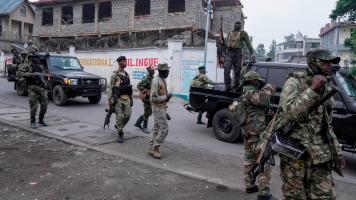 Joseph Kabila, former president of the Democratic Republic of Congo, named himself president of the Front for the Rebuilding of the Nation. He is now formally allied with M23, the Rwanda-backed…
 Isaac Saney is a Cuba and Black Studies specialist and historian at Dalhousie University in Halifax, Nova Scotia, Canada. He discusses the U.S./Canadian partnership in settler colonialism,…
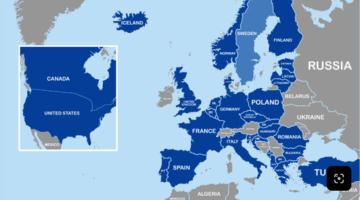 European puppet states have undermined themselves and their peoples' needs at the behest of the U.S. Now, that subservience may lead to war.
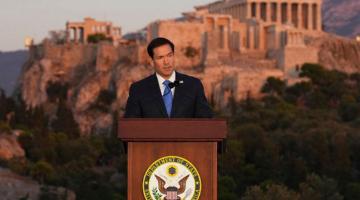 Marco Rubio's appeals to Western civilization, Christian heritage, and the defense of Western dominance are fundamental to the consolidating global fascist project, functioning to transform a crisis…


