King Commemoration and Revisionism
by Mel Reeves
"King would explain to the candidates that the very
system they plan to represent, is the problem."

The commemoration of MLK's assassination 40 years ago stuck
to the usual revisionist script, as the dailies and even some black periodicals
heralded the occasion by referring to MLK as "The Dreamer." The presidential
candidates joined the act as well, as they praised the fallen prophet and their
respective versions - or, more accurately, revisions - of the human rights
leader. John McCain apologized and prevaricated, Barack Obama hoped and
obfuscated, and Hillary Clinton promised and appropriated, but they all managed
to dilute his message and sanitize this great man.
McCain, as he reminded us in his speech, refused to vote in
favor of the King holiday in 1983 when the initiative was finally passed.
McCain supported Arizona Governor Evan Mecham when, in 1987, he rescinded a
previous order by the former Governor Bruce Babbitt creating a state MLK
holiday. Mecham said at the time: "I guess King did a lot for the colored
people, but I don't think he deserves a national holiday."
A referendum supporting a holiday was voted down in 1990.
And in 1992 after the state lost Super Bowl XXVII and was the object of national
scorn, Arizonans voted in favor of the King holiday.
"McCain refused to vote in favor of the King holiday in
1983."
McCain voiced regret about his opposition in 1999 when he
was also running for the presidency. He explained to NBC's Tim Russert that,
"on the Martin Luther King issue, we all learn. I will admit to learning," he
said. The question now is, what did he learn? I think he learned how better to
play politics.
But McCain's initial refusal to honor King was more honest
and more accurate than his attempt to portray King as an American
super-patriot, who somehow was once scorned by the world. In one piece of
brilliant revision, McCain speaks about what happened after he got the news
from his Vietnamese captors about King's death. The Senator said:
"Doubtless it boosted our captors' morale, confirming their
belief that America was a lost cause and the future belonged to them. Yet how
differently it all turned out. And if they had been the more reflective kind,
our enemies would have understood that the cause of Dr. King was bigger than
one man and could not be stopped by force of violence."
In another section he commented, "Martin Luther King is
honored by the world, in such a way that it is easy to forget he once knew the
scorn of the world."
Scorn of the world? Nobody can blame this on a typo. Rather,
it was a conscious attempt by McCain to make King one of the good ole boys who
just tried to love us into doing right. In speech after speech, King said that
the coming world belonged to the oppressed of the earth. He counted the revolutionary Vietnamese as
members of the oppressed in his famous anti-war speech "Beyond
Vietnam," delivered at New York's Riverside Church exactly a year before he
was murdered. In that speech, he said of the Vietnamese fighting US aggression
that, "these too are our brothers.... I believe that the Father is deeply
concerned especially for his suffering and helpless and outcast children, I
come tonight to speak for them."
King was well respected throughout the Third World and
developing world and all those struggling to throw off the yoke of colonialism
and oppression, including the Vietnamese. King was the quintessential
internationalist. While loving his country, he loved the world as well. His
enemy and McCain's enemy would not be the same. King sided with those in
Vietnam whom McCain would refer to as the enemy. He supported US troops as well
by insisting that they be brought home and away from a conflict that they had
no business interfering in and that was destroying their bodies and souls.
"King said that the coming world belonged to the
oppressed of the earth."
John McCain opposed an MLK holiday because Dr. King opposed
large defense budgets while the government neglected domestic needs such as
full employment, equal quality public education and affordable housing.
It was the US government that hated King, the same
government that King described as "the greatest purveyor of violence in the
world today." It was the violence orchestrated by the US government that felled
King. And today they try to sanitize his message.
McCain voted against the King holiday because the human
rights leader said, "The war in Vietnam is but a symptom of a far deeper malady
within the American spirit, and if we ignore this sobering reality...we will be
marching for a dozen other names and attending rallies without end, unless
there is a significant and profound change in American life and policy."
Senator Barack Obama said, eloquently, that "the great need
of this hour is much the same as it was when Dr. King delivered his sermon in
Memphis."
King would remind the Democratic Party's frontrunner, that
while it is good to hope we must do more than hope.
He would remind us, as he did at Riverside Church, that
"We must rapidly begin the shift from a thing oriented society to a
person-oriented society. When machines and computers, profit motives and
property rights, are considered more important than people, the giant triplets
of racism, extreme materialism, and militarism are incapable of being
conquered."
And King would explain to the Senator that the very system
he hopes to represent, is the problem.
Hillary Clinton would not be outdone on the subject of Dr.
King. She praised the fallen leader and suggested the addition of a cabinet
level position devoted to ending poverty in America. Dr. King would have had an
answer for Senator Clinton as well:
"Why are there [millions] of poor people in America? And when
you begin to ask that question, you are raising questions about the economic
system, about a broader distribution of wealth. When you ask that question, you
begin to question the capitalistic economy. And I'm simply saying that more and
more, we've got to begin to ask questions about the whole society,... we must
come to see that an edifice which produces beggars needs restructuring." - from
"Where
Do We Go From Here," August 16, 1967.
This is the real legacy of MLK, who challenged us to see
that it was the system that produced the problems.
Mel Reeves is an activist living in Miami. He
can be contacted at mellaneous19@yahoo.com

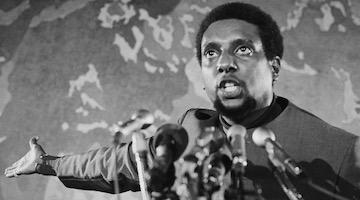 In the political hotbed that was Dar es Salaam, Tanzania, in 1967, US Black Power advocate Stokely Carmichael, who had not yet changed his name to Kwame Ture, made both friends and enemies among th
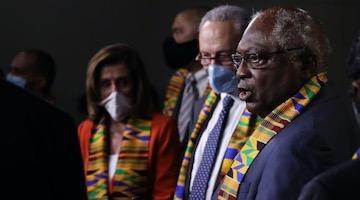 The Black misleaders have been busy selling out Black people for half a century, but are still only barely tolerated by the rich man’s Democratic Party and its racist figurehead, Joe Biden.
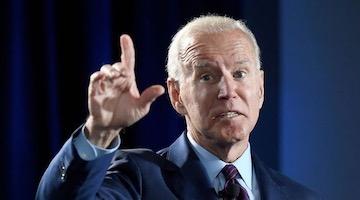 The civil rights groups’ rather basic requests for voting rights protections and the need for federal intervention to address police brutality were minimized and dismissed by the president-ele
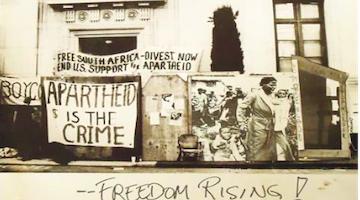 The phrase racial capitalism first emerged in the context of the anti-Apartheid and southern African liberation struggles in the 1970s.
 The theory of change that depicts the likes of Bernie Sanders and AOC as the leaders of the class struggle has failed to materialize in reality.


