There is no better time than African Liberation Day to call out Africa’s imperialist stooges, lackeys and puppets.
“There are far too many neo-colonial African leaders willing to dance to the African dependency tune.”
A man lost in the desert needs water and lots of it. If instead, a rescuer gives him a really excellent novel and a comb, the desperate man will be confused and angry.
Africa too is lost. It wanders aimlessly in international capitalism’s vast wasteland of economic lunacy. The continent’s widespread poverty, disease, failing/failed infrastructure and many other economic challenges caused by centuries of imperialist underdevelopment and exploitation can be remedied by only one thing -- socialism. Africa is as thirsty for socialism as the man in the desert is for water. Yet, those who purport to come to Africa’s rescue resist all socialist initiatives. Instead they offer foreign aid, exploitative loans, weapons and military advice, structural adjustment programs, trade agreements, and endless pronouncements that Africa’s entire economic mess is the fault of corrupt African leadership.
The thirsty man in the desert is clear about his needs. He casts aside the novel and comb and grabs the would-be rescuer by the throat. With rage in his eyes he places his face inches away from the rescuer’s countenance and shouts: “I need water now! Give me water!” Yet, when western imperialism and China offer Africa everything but space and opportunity to construct and nurture a socialist economy, too many African leaders grasp what comes their way with desperation and proclaim: “None of this stuff works, but we want more of it!”
“Centuries of imperialist underdevelopment and exploitation can be remedied by only one thing -- socialism.”
During the early years of Africa’s independence movement there was great clarity about Africa’s needs, and socialism was at the top of the list. One of the original participants in the Organization of African Unity (OAU) was Ghana’s first president, Kwame Nkrumah. By 1970 his analysis was fully developed and he said:
“The peoples of the less industrialized areas of the world are in a good strategic position to advance in the direction of socialist revolution as a result of their experience of imperialism, colonialism and neo-colonialism. They see issues clearly, since productive and distributive processes are not obscured or blurred by the trappings and diversions of the capitalist ‘welfare state,’ and capitalist corruption.”
Nevertheless, the neo-colonial African leaders in the OAU worked intentionally to miss the lessons learned by Nkrumah, other progressive African heads of state and the broad masses of Africa’s people. The OAU deteriorated into a neo-colonial farce, and the disgruntled grumblings of politically conscious Africans grew to a quiet roar. As a necessary response the OAU folded and was replaced in short order by the African Union (AU) amidst promises that this new formation would become an authentic vehicle for African liberation.
“AU rhetoric is magnificent.”
The AU rhetoric is magnificent. For example, in a document titled “Agenda 2063: The Africa We Want,” the AU states:
“We aspire that by 2063, Africa shall be: • A major social, political and economic force in the world, with her rightful share of the global commons (land, oceans and space); • An active and equal participant in global affairs, multilateral institutions, and a driver for peaceful co-existence, tolerance and a sustainable and just world; and • Fully capable and have the means to finance her development. Africa will take her rightful place in the political, security, economic, and social systems of global governance towards the realization of its Renaissance, establishing Africa as a leading continent. We undertake to continue the global struggle against all forms of exploitation, racism and discrimination, xenophobia and related intolerances; to advance international cooperation that promotes and defends Africa’s interests, and is mutually beneficial and aligned to our Pan-Africanist vision; to continue to speak with one voice and act collectively to promote our common interests and positions in the international arena.”
This is a grand vision worthy of Africa and its noble people. However, socialism is essential to its realization. Yet, a socialist Africa is apparently not a part of the AU’s vision. Consider another section of Agenda 2063 that says the AU plans to develop “…the African private sector through engagement and a conducive climate, fostering Pan-African businesses through the growth of regional manufacturing hubs and scaled up intra-Africa trade…”
“A socialist Africa is apparently not a part of the AU’s vision.”
If the AU contemplates a socialist economy for Africa, that language does not reflect that plan. This in spite of the fact that now is the time for the needs of Africa to be addressed frankly and honestly. Instead, neo-colonial heads of state mouth the same economic garbage as imperialism’s spokespeople, and all concerned delude themselves into believing that conceptually, socialism is a dead idea in Africa.
The U.S. has persuaded itself that Africa aspires only to become the ward of a strong guardian. This was clear from a discussion by federal officials and Congressional representatives at a recent hearing on Africa convened by the House Foreign Affairs Committee. During that hearing, Rep. Michael McCaul stated on several occasions that Africa’s fondest wish is to be a client of the U.S., but the Trump administration’s relative indifference to Africa has left only China to play the role of Africa’s savior. More tragic is that notwithstanding Africa’s thirst for genuine independence and self-determination, there are far too many neo-colonial African leaders willing to dance to the African dependency tune by limiting their agenda solely to pursuit of more foreign aid and loans.
On Saturday, May 25th, there will be commemorations of African Liberation Day all over the world. (See https://africanliberationday.net/events/) There is perhaps no better time to call out Africa’s imperialist stooges, lackeys and puppets, and to demand that they come clean with Africa’s people. If they are truly revolutionary and have Africa’s best interests at heart they will not hesitate to declare publicly and proudly that socialism is at the heart of their program. If on the other hand they stutter, stammer and mumble gibberish about not wanting to place foreign assistance and trade deals in jeopardy with radical talk, then Africans will be able to identify the continent’s traitors and abandon them in favor of genuine leaders and fighters pulled from the ranks of the masses of Africa’s valorous people.
Mark P. Fancher is an attorney who writes frequently for Black Agenda Report. He can be contacted at mfancher[at]Comcast.net.
COMMENTS?
Please join the conversation on Black Agenda Report's Facebook page at http://facebook.com/blackagendareport
Or, you can comment by emailing us at comments@blackagendareport.com




 In this week’s segment, we discuss events in the Horn of Africa as the Somaliland region requests U.S. recognition and the Trump administration ends some sanctions against Eritrea. But we begin by…
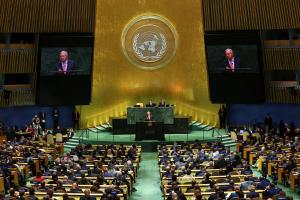 Ajamu Baraka discusses U.S. influence over the United Nations and its Security Council as the 81st General Assembly high-level meetings take place.
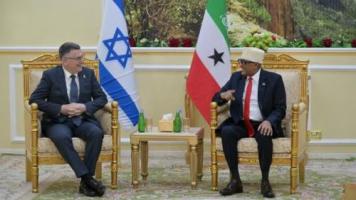 Abayomi Azikiwe, editor of the Pan-African Newswire, discusses Israeli recognition of the Somaliland region, the US reduction of sanctions on Eritrea, a new anti-government alliance in Ethiopia, and…
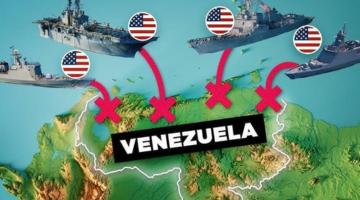 The trope of the United States being in a state of decline is a common one, but it should not be accepted without scrutiny. The U.S. faces crises but remains dangerous, powerful, and single-minded in…
 The "Antifa summit" and the NSPM-7 represent another institutional step toward consolidating fascism in the United States by criminalizing opposition to fascism itself.


