Elites in Chile take their cues from places like the University of Chicago, where the author witnessed technocrats plotting to save the ruling order from popular uprising.
“Chile is the canary in the coal mine.”
Yesterday, I got last minute notice of a talk on the Chilean protests at (of all places) the University of Chicago. I didn't know exactly what to expect but what I encountered was far more sinister than I could have imagined: a room full of technocrats -- and soon to be 21st century Chicago Boys -- dissecting the protests in Chile. I almost got security called on me, the lady next to me complained about my manner of talking (“gesticulating” with my arms lol), and I was called a violent machista for interrupting a white Chilean lawyer who was saying some right wing bullshit. But I stuck it out to get a full report on what the enemy is thinking right now. Some takeaways:
* There is a sector of the Chilean ruling class that is willing to raise the minimum wage, reform the pension system, amend the constitution, even get rid of President Sebastián Piñera. They want order and are willing to make concessions because long term street disturbances are a threat to capital interests. Inherent in this argument is the need to preserve the ruling order long term. The three possible future scenarios they explicitly presented were: 1.) Incremental reforms that will appease protestors and eventually diminish the power of the uprisings. 2.) Drawing parallels to Venezuela's 1989 “Caracazos” and the potential these protests may lead to a Chavez-style Leftist popular government. 3.) Drawing parallels to Brazil's fascist Bolsonaro, the potential of a populist far-right wing leader rising to power -- in this case someone like Chilean demagogue Jose Antonio Kast.
In my analysis, the Chilean ruling class wants option #1, and the US ruling class wants to provoke option #3. Both are extremely fearful of option #2.
“They want order and are willing to make concessions because long term street disturbances are a threat to capital interests.”
* One of the presenters did a detailed summary of the history of reforms to Pinochet's 1980 constitution, highlighting the progress to a more “inclusive” and “democratic” constitution with “apertures” for structural change. There was a condescending suggestion made that for most Chilean protestors, the call for a Constitutional Assembly was merely to oppose a “symbolic” remnant of the Pinochet era. Implicit in this argument is the notion that at the very least, Pinochet's constitution already has the viable legal mechanisms to address the protestors concerns, and worst comes to worst, it can be amended towards a more democratic path, as it already allegedly has. Either way, there was not one voice in the room that expressed support for a new Constitutional Assembly.
* The Chilean mass media talking points are coming straight from US academia and think tanks. Similar to Ferguson in the US in 2014, there is a weak acknowledgment in the mass media of the protestors grievances, followed by a litany of manufactured false binaries: The “peaceful good” vs “violent bad” protestor, damage to private property vs loss of human life, injuries to protestors vs injuries to police, etc. This also includes populist appeals against the protests, highlighting the “inconveniences” to everyday Chileans caused by the protests; the old lady who couldn't make it to work because of shutdown metro service, the small business owner who's livelihood is disturbed by the protests, etc. The presenters showed pictures of burned supermarkets and injured police officers while neglecting to acknowledge the asymmetrical warfare being waged against the Chilean protestors. There was also no talk of the 'looting' US and European-based multinationals have committed and continue to do in Wallmapu.
“Not one voice in the room that expressed support for a new Constitutional Assembly.”
* Also similar to Ferguson in the US in 2014, there is a sector of the ruling elite that superficially support the protests, but are appalled by its “lack of leadership” and/or “cohesive demands.” Inherent in this argument is a disdain and dismissiveness towards the politics of the street; the inability to imagine poor, working class youth have the ability to develop viable proposals for radical structural change. One presenter even expressed incredulity at how fearless and violent the protestors have been towards the military on the streets (!), almost incapable of grasping the urgency and courage with which Chileans young and old have overcome any remnants of fear from the years of the military dictatorship.
* Again also similar to Ferguson in the US in 2014, the ruling class is unwilling to accept clear proof of blatant human rights abuses, citing “a few bad apples” as opposed to, in the Chilean case, acknowledging the current level of brutality is a direct extension of the violent military repression seen during the years of the Pinochet dictatorship. When I spoke up about the secret torture center under the Baquedanos Metro station -- where dozens of men and women have been raped in the last couple weeks -- I was shut down by the moderators, under the guise that my speaking time was up.
* There is an unwillingness from the Chilean ruling class to acknowledge neoliberalism as a socio-political project, beyond merely an economic one. Many in the room expressed surprise and incredulousness at the protests, citing the “Chilean miracle,” “high GDP,” “booming economy,” etc. An astute math whiz in the audience did give some good stats highlighting the mental health crisis in Chile, which has some of the highest suicide rates and use of antidepressant drugs in the western hemisphere. However, the link was not explicitly made to monopoly pharmaceuticals, pensions used for gambling in the stock market, skyrocketing incarceration rates, and deregulation of key industries of social conditioning including public education and mass media.
“The current level of brutality is a direct extension of the violent military repression seen during the years of the Pinochet dictatorship.”
* Two academic theories were presented that I need to investigate further but on the surface seem to try to explain the protests through a psychoanalysis of the Chilean people, instead of an analysis of material conditions: Theory of Criminal Governance, and the Theory of Relative Deprivation. The words “anomie” and “deviance” were abundant in describing these theories. I got the sense that they were trying to make the argument that somehow Chilean society is predisposed to a certain level of violence, yet divorcing that intra-community violence from the structural violence (austerity) imposed from the top down. Not to mention ignoring the now fully proved role Pinochet's family played in the cocaine/crack trade, which has destroyed the social fabric of impoverished Chilean neighborhoods since its introduction in the 1980s.
* Neoliberalism is no longer viable for a sector of the Chilean ruling class. They are starting to acknowledge that long term structural inequality and the resulting popular uprisings are a real threat to the ruling order. The inevitable fall of the petrodollar and the shift from a US- led neoliberal consensus, to a multi-polar Digital Monopoly Capitalism, is necessitating that the Chilean ruling class re-align its priorities and loyalties to address its long term survival. This includes mass data analysis of social media interactions with the protests, in order to better determine appropriate course of action -- again, to ensure their survival and that the ruling order remain.
* No one in the room acknowledged the US role in creating the structural inequalities that have led to these protests, or the Israeli role in suppressing these protests. No one in the room acknowledged the nefarious role played by the University of Chicago, the Carnegie Foundation, and the Rockefeller Foundation, all of which had affiliates in the room as audience and/or presenters. In short, the room was full of people who at best, are “ni chicha ni limonada” (“neither fish nor fowl”) wonks bent on some bankrupt idea of academically rigorous impartiality, and at worst, are dangerous ideologue mercenaries for the transnational US-Chilean oligarchy. Either way, in my opinion they are the enemy of the masses of Chilean people.
“The inevitable fall of the petrodollar and the shift from a US- led neoliberal consensus is necessitating that the Chilean ruling class re-align its priorities and loyalties.”
A personal note:
Thank you to my father, a survivor of Pinochet's murderous concentration camps, who alerted me, invited me, and accompanied me to this event at the University of Chicago. Without him, I would have been the only voice in the room speaking to the realities of the demands of the people on the street in Chile. His presence gave me the courage to speak up as he also voiced support for protestors in Chile, speaking from a perspective of having recently been on the frontlines of some of the elders' “cacerolazos” on the streets of Santiago.
And!...
We must keep our eyes on Chile. It is the canary in the coal mine. Privatization and vicious neoliberalism have ruled in Chile since the late 1970s, an economic experiment that saw Chilean people subjected early on to some of the heartless austerity measures we see imposed worldwide today. How the Chilean people respond to this new crisis in capitalism, how those of us living in the belly of the beast support those Chileans on the streets demanding a life of dignity from Arica to Punta Arenas, will be crucial in determining whether this current crisis brings us one step closer to fascism or liberation.
Stay tuned for more reports from our recent travels in Europe, where we were able to join solidarity actions with the Chilean diaspora from Hamburg to London to Barcelona.
Rebel Diaz is a political hip hop duo out of the Bronx, New York and Chicago, IL consisting of the Chilean brothers Rodrigo Venegas (known as RodStarz) and Gonzalo Venegas (known as G1). Rebel Diaz uses their music as an organizing tool and to spread knowledge about injustice.
COMMENTS?
Please join the conversation on Black Agenda Report's Facebook page
at http://facebook.com/blackagendareport
Or, you can comment by emailing us at comments@blackagendareport.com


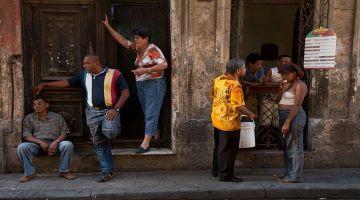 The United States has cut off channels for sending remittances to the island, leaving families who rely on the help – especially during the pandemic – without desperately needed resources.
 Economic recovery is uneven, with Black workers least likely to be employed in the wake of the covid pandemic.
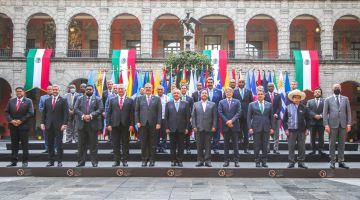 The heads of state of the regional block agreed on a 44-point declaration which addressed the strategy against COVID-19 and climate change and took a stand against the blockade on Cuba.
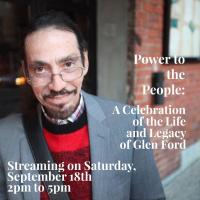 The memorial gathering for Glen Ford was held on Saturday, September 18, 2021 in New York City at the Riverside Church.
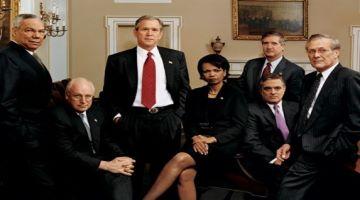 Memories of the last 20 years are rarely focused on increased state violence and repression in the post-9/11 world. The damage has largely been forgotten.


