The United States has cut off channels for sending remittances to the island, leaving families who rely on the help – especially during the pandemic – without desperately needed resources.
With the money she earns cleaning houses in the morning and an office at night, Virgen Elena Pupo, a 47-year-old Cuban migrant, has managed to raise her family in Washington, DC, but has not been able to help her parents in Holguín, Cuba. She is separated from her parents by more than 1 246 miles. In Cuba’s eastern region, Holguín has been hit hard by an increase in Covid-19 cases, but Pupo cannot visit or send money to her parents due to the restrictions on flights and remittances from the United States as a result of former US President Donald Trump’s policies that President Joe Biden has continued.
On 27 October 2020, a week before the US presidential elections took place on 3 November, Trump issued his final sanction against the island. Trump included Cuban financial company Fincimex, Western Union’s main partner in the country, in the Cuban Restricted List. The pretext was that it belongs to the Cuban business corporation, Grupo de Administración Empresarial SA.
This measure cut off the channels for sending remittances to Cuba, and Pupo’s elderly parents have not been able to receive any help amid the pandemic as a result of this move.
Fincimex issued a statement on 27 August 2021, announcing delays in the delivery of remittances that arrive in Cuba from third countries due to the difficulty of finding financial institutions willing to authorise operations. The inclusion of this company in the list of restricted entities by the US Treasury Department “continues to generate fears in the international banking sector about accepting operations directed to… [Fincimex] and tendencies to limit the scope of these transactions,” said the Fincimex statement.
The US policy relating to remittances goes against all logic. Remittances have come to the rescue of families affected by the coronavirus all over the world. According to the World Bank, money sent by migrants to their families in “low- and middle-income countries surpassed the sum of FDI [foreign direct investment] ($259 billion) and overseas development assistance ($179 billion) in 2020”. For example, remittances grew historically in Mexico in the first six months of 2021, as La Jornada recently reported. They reached $23.6 million, which is 22% more than the remittances received during the same period in 2020.
“As Covid-19 still devastates families around the world, remittances continue to provide a critical lifeline for the poor and vulnerable,” said Michal Rutkowski, global director of the Social Protection and Jobs Global Practice at the World Bank. The regular remittances that poor Latin American migrants send to their families have become vital to many of the region’s economies. Generally, it’s the working poor who send small sums of money, sometimes up to eight times a year, usually sending more money than they earn during the year. For years, remittances have been one of Mexico’s main sources of foreign exchange, and remittances form close to or more than 20% of the gross domestic product of Honduras, El Salvador and other countries in Central America. They protect millions of people. But why do migrants do it? Why do they make sacrifices and send money back to their home countries? Surveys say that the explanation for this grand gesture of solidarity, with enormous macroeconomic impact, lies above all in supporting the institution of family. Migrants send money out of moral inspiration and loyalty to their parents, siblings, children, and nieces and nephews.
In a 2006 study on remittances and their imprint on the Cuban family, researcher Edel Fresneda Camacho recognised that this type of aid is not intended for productive investment. “It constitutes an important source of income for the recipient families, [for] their consumption and saving capacity, and implies an improvement in living conditions,” which in the case of Cuba includes the possibility of investing in a small private business.
Camacho and other researchers have given an account of the manipulative forays of the US government on this front. In the 1990s, during the crisis known in Cuba as the “Special Period”, the United States reinforced the economic siege. The former US President Bill Clinton prohibited remittances from August 1994 to 1998 except under strictly humanitarian conditions: illness or in cases of people with official immigration permission. Bush imposed even more cruel restrictions, allowing only visits to the island once every three years if the person visiting had very close relatives in Cuba – aunts, uncles and cousins were not considered “family”.
Even then, remittances managed to continue reaching the island. That is, until now. Without Western Union offices, without the possibility of shipments by DHL, with banks being intimidated and flights being suspended to all provinces, except for those very limited to Havana, Pupo can only hope that her elderly parents can survive the pandemic without any help from her. And she prays every day for common sense to prevail among those making policies in the White House, which is located just two blocks away from the office she cleans at night with the stubborn will to keep her loved ones afloat.
This article was first published by New Frame.



 In this week’s segment, we see through supposed disagreements between the US and Canada and recognize their partnership in settler colonialism, enslavement, and imperialism. But we begin with a…
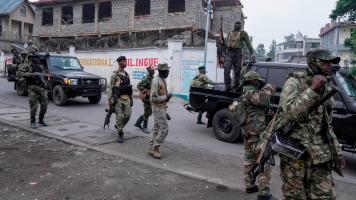 Joseph Kabila, former president of the Democratic Republic of Congo, named himself president of the Front for the Rebuilding of the Nation. He is now formally allied with M23, the Rwanda-backed…
 Isaac Saney is a Cuba and Black Studies specialist and historian at Dalhousie University in Halifax, Nova Scotia, Canada. He discusses the U.S./Canadian partnership in settler colonialism,…
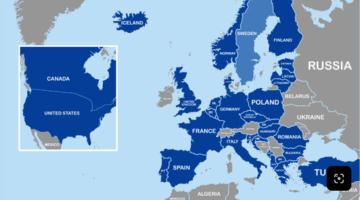 European puppet states have undermined themselves and their peoples' needs at the behest of the U.S. Now, that subservience may lead to war.
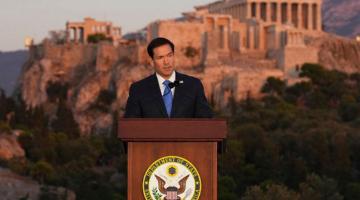 Marco Rubio's appeals to Western civilization, Christian heritage, and the defense of Western dominance are fundamental to the consolidating global fascist project, functioning to transform a crisis…


