“There can be no ‘black internationalism’ without an attack on imperialism and finance capitalism.”
In this series, we ask acclaimed authors to answer five questions about their book. This week’s featured author is Peter James Hudson. Hudson is Assistant Professor of History and African American Studies at the University of California, Los Angeles. His book is Bankers and Empire: How Wall Street Colonized the Caribbean.
Roberto Sirvent: How can your book help BAR readers understand the current political and social climate?
Peter Hudson: Bankers and Empire recovers the little-known history of the precursors of Citigroup, JPMorgan Chase, Brown Brothers and other Wall Street institutions as they embarked on a binge of financial plundering in the Caribbean at the beginning of the twentieth century. It demonstrates the intimate and oftentimes bloody nexus between financial interests and military power, showing how, with the backing of the US military, Wall Street crushed the sovereignty of and extracted considerable profits from Cuba, Haiti, the Dominican Republic, Panama, Nicaragua, and Puerto Rico. It shows how Wall Street manipulated – and often broke – the laws ostensibly regulating US banking activity. And it asserts that the extension of US financial capitalism over the Caribbean occurred alongside the expansion and reproduction of white supremacy. As these questions – of banking and imperialism, of finance and militarism, and of capitalism and white supremacy – are being reprised today in the Caribbean and elsewhere, Bankers and Empire offers a map of the past to understand the present.
What do you hope activists and community organizers will take away from reading your book?
Your question brings to mind a recent comment from Ajamu Baraka of the Black Alliance for Peace and Justice. “The correct moral and political stance for people who live at the center of empire is to be anti-imperialist,” Baraka tweeted.“That is the simple and direct position that progressives and ‘radicals’ in the U.S. have abandoned.” Bankers and Empire is, above all, a critical dissection of the institutions and history of US imperialism written from the center of empire. Following this, I hope the book will contribute to the reclamation of the moral and political stance that Baraka invokes while providing a kind of analytical tool kit to understand imperialism’s history and organization, and to help identify its weaknesses and the points at which it can be resisted. To this latter point, the last chapter of the book describes the ways in which both Caribbean and US citizens fought Wall Street, white supremacy, and the imperial bankers -- demonstrating, I think, that there can be no “black internationalism” without an attack on imperialism and finance capitalism.
We know readers will learn a lot from your book, but what do you hope readers will un-learn? In other words, is there a particular ideology you’re hoping to dismantle?
That’s a fantastic but difficult question. But I think the first thing I would hope the book does is help readers understand that the systems of global capitalism and global white supremacy are neither normal nor natural and that those institutions and individuals that support this system, in particular the imperial banks and their rogue bankers, have been engaged in a long, devilish struggle to keep it in place. While many of us acknowledge the profound ways in which racism defines our culture, we do not always question the degree to which capitalism, through the work of bankers and financiers, shapes our everyday lives. In this sense, I hope that Bankers and Empirecan help us “un-learn” what we think we know about banking finance, and the inevitability of capitalism.
Who are the intellectual heroes that inspire your work?
My intellectual heroes are those uncompromised and independent Black mavericks who are neither bound to academic institutions nor swayed by intellectual trends, who have resisted bourgeois Black nationalism and broke from the restraints of white Marxism, who have maintained an originality of thought without sacrificing a commitment to style, and who write with urgency, fire, and elan in multiple registers for a variety of audiences. Frantz Fanon and Walter Rodney, in particular, but also the core columnists and editors of the Black Agenda Report: Margaret Kimberley, Bruce Dixon, Glen Ford.
In what way does your book help us imagine new worlds?
The struggles of Caribbean people against white supremacy, capitalism, and imperialism in the 1930s served as the threshold for the global movements for decolonization after World War II. These struggles were fueled by an imagination of a new society after white supremacy, capitalism, and imperialism were dismantled. As much as we can draw from this history of radical possibility to imagine a better future, we also need to learn from the defeats and failures and counter-revolutions and reactions that prevented the new society from emerging. Bankers and Empire, then, may not help us imagine new worlds but it may illuminate the potential pitfalls on the road to freedom.
Roberto Sirvent is Professor of Political and Social Ethics at Hope International University in Fullerton, CA. He also serves as the Outreach and Mentoring Coordinator for the Political Theology Network. He’s currently writing a book with fellow BAR contributor Danny Haiphong called American Exceptionalism and American Innocence: The Fake News of U.S. Empire.



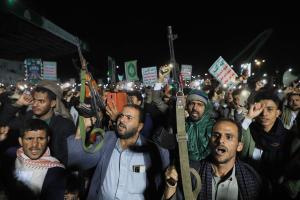 Dr. Shireen Al-Adeimi provides historical background and analysis of events in Yemen as Ansar Allah advances against Saudi-backed mercenaries.
 Pan-African Community Action (PACA) released a Transit Solidarity Plan for Washington, DC that challenges DC fare evasion crackdowns by collecting and redistributing fare cards to residents in the…
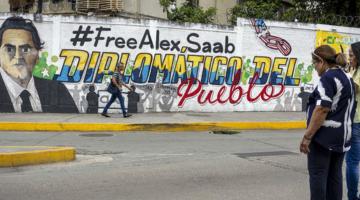 The United States got its hands on Alex Saab a second time in order to use him in its case against Nicolás Maduro. The U.S. succeeded in getting a guilty plea from Saab, but the current Venezuelan…
 “The Iraq invasion greatly accelerated the process of U.S. imperialism’s decline.”
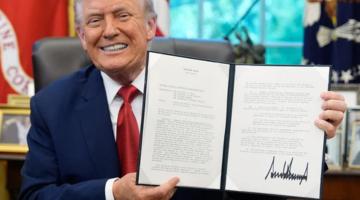 NSPM-7 and the State Department's international campaign against "far-left political terrorism" represent new and more dangerous forms of domestic repression in the 21st century, while reconstructing…


