Ethiopian Prime Minister Abiy Ahmed and Eritrean President Isaias Afwerki embraced after signing a peace agreement in 2018. The TPLF waged the war against Eritrea while it controlled the Ethiopian state.
The US seems willing to accept Ethiopia’s defeat of its former puppet, the Tigray People’s Liberation Front (TPLF), if it can just drive a wedge between Ethiopia and Eritrea.
Western officials and pundits never stop trying to drive a wedge between Ethiopia and Eritrea. Their screams that Eritrea must get out of Ethiopia have grown louder and louder every day since Ethiopia and the Tigray People’s Liberation Front (TPLF) signed a peace agreement to end the two-year civil war. The US should get out of Europe, Africa, Asia, Latin America, and outer space before it brings an end to life on earth, but of course that’s not on the table.
Instead we hear that the Ethiopian peace agreement is likely to collapse if Eritrean troops don’t leave Ethiopia. Biden, Blinken, and rabid pro-TPLF Congressmen like Brad Sherman, D-CA, continue to threaten Ethiopia, but even more so Eritrea, with sanctions.
Thanks to US sanctions imposed in November 2021, Eritrea is already among the four nations excluded from the SWIFT system for executing financial transactions and payments between the world’s banks; the other three are Russia, Iran, and North Korea. Now American Enterprise Institute fanatic Michael Rubin has called for adding it to the US list of state sponsored terrorists—Cuba, North Korea, Iran, and Syria—triggering sanctions that penalize persons and countries trading with Eritrea.
In “Responsible Statecraft,” imperial mouthpiece Alex de Waal wrote, “The biggest issue in the two agreements is Eritrea, named only as ‘foreign forces.’”
No one seems to have any hard evidence that Eritrean troops are actually in Tigray at this point, but even if they were, Ethiopia and Eritrea would be within their sovereign rights to form bilateral, regional, or broader cooperative security agreements like the Tripartite Agreement that Ethiopian President Abiy Ahmed, Eritrean President Isaias Afwerki, and Somali President Abdullahi Mohammed Abdullahi, aka Farmaajo, signed in 2018.
Since 2007, the US Africa Command (AFRICOM) has established cooperative security agreements with every nation in Africa except Zimbabwe and Eritrea, planting troops and bases all over the continent. As Glen Ford said, it got Africa to colonize itself. But Ethiopia can't cooperate with Eritrea?
NATO, a US-dominated alliance of 30 lethally armed white nations that's brought us to the brink of nuclear war, could not tolerate the Tripartite Alliance between three nations in the Horn of Africa. In May, Somalia’s President Farmaajo was replaced by Hassan Sheikh Mohamud, a leader more to the US’s liking, and now the US is going full bore after Eritrea. It even seems willing to accept Ethiopia’s defeat of its former puppet, the Tigray People’s Liberation Front (TPLF), if it can just drive a wedge between Ethiopia and Eritrea.
Why the US hates Eritrea
Why does the US foreign policy establishment so hate Eritrea, a tiny, poor country of 6 million on the far eastern edge of Africa? Eritrea, like China and Cuba, is a one-party state. It practices democratic centralism within the People’s Front for Democracy and Justice in accordance with the party’s fundamental commitment to uplift the people. It doesn’t mimic the hollow democratic forms that the US and Europe have tried to force on the rest of the world on pain of death.
It refuses to collaborate with AFRICOM and controls its own security forces, and thus its air, land, and sea. (Unlike Somalia, which doesn’t have the sovereign navy and coast guard that it needs to stop Europe from dumping its toxic waste off its coastline, as it has for decades. US and EU navies are all over that coastline, but they don’t care.)
Eritrea has an egalitarian social and economic model, and it demands a fair price for its natural resources.
These are passages of the People’s Front for Democracy and Justice Charter which are unlike anything in the US Constitution:
“Our vision is for Eritrea to become a country where peace, justice, democracy and prosperity prevail. Our vision is to eliminate hunger, poverty and illiteracy from Eritrea. Our vision is for Eritrea to preserve its identity and uniqueness, develop commitment to family and community care, and by advancing economically, educationally and technologically, find itself among the developed countries.
“The political system must be based on democracy. Democracy, however, is a controversial concept. Democracy is sometimes narrowly viewed in terms of the number of political parties and whether regular elections are held. Such a view, which limits the meaning of democracy to its form, is superficial and not historical. Viewed in its broader and deeper historical perspective, democracy means the existence of a society governed by democratic principles and procedures, the existence of democratic institutions and culture, broad public participation in decision-making and a government that is accountable to the people.
“. . . People should participate in all decisions that touch their lives and their country, from the inception to the implementation of ideas. Without public participation, there cannot be development; it is vital for people to participate at all stages of development projects--from planning to implementation and assessment. However, the participation cannot be effective unless people are organized. Thus, not only should people have the right to establish organizations, they should also be encouraged and assisted to do so.
“. . . Social justice is a very broad and flexible concept open to different interpretations. However, for us, based on our actual experience, social justice means narrowing the gap between the haves and have-nots, ensuring that all people have their fair share of the national wealth and can participate in the political, social and cultural life of the country, to creating balanced development, respecting' human rights, and advancing democracy. To be meaningful and have a stable foundation, political democracy must be accompanied by economic and social democracy.”
The Charter isn’t perfectly consistent, and Eritrea hasn’t achieved all the goals it lays out. Eritrea haters will likely say that it’s just words, but when I visited Eritrea earlier this year, nothing struck me so much as its egalitarian atmosphere. There were no gross disparities of wealth on display and this is not something that can be readily disguised for a visitor.
I spoke to doctors, scientists, and ministers whose commitment to developing the country was clear. I visited a hospital where doctors explained the national health service and the mass vaccination mobilization that had all but eliminated transmissible childhood disease, making it one of the few countries to achieve the UN Millennium Development Goals. In November 2014, the UN Development Program reported that, “Eritrea has now achieved all the three health MDGs namely MDG-4, reduce child mortality, MDG-5, improve maternal health, and MDG-6, combat HIV/AIDS, malaria and other diseases.”
So it shouldn’t be any surprise that the US, which represents its oligarchs and corporate empires, is determined to drive a wedge between Ethiopia and Eritrea. It would take out Eritrea altogether if it could. Like Cuba, Venezuela, and any other nation that has attempted to distribute its wealth among its people and control its own security forces, it sets a threatening example.
Ann Garrison is a Black Agenda Report Contributing Editor based in the San Francisco Bay Area. In 2014, she received the Victoire Ingabire Umuhoza Democracy and Peace Prize for her reporting on conflict in the African Great Lakes region. She can be reached at ann(at)anngarrison.com.

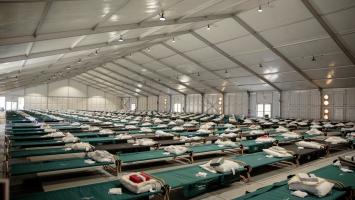 The migrant crisis in New York City is a multifaceted issue, rooted in a complex interplay of domestic and international politics and policies.
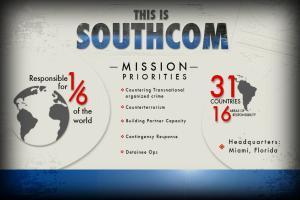 It doesn't matter if China and Caribbean nations may want to have friendly relations and economic cooperation. Washington wants nothing of the sort and undermines what could be mutually beneficial…
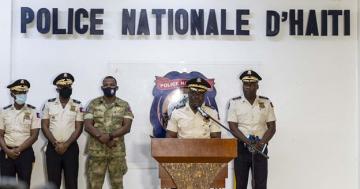 Kenya has chosen its side. That nation has agreed to give cover for the next occupation of Haiti by providing a Black face for imperialism.
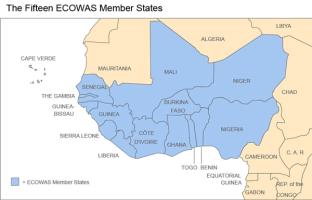 U.S. and African puppet regime threats against Niger and all African states must be condemned.
 As the U.S. and France move to interfere in the Sahel region of West Africa, Niger, Guinea and Mali have spoken up to defend their sovereign rights and declare their determination to be free from…


