by Dr. Marsha Coleman-Adebayo, editor and columnist
Cuba, like the United States, has a long history of slavery and racial discrimination. However, unlike the U.S., Cuba has undergone a revolutionary transformation. “The US government has no moral authority to criticize any other country,” said Kenia Serrano, a Member of the Cuban National Assembly and Director of the Cuban Institute for Friendship with the Peoples.
Cuba’s Kenia Serrano: U.S. Has No “Moral Authority” to Criticize Anybody on Race
by Dr. Marsha Coleman-Adebayo, editor and columnist
“The Civil Rights movement was a part of the inspiration of the Cuban Revolution.”
Kenia Serrano is Director of the Instituto Cubano de Amistad con los Pueblos, (The Cuban Institute for Friendship with the Peoples, ICAP) an NGO established in 1960 and a Member of the Cuban National Assembly. Ms. Serrano has played a leading role in forging international solidarity between the people of Cuba and the global community. In particular, she has supported the struggle of African-Americans against US occupation and white supremacy. The interview below took place in Havana, Cuba between Glen Ford, BAR Executive Editor and Kenia Serrano at ICAP Headquarters during a recent trip to celebrate May 1st – International Workers Day.
Since 1960, ICAP has coordinated work brigades comprised of volunteers from around the world who are prepared to work in solidarity with the Cuban people by engaging in light agricultural work and cultural activities. Today more than two thousand associations express their solidarity with Cuba from 156 countries.
Despite the US embargo imposed upon Cuba, October 19, 1960, the accomplishments of the 1959 Cuban revolution are impressive such as, accessible and free universal health care, free education from elementary school to the doctorate level, high levels of political participation, low unemployment, currently standing at approximately 2 to 3%, affordable, elimination of illiteracy, a commitment by the government to address violence against women and protect workers rights. Many African-Americans on the left have expressed suspicion of US intentions regarding normalizing relations with Cuba.
Glen Ford explores the Cuban perspective on the Black Lives Matter movement in the US with Kenia Serrano.
Glen Ford: Are the Cuban people, the rank and file folks in Cuba aware of the Black Lives Matter movement in the US?
Kenia Serrano: Remember, in Cuba, the Cuban Revolution triumphed in 1959 and in the 60’s in the US / the civil rights movement was very important. The Civil Rights movement was a part of the inspiration of the Cuban Revolution. Martin Luther Kings, Jr., Malcolm X were active in that struggle and provided good examples for the Cuban Revolutionaries and for the young people in Cuba. So, today when some people ask about Assata Shakur, probably some young people don’t know her, but they know our principles.
Glen Ford: But, are they aware of the mobilization of young people especially in the US?
Kenia Serrano: Yes, or course, especially in Ferguson and many other cities in the US. We have contacts with many progressive people in the United States. And, when they come to Cuba we make sure they talk to the Cuban people and I believe we have more information directly from you but our media is also covering (the events in Ferguson and other communities) and Telesur (Latin American broadcasting television) is also informing our community about this racist situation in the United States.
Glen Ford: About 5 or 6 years ago there was a flurry of, some would say, an orchestrated, criticism of the racial situation in Cuba. How has the Cuban government and the party responded?
Kenia Serrano: First of all, the United States government has no moral authority to criticize any other country in the world because of their racist policies. I know and you know that in the United States, the capitalist society is based on racism, discrimination and a lack of equality. Yes, but on the other hand, based on the Cuban revolution everyone is guaranteed equal access and social justice for everyone but still today we have cases of discrimination and the revolution is powerful enough to overcome these expressions of discrimination.
There are some “plans,” coming from the United States (to provide negative images of Cuba.) A lot of money has been invested with some opinion leaders and agencies, like the US Agency for International Development that are trying to present Cuba as a country where discrimination is everywhere, and that is not true! It’s a part of their media campaign against Cuba. And our reaction will be that yes, it is true that we still have problems but the problems are solved by the Cuban people. If there are problems and conditions that need to be solved the Cuban revolution will solve these problems.
Glen Ford: Cuba has one of the lowest Internet participation levels in the world. Some people in the United States say the Cuba government is scared of the Internet.
Kenia Serrano: 25% of the Cuban people have access to the Internet. I believe the main obstacle to our being fully connected to the Internet is the US blockade against Cuba. If there are people in the United States who are concerned about the lack of Cuban access to the Internet, please ask them to help us stop the US blockage against Cuba and then we will have 100% access to the Internet. But in between, we continue to develop our own access to the Internet using our own resources and I can tell you that it will not be the market that will decide who will have access to Internet. It will be the social forces established in Cuba that will allow people to gain greater knowledge and to have more capabilities to develop our country.
Ford: Thank you.
Dr. Marsha Coleman-Adebayo is the author of No FEAR: A Whistleblowers Triumph over Corruption and Retaliation at the EPA. She worked at the EPA for 18 years and blew the whistle on a US multinational corporation that endangered South African vanadium mine workers. Marsha's successful lawsuit led to the introduction and passage of the first civil rights and whistleblower law of the 21st century: the Notification of Federal Employees Anti-discrimination and Retaliation Act of 2002 (No FEAR Act). She is Director of Transparency and Accountability for the Green Shadow Cabinet, serves on the Advisory Board of ExposeFacts.com.and coordinates the DC-based Hands-Up Coalition

 Quinn Cozzens joins us to discuss the case of Derek Lee, convicted of felony murder and sentenced to life in prison without parole for a killing he did not commit. Derek Lee is challenging his…
 Margaret Kimberley, Black Agenda Report Executive Editor, was recently a guest on the Revolutionary Blackout Network with hosts Nick Cruse and James Fauntleroy. This is an excerpt of their wide-…
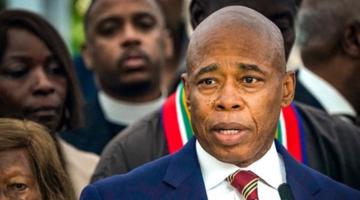 The indictment of New York City mayor Eric Adams is the latest example of moribund Black politics. Rich donors and corporate media decide who will be elected to office, while the people’s needs go…
 Margaret Kimberley and Ajamu Baraka discuss the US upcoming presidential election, and the historic events unfolding in Western Asia - where Israel continues its onslaught of the region with an…
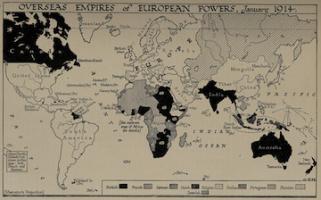 “We need to give greater theoretical centrality to the fact that European conquest of the world has established what is in effect: global white supremacy.”


