by Ann Garrison
Rwandan dictator Paul Kagame sends hit squads around the globe to eliminate critics of his minority-based government. The regime is seeking to silence dissident Léopold Munyakazi through deportation back to Rwanda from the United States. The author interviewed Munyakazi's lawyer, Ofelia Calderón.
Scholar Says Rwandan Massacres Were Class War; Faces Deportation
by Ann Garrison
“There's no dispute that Professor Munyakazi will be detained upon his arrival in Rwanda. I believe that he will suffer torture.”
Supporters of suspended Goucher College French Professor Léopold Munyakazi are urgently trying to stop his deportation to Rwanda because they feel it would lead to his imprisonment, torture and/or death. The Rwandan government accused Professor Munyakazi of genocide after he made several speeches in which he said that the Rwandan massacres that took place between 1990 and 1994 were not genocide. He said instead that Rwandans are one people sharing the same language and culture and that the war and massacres grew out of a long smoldering class conflict in which the social classes were labeled as Tutsi, Hutu, and Twa.
Dr. Munyakazi's case is still pending in the Fourth Circuit Court of Appeals, but Department of Homeland Security professionals arrested him last week anyway. I spoke to his attorney Ofelia Calderón.
Ann Garrison: Ofelia Calderón, what happened to Professor Léopold Munyakazi last week?
Ofelia Calderón: The DHS picked him up, or ICE, the police of the DHS, picked him up at his home on Friday, September 4th, at 3 pm and took him into custody, and moved him from Baltimore to Louisiana to Miami, which is the classic staging step for deportation. He's always reported, and he's been on an ankle bracelet, so there's really no other reason to pick him up except to deport.
AG: What do you think the underlying political context of this is?
OF: I believe that the Rwandan government has been negotiating with the U.S. government to extradite individuals that they want to charge with these types of crimes, with genocide.
AG: And, Professor Munyakazi has been critical of the Rwandan government and its official genocide narrative, right?
OF: That is true. That's completely accurate. The Rwandan government issued its warrants of arrest for Professor Munyakazi in 2008. It was because he had given two speeches about the genocide and had characterized it differently from the Rwandan regime.
AG: He characterized it as a class conflict rather than an ethnic conflict, right?
OF: That's correct. That's correct. And then coincidentally, they immediately issued these warrants alleging that he had been involved in genocide, notwithstanding the fact that years prior evidence had been proffered specifically by witnesses who said that he hadn't been involved.
AG: Right, well they couldn't charge him with a speech crime, which seems to be what they're actually exercised about.
OF: To be fair, there was also a charge of genocide negation, and there was also a charge of divisionism.
AG: Oh, divisionism, OK.
OF: Having divisionist ideology.
AG: How did the U.S. courts deal with the speech crime issues?
OF: Well, I would say that in immigration court, I think that Judge Kessler certainly acknowledged that that was a motive for the Rwandan government to issue their warrants, but at the end of the day, she accepted the evidence that the Rwandan government had provided to the U.S. government and found that he was a human rights persecutor and, as a result, denied his application for asylum.
AG: There are lots of people working to try to stop this deportation. What are his chances?
OF: Right now his case is at the Fourth Circuit Court of Appeals. So, what I have done as his attorney is I filed a motion for an emergency stay with the Fourth Circuit, asking that they stay his deportation pending the culmination of the appeal at the circuit court level. An administrative stay was filed with ICE as well by friends and family and individuals that are very supportive of Professor Munyakazi. And there's a lot of pressure, I think, from the public now at this point to, at a minimum, permit him to stay for purposes of completing the appeal.
AG: Well, he could appeal all the way to the Supreme Court, couldn't he?
OF: Absolutely, that's right, but we haven't finished the circuit court point. The opening brief is due September 21st,
AG: And you believe in this case so much that you've been working on it pro bono for four years, right?
OF: I've been working on it pro bono since 2009. Six years.
AG: OK. What do you think will happen to Professor Munyakazi if he is in fact deported to Rwanda?
OF: Well, there's no dispute that Professor Munyakazi will be detained upon his arrival in Rwanda. I believe that he will suffer torture. I absolutely believe that. And to some extent, I also believe that. . .I believe his very life is in danger. For purposes of the Rwandan government, he is someone that they do not want to continue speaking.
Ann Garrison writes for the San Francisco Bay View, Black Agenda Report, Black Star News, Counterpunch and her own website, and produces news and features for Pacifica Radio’s WBAI-NYC and KPFA-Berkeley. She can be reached at @AnnGarrison.

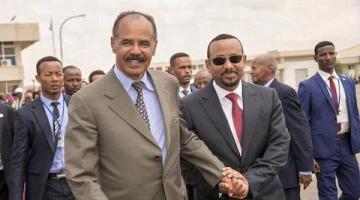 US hostilities towards Ethiopia and Eritrea look more and more like those preceding US wars in Yugoslavia, Libya, and Syria, writes Ann Garrison.
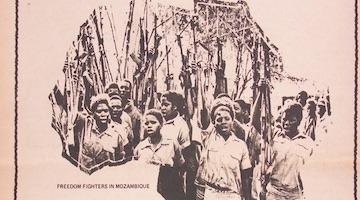 At the 1972 event, Walter Rodney proclaimed that “black unity must be international because we live on every continent, through no choice of our own.”
 2020’s hindsight—frost in the rearview mirror. Miles Ahead… I’m Sheltered in Solidarity with National Poetry Month and Jazz Appreciation Month— April in Boston—warm cider
 The critics want to wipe clear the actual history of racial oppression that is baked into the social and economic structures of the US.
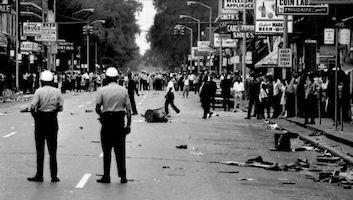 The police as they exist today need to be abolished, there’s no question. “Diversity doesn’t change the fundamental dynamics of policing.”


