Trinidad and Tobago's Prime Minister says she backs Trump's conservatism and capitalism, and the criminal case against a hairdresser paralyzed in a police shooting shows exactly what that partnership looks like on the ground.
The case of Kaia Sealy, a 24-year-old hairdresser and mother, left paralysed after being shot by police in St. Augustine on January 20, 2026, has become a flashpoint for understanding how state power operates in contemporary Trinidad and Tobago. Seely, who was wounded, while her partner and father of her child, Joshua Samaroo, was killed during a police confrontation, now faces extraordinary legal jeopardy. The Director of Public Prosecutions (DPP) has issued warrants charging her with three counts of shooting with intent to cause grievous bodily harm against police officers and, most strikingly, manslaughter in the death of Samaroo himself. This legal maneuver, effectively blaming a surviving victim for the death caused by police, is occurring against a backdrop of video evidence that appeared to show Samaroo with his hands raised in surrender before officers opened fire. However, no police officers face charges.
This case cannot be understood in isolation. Rather, the persecution of Seely serves a calculated political function justifying the attempts for Zones of Special Operations (ZOSO), defeated in the Trinidad and Tobago Senate in January 2026 and the extended State of Emergency (SOE) reissued on March 2, 2026, paving the way for even more draconian legislation modeled on the United States' statutory instruments. By manufacturing an atmosphere of public unrest, the government creates demand for security crackdowns. The SOE already suspends bail and grants police warrantless search and arrest powers. But Prime Minister Kamla Persad-Bissessar's explicit embrace of "conservatism and capitalism" and her alignment with the Trump administration suggest this is merely a precursor to more permanent repressive measures.
Persad-Bissessar has been unambiguous about her ideological orientation. In February 2026, she declared that Caribbean nations should live "under democracy and capitalism," and two weeks prior to that statement, she affirmed her support for the "conservatism and capitalism of the President Donald Trump administration.” This ideological submission has translated directly into geopolitical alignment. At the March 7, 2026, Shield of the Americas Summit at Trump's Doral resort in Florida, Trinidad and Tobago formally pledged participation in the US-led Americas Counter-Cartel Coalition. The alliance, which includes hard-right leaders from Argentina, El Salvador, Honduras, and elsewhere, explicitly commits signatories to supporting the US in "limiting external influences from outside the Western Hemisphere", a euphemism for countering Chinese and Russian presence in the region.
Trinidad and Tobago's Foreign Minister Sean Sobers has sought to assure citizens that the country’s sovereignty remains intact, calling the Shield summit "one of the most successful multilateral engagements" he has ever witnessed. But sovereignty cannot be reconciled with joining a US-led military alliance explicitly designed to subordinate regional security policy to Washington's priorities. As Trinidad and Tobago tightens domestic security through SOEs and prepares for ZOSO-style legislation, it simultaneously binds itself to a US regional strategy characterised by extrajudicial killings in the Caribbean Sea and Pacific Ocean.
The broader regional context makes clear what is at stake. Since January 2026, the United States has conducted Operation Absolute Resolve, resulting in the kidnapping of Venezuelan President Nicolás Maduro and his wife, First Combatant Cilia Flores from their residence, with 83 people killed, including 32 Cuban soldiers killed during the abduction. The same military buildup in the Caribbean, which includes aircraft carriers and nuclear submarines, has been used to justify strikes on alleged "drug boats" that have killed over 200 people. These operations coincide with intensified pressure on Cuba, including threats of military invasion and regime change, and economic coercion that has collapsed the island's oil supplies. The Trump administration is systematically destabilising the region to secure resource access and maintain US monopoly, with compliant Caribbean governments providing political cover. In alignment, Persad-Bissessar has openly declared that Trinidad and Tobago does not support Cuba’s “dictatorial” regime, dismissing appeals for regional solidarity.
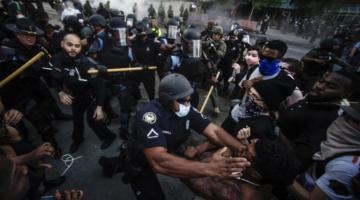
When protestors and those arrested in support of Kaia Sealy attempted to exercise their democratic rights outside of the DPP’s office, the Prime Minister condemned their supporters as “sick and evil” and praised law enforcement for suppressing the demonstrations. The selective application of democratic principles, championing “freedom” for Cubans while curtailing protest rights for Trinidadian citizens, suggests that Persad-Bissessar’s right- wing ideological commitments serve strategic convenience rather than consistent principle. Although presented as irrational, the right-wing ideological framework underlying what is unfolding in Trinidad and Tobago and throughout the Caribbean and Latin America is organized around the prioritized “values” of order, security, and anti- communism. This framework has animated attacks on Haiti’s democratic institutions through US- backed interventions, facilitated extrajudicial assassinations of elected leaders in Honduras, and bolstered the hardline Bukele government in El Salvador despite its human rights abuses, all while presenting these actions as necessary security measures rather than imperial consolidation. The urgent counter to this cascade of atrocities lies in reclaiming the Caribbean as a Zone of Peace, a principle demanding non-militarization, non-intervention, and genuine cooperation articulated by progressive forces across the region.
When a society decides that a militarized, carceral approach is an acceptable substitute for justice and care, the logic of militarization inevitably produces murder victims, protected killers, and a system that grows stronger the more people it destroys. People(s)-Centered Human Rights stands against this logic. The Kaia Sealy case stands as the domestic face of this broader logic of criminalisation of victims, the protection of state violence, and the relentless expansion of carceral power in service of capitalist conservatism, demonstrating precisely why this vision is indispensable.
Erica Caines is a writer and organizer in Baltimore and the DMV. Caines is the Field Operations and Membership coordinator of The Black Alliance For Peace, a member of the Black working-class centered Ujima People’s Progress Party in Maryland, and founder of #LiberationThroughReading providing African children with books that represent them.


 Nicaragua's recent elections were conducted with transparency and freedom of choice for voters. The only problem is with the United States and its determination to undo the will of Nicarag
 COP26 ended the way climate summits always do, with promises for change from countries which have every intention of keeping the status quo.
 Rich capitalist nations use a variety of means to escape paying compensation to the Global South for climate change damage. The outcome at COP26 was no different in this regard.
 The island nations of the Caribbean are vulnerable to the impacts of climate change.
 In this extensive interview, socialist activist and writer Issa Shivji discusses the peasantry, capitalist development and socialism.


