#BlackLivesMatter Introduces a New Visa Debit Card, and Revives the Toxic Old Myths of Black Capitalism
by BAR managing editor Bruce A. Dixon
The old myths that African Americans are poor because we don't spend wisely invest or save enough have been demolished many times. Black unemployment and poverty are core features of US capitalism and can’t be cured by black banking or shopping with black businesses. So why has #BlackLivesMatter teamed up with shady black bankers to introduce a #BlackLivesMatter debit card in a campaign that boosts the fake economics of black capitalism?
#BlackLivesMatter Introduces a New Visa Debit Card, and Revives the Toxic Old Myths of Black Capitalism
by BAR managing editor Bruce A. Dixon
There’s a box of odious and discredited myths which hold that African Americans have less wealth and higher rates of poverty, joblessness and other negative social indicators because we ain’t thrifty, because we don’t save and invest like some other folks, because we don’t spend our cash with black businesses, and we just do not properly manage our collective wealth. Quite simply, these propositions are fake economics, zombie fake economics, killed and disproven many times but still walking among us. Now these disreputable myths have been embraced by portions of the #BlackLivesMatter movement.
During this year’s Black History Month, the #BlackLivesMatter folks rolled out, in partnership with OneUnited Bank, their officially branded #BlackLivesMatter debit card, which features the striking portrait of “Amir,” an African boy flanked by the iconic images of 1968 Olympians Tommie John and John Carlos, fists in the air. The accompanying mini-blizzard of press releases, stories and statements, some accompanied by the hashtag #BlackMoneyMatters, double down again and again on the pernicious nonsense that black banks and the marshaling of black spending power are solutions to the economic distress of black families and communities.
Morgan State University’s Dr. Jared Ball, a former collaborator of ours at Black Agenda Report and a prolific scholar whose current work can be found at imixwhatilike.org, has done more to document and explain the bogus economics of “black spending power” and similar contraptions than anybody alive. Ball wrote a long and thoughtful Facebook post this morning on the news that #BlackLivesMatter is leveraging its brand for this Visa card and claiming the whole thing is about black economic empowerment.
Here’s how Dr. Ball begins his deconstruction of this hard to kill myth at imixwhatilike.org…
- “Buying Power” is a marketing phrase that refers only to the “power” of consumers to purchase what are strictly available goods and as their own report admits has nothing to do with income or wealth which are the genuine markers of economic condition. “Power” here has nothing to do with actual economic strength. Nearly all reports/stories related to these numbers refer back to flawed, misleading and misinterpreted research from the Selig Center for Economic Growth at the Terry College of Business housed in the Bank of America Financial Center in Athens, GA.
- The claim that African America has roughly $1 trillion in “buying power” is an entirely phony myth, like unicorns, democracy or freedom. As explained in detail below, the number is fraudulent, itself derived from equally fraudulent surveys, absurdly interpreted sociological data and – at best – misinterpreted data regarding spending which mostly just ignores the far more sound data regarding wealth and income.
- The myth of “buying power” works to deny the reality of structural, intentional and necessary economic inequality required to maintain society as it is, one that benefits an increasingly decreasing number of people. To do this the myth functions to falsely blame the poor for being poor. Poverty, the myth encourages, is the result of the poor having little to no “financial literacy,” or as resulting from their bad spending habits, when in reality poverty is an intended result of an economic and social system.
Ball’s entire treatise, titled “the Myth of Black Buying Power” is not only worth reading in its entirety, it’s a thoughtfully maintained and frequently updated resource on the topic. Among much else, Dr. Ball reveals that “black buying power” phrase originated as the sales slogan of black marketers a generation ago who wanted to convince clients they had a lock on the black market. Ball points out that in the real world black America spends 44% of its income on rent alone. When you add utilities, transportation, food, clothing, student and consumer debt there’s next to nothing left to invest.
Patronizing black banks and other businesses simply will not create the mythical black owned entities that will somehow hire millions of now jobless black workers to manufacture the cars, computers, cell phones, fuel, electricity clothing health care and other services and goods made by somebody else which African Americans now consume. Nobody has ever boycotted and shopped their way to freedom. Lazy demagogues touting this nonsense never explain just how this “buying power” might somehow be intelligently re-directed from utilities, transportation, rent, and whatnot into the coffers of some entity that will “re-invest” in black communities, because they simply cannot.
Black capitalism won’t cure black unemployment either. Karl Marx wrote 170 years ago that capitalist economies always require a large reserve of unemployed workers to depress the wages of those currently employed. That has not changed. So black unemployment is not a bug in capitalism, it is a core feature. There’s nothing in the fantastical black capitalist universe to prevent the gentrification of black and brown communities either, because under this economic system the only value a stable poor or working class neighborhood possesses is the value which might be realized by flipping it, by expelling the current residents and moving in hotels, stadiums and richer, usually whiter inhabitants. This particular feature of capitalism explains why the black political class has never been able to offer any alternative model of urban economic development to its low and moderate income constituents. Advocates of black capitalism want us to live in a fantasy world which defines collective effort as shopping black and using the #BlackLivesMatter debit card at OneUnited Bank.
What would real world collective black economic effort look like?
We’ve always wondered here at Black Agenda Report why none of the pro-capitalist advocates of black collective economic effort have noticed the black agricultural cooperatives of the Federation For Southern Cooperatives which has been around for 50 years, the more recent groundbreaking work of Cooperation Jackson in Jackson Mississippi or discuss the whys and wherefores of worker owned cooperative businesses. An even greater omission that speaks plainly to the class and gender biases of the of those touting black capitalist remedies as solutions to the dire economic situation of black America is their failure to EVER mention labor unions, just about the only real world engines for collective economic empowerment ever invented.
The NYC transit workers strike of 2005, when 30,000 mostly black and brown workers brought metro NY to a halt defending their health care, pensions and the wages of future workers is a priceless example of collective action for economic uplift in the real world. That single strike probably bolstered the fortunes of more black families than all the careers of Oprah and all the other black billionaires in the US. Organizers know well that black women are the most likely to join unions too, followed in order by black men, then Latino women and Latino men, Asian women and Asian men, then white women and finally white men. You’d think the responsible heads of #BlackLivesMatter, who claim they are second to nobody when it comes to enabling and boosting the work of women organizers and organized women, would be all over this, training women to be union organizers across the country, and agitating for the repeal and creative violation of laws which make it difficult and almost impossible to organize unions and strike in large swaths of the US. But they’re not.
Somehow it makes more sense to #BlackLivesMatter to lend their brand to a black bank for their Visa debit card rollout, and peddle the tired old fake economics about how buying and banking black will save us, instead of empowering ordinary women to save each other and all the rest of us. The hashtage #BlackMoneyMatters says it all.
The portion of #BlackLivesMatter leadership which promotes these fake economic nostrums instead of real world collective actions like cooperatives and unions can only roll this way because they are unaccountable to anyone but themselves and their funders. Who are these funders? A web page that seems to have been taken down from the Borealis Philanthropy web site explained that Borealis, in cooperation with the Ford Foundation and other players, aims to raise $100 million to train the next generation of #BlackLivesMatter leaders. Unlike the one percenters writing checks, the tens of thousands of rank and file activists flying the #BlackLivesMatter banner around the country possess no structural way to bend BLM’s national leaders to their will, or even to express that will.
The BLM contraption isn’t made for that. But it works just fine for reviving the old and discredited myths of black capitalism, tales which blame the black poor for poverty and tell us we can and should be saving and shopping our way to freedom.
Bruce A. Dixon is managing editor at Black Agenda Report, and a member of the state committee of the Georgia Green Party. He lives and works near Marietta GA and can be reached via email at bruce.dixon(at)blackagendareport.com.

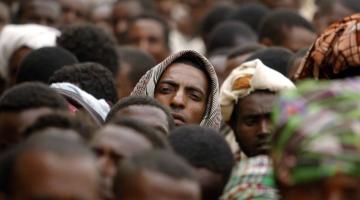 The peoples of this world will never see true liberation and peace until we are free of the shackles of U.S. and Western colonial domination.
 The proposed 854-bed facility will be a hybrid jail, hospital and mental health and substance use treatment facility for people facing criminal charges.
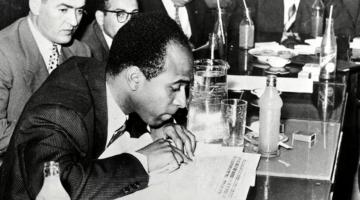 No amount of verbal gymnastics can escape the simple truth that indigenous resistance is crucial to ending colonial atrocities.
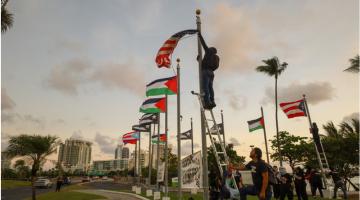 Puerto Ricans protested Harris’ visit citing the ongoing US occupation of Puerto Rico and support to Israel’s genocide against the Palestinian people.
 In the fight for the liberation of Palestine, reject the reactionary politics of bourgeois feminism and embrace a liberatory struggle led by Palestinian women.


