W.E.B. Du Bois and the Radicalization of 21st Century Black Studies
by Dr. Anthony Monteiro
“His approach was not just Black, or Black centered, but a philosophy and social science of Black liberation.”
February 23 was W.E.B Du Bois’ 147th birthday. He was a man of the Enlightenment, reason and Black resistance. He believed in scientific inquiry, poetry and art as methods for acquiring knowledge. Most of all he believed that knowledge had to be practical and purposeful and must be connected to the struggles for freedom of the oppressed. In the last sentence of the Forward to The Souls of Black Folk he insists: “...and need I say, I who write am flesh of the flesh and bone of the bone of those within the Veil.” In that brief statement he rejected the idea that Black social science and art should be separated from Black folk, especially the poor. What gives astounding originality and creative force to all of his work is this connection, this practice of linking knowledge and research to art and the struggles of ordinary Black folk.
It was this epistemology upon which he based his monumental work at Atlanta University from 1897 to 1910, to his founding of the Department of sociology there (the second in the nation, but the first in the modern sense of sociology), and the influential Atlanta University Studies, his sociological laboratory. At Atlanta he institutionalized Black Studies as a discipline, centering it in both theory and practice and anchoring it in the Black lived world. His approach was not just Black, or Black centered, but a philosophy and social science of Black liberation.
W.E.B Du Bois is unquestionably the founder, along with brilliant colleagues like Ana Julia Cooper, Alexander Crummell, William Monroe Trotter and Ida B Wells-Barnett, of Black Studies. An increasingly brilliant and courageous group of intellectuals, applying the idea of emancipatory knowledge founded the American Negro Academy in 1897, the Niagara Movement (the first civil rights platform in US history) in 1905 and the NAACP and modern Pan Africanism.
“He institutionalized Black Studies as a discipline, centering it in both theory and practice and anchoring it in the Black lived world.”
By anchoring knowledge in Black liberation Du Bois was revolutionary in his epistemology and radical in his politics. He called upon educated Blacks to constitute themselves as an emerging leadership in the Black movement. This was his famous notion of the talented tenth. In 1948, 45 years after launching the idea he would say that the talented tenth, the most privileged part of the Black community, had failed their people. They had become “consumed by universal selfishness.” Rather than a leadership class they had become disengaged, self-centered and in many instances a misleadership class. He proposed to replace them with a more radical concept, a guiding one hundredth composed of intellectuals and working people.
Today Black Studies, like Black people, are in a deep crisis. Most Black intellectuals and academics have abandoned ordinary Black folk and the poor. They use their privileges to serve themselves; they are “consumed by universal selfishness.” Rather than their people and the struggles of the poor and working people, they are consumed by identity politics, racial essentialism (called Afrocentrism) and seduced by careerism. The radical and revolutionary force that Du Bois and generations of Black academics (mostly at historically Black colleges and universities, HBCU’s) brought to Black Studies is pretty much gone. Seldom is a Black scholar seen teaching in the Black community or doing research in the community. Few even mention the struggle for Black liberation.
“Most Black intellectuals and academics have abandoned ordinary Black folk and the poor.”
In the face of this we need a return to the Du Boisian idea of Black Studies as a part of the struggle for Black liberation. Young scholars and academics need to join their scholarship with the Black community, rejecting their class privileges and rejecting the lures of whiteness and identity politics.
Pastor Dr. Renee McKenzie of the Church of the Advocate and myself, in an effort to return Black Studies to its source, have launched a Center for the Advanced Study of the African American People. It is a Du Boisian enterprise. Our first program will be a conference on April 17 and 18 on James Baldwin entitled “James Baldwin, Humanity and the Destruction of Whiteness.” We hope to make Du Bois live. The greatest celebration of Du Bois is to continue in this new era the work he began over one hundred years ago.
Dr. Anthony Monteiro is an activist and scholar who specializes in the works and legacy of W.E.B. Du Bois. Until last year, Dr. Monteiro was a professor of African American Studies at Temple University. He can be contacted at tmon(at)comcast.net.

 In this week’s segment, we discuss the legacy of Malcolm X and the state of the political party that many Black people feel trapped in. We are joined by a guest in Libya who explains the lasting…
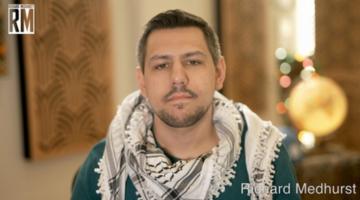 Our guest is Richard Medhurst. He is an independent journalist whose work has been severely impacted by state repression in the UK and Austria. He was arrested and detained in the UK in August 2024…
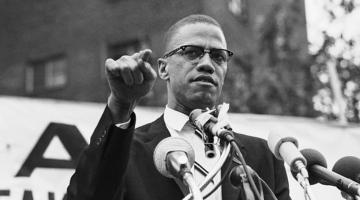 Anthony Rogers-Wright is a Black Agenda Report contributor and host of the WPFW program Full Spectrum, where Margaret Kimberley was recently a guest. They discussed the legacy of Malcolm X on the…
 Our guest is Dr. Abdelkarim Kashkar. He is a physician and author who writes about politics in Libyan newspapers. He joins us from Benghazi, Libya, to discuss how the United States impacts the people…
 Israel is starving Gazans to death and continuing its bombing attacks on civilians. Israel also specializes in personal revenge, targeting men, women, and children who might be the subject of…


