Venus and Serena’s Father’s Tale of Southern Injustice
Black and White: The Way I See It
Richard Williams with Bart Davis
292 pages
Atria books
A Division of Simon & Schuster, Inc.
a review by Norman (Otis) Richmond
“His nose was broken three times, his teeth were knocked out, he was beat up with sticks, bats, and chains, not to mention how many times guns were involved.”
After reading Richard Williams, new memoir Black and White: The Way I See It, I thought about Black Uhuru’s song, “Sponji Reggae.” Williams is the “genuine character“ that Michael Rose, their lead singer, sang about.
If there is one word that captures Williams it is “driven.” Williams is the father of Venus and Serena Williams, two of the world’s greatest tennis players.
His new autobiography is a must read for African youth. It is the story of the Shreveport, Louisiana born Williams’ struggle against white supremacy.
When Williams was born on February 16, 1942, he may as well have been born in Johannesburg, South Africa. Williams was born a few months before Chris Hani. Hani who was regarded as one of the most militant leaders of the African National Congress of South Africa.
Paul Mooney who was also born in Shreveport, pointed out in his memoir, Black is the New White: “Shreveport, Louisiana. The deep, deep South. So deep the Confederates there keep right on fighting for weeks after the Civil War ends. Shreveport is where Jefferson Davis is running to when they catch his ass. One of the last die-hard outposts of the Old South.”
It was in Shreveport that Sam Cooke was jailed. Mooney continues: “Shreveport is also where the great soul singer Sam Cooke gets arrested in 1963 for making a public disturbance, trying to check into a whites-only Holiday Inn. Cooke pulls up in a $60,000 Maserati, with his band following in a Cadillac limo, and they won’t let him in.”
“Shreveport is where Jefferson Davis is running to when they catch his ass.”
Shreveport is also the birthplace of some of the most militant of the militants born in Babylon. Alprentice "Bunchy" Carter, deputy minister of defense of the Southern California chapter of the Black Panther Party; Raymond “Maasi“ Hewitt, the party’s minister of education; and the lawyer Johnnie Cochran, who represented the Louisiana born Geronimo ji-Jaga Pratt, who replaced Carter as the deputy minister of defense of the Southern California chapter.
Unlike Carter, Hewitt, Pratt, Cochran and Mooney, Williams remained in the apartheid south until he was 18 years old. It is a miracle that he lived to document his life story. Williams writes, “Life was a battlefield, win or die.” He documents how he lost two of his childhood friends to southern fried lynchings. Chili Bowl, his best friend, was killed by a white lady who hit him with her car while he was riding his bicycle and “just kept going.” Chili Bowl was eight and Williams was six.
A few years later, his second best friend Lil Man suffered the same fate as Chili Bowl. Lil Man’s lifeless body was found hanging from a tree. Both his hands had been cut off. He was suspected of stealing a white man’s pig.
Williams says: “The Klan caught Lil Man and decided to make an example of him. They bound his hands and feet and tied a handkerchief around his mouth. They cut off both his hands with an ax and lynched his shocked body from a tree. Then they hung Lil Man’s hands on the fence as a warning to other niggers who thought about stealing.”
The death of Lil Man helped Williams grow into a young man filled with rage. He says if he couldn’t get the white man’s respect, he dishonored him by stealing from him. He had no sense of guilt or remorse. At one point Williams even infiltrated the Ku Klux Klan. His episode with the Klan alone is worth the price of his autobiography.
“They cut off both his hands with an ax and lynched his shocked body from a tree.”
Williams was personally subjected to violence. Howard Stern wigged out when he interviewed Williams on his talk show. Stern ran down a litany of things that happened to Williams in Shreveport, Chicago and Compton: His nose was broken three times, his teeth were knocked out, he was beat up with sticks, bats, and chains, not to mention how many times guns were involved.
In this volume Williams reveals that he planned to raise two daughters to become world champion tennis players even before they were even born. Venus was born on June 17, 1980 in Lynwood, California. Serena was born on September 26, 1981 in Saginaw, Michigan.
Williams married Oracene Price from Saginaw, Michigan who had three daughters by a previous marriage. He points out this was just like he grew up. Says Williams, “As a child, I had lived with my mother and three sisters. Here I was again, living in a house filled with four women – and I loved it.”
Williams talked about how he wooed Oracene Price. He says in his book, “I told her I had a son named Richard, by a lady named Betty Johnson. I explained I had left Betty because of the presence of gambling and alcohol, but I was doing all I could to take care of my son, and wanted to bring Richard up the right way.”
Williams worshiped his mother, Julia Metcalf Williams, who died in 1985. His mother picked cotton and raised him and his four sisters. The same cannot be said about Williams’ father R.D., who he described as “a man with a terrible reputation for living off women and having babies all over Shreveport.” Williams witnessed his father being beaten by white hooligans. However, he told Howard Stern his father was afraid because he had been conditioned to be.
Black and White: The Way I See It is a must read for Africans and all oppressed people, especially the youth.
Norman (Otis) Richmond, aka Jalali, was born in Arcadia, Louisiana, and grew up in Los Angeles. He left Los Angles after refusing to fight in Vietnam because he felt that, like the Vietnamese, Africans in the United States were colonial subjects. Richmond is currently working as a producer/host of Saturday Morning Live on Radio Regent (radioregent. com.) He can also be heard on Diasporic Music on Uhuru Radio (uhururadio. com) His column Diasporic Music appears monthly in The Burning Spear newspaper.

 Despite being held in Brazil, a nation with the largest Black population outside of the African continent, COP30 has continued a thirty-year pattern of sidelining the specific climate threats to Afro…
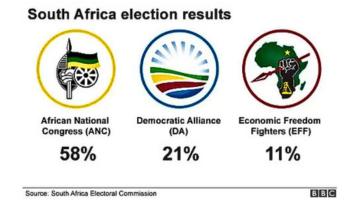 Decades of unmet promises and endemic corruption have eroded the ANC's legitimacy, creating a surge of support for a party led by South Africa's white minority.
 As U.S. militarism intensifies across Latin America and the Caribbean, regional social movements are making the firm declaration that only a unified, mass-driven front can build a true "Zone of Peace…
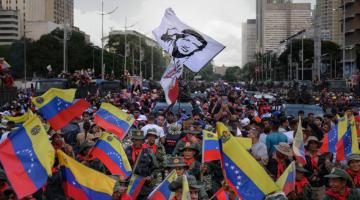 The assault on Venezuela's sovereignty represents a broader imperial strategy to discipline any nation that defies U.S. hegemony.
 SNAP recipients were willing to sacrifice to protect health care benefits for themselves and others and they are furious that the Democrats' chose collusion with the Trump administration rather than…


