The Great Xmas Eve Black-Seminole Victory
by William
Loren Katz
"U.S. tactics
aimed at racially dividing the Africans and Seminoles also failed."
This Christmas Eve, the freedom-loving Bush administration has a chance to mark
the anniversary of a great victory for formerly oppressed people on U.S.
soil. The President is unlikely, however, to notice or heed the meaning
of this particular milestone, whose cast of characters and historical lessons
he would undoubtedly regard as all wrong.
December 24th, 1837 marks the 170th anniversary
of the U.S. government's first significant military defeat in its first foreign
incursion. The place was Florida, then a Spanish colony. The foe was a united
force of Africans, on the run from the south's slave plantations, and
Seminoles, whose self-determination was endangered. The runaway Africans had
been establishing prosperous, self-governing communities in the peninsula since
1738. During the American Revolution they merged with Seminole Indians into a
multicultural nation that cultivated crops according to techniques learned in
Senegambia and Sierra Leone. Out of this came an alliance that shaped effective
diplomatic and military responses to invaders and slavecatchers.
By the early 19th century, U.S. slaveholding
classes saw these groups as a clear and present threat to their system of
wealth production through chattel slavery. Hoping to plug the leak, they began
invading Florida during the administration of President James Madison, father
of the U.S. Constitution and Virginia slaveholder. Then in 1811, Madison
authorized covert U.S. military operations to assist the posses, and in 1816
General Andrew Jackson invaded, seeking annexation. A leader in that invasion,
Army Lt. Colonel Duncan Clinch, reported: "The American negroes had
principally settled along the Appalachicola river and a number of them had left
their fields and gone over to the Seminoles on hearing of our approach. Their
corn fields extended nearly fifty miles up the river and their numbers were daily
increasing."
"The
American negroes'...corn fields extended nearly fifty miles up the river and
their numbers were daily increasing."
Spain, whose claim to Florida rested on a visit
by Ponce De Leon and imperial hubris, gave in to U.S. persuasion and agreed to
sell the colony. But this led to a protracted U.S. occupation known as the
"Three Seminoles Wars." In 1837, the well-informed Major General Sidney
Thomas Jesup found that Africans had become resistance leaders. He
stated: "Throughout my operations I have found the negroes the most active
and determined warriors; and during conferences with the Indian chiefs I
ascertained they exercised an almost controlling influence over
them."
 Citing the dangers presented by the two peoples from
different continents having forged a single nation, he said U.S. tactics aimed
at racially dividing the Africans and Seminoles also failed. . . . . Should the
Indians remain in this territory the negroes among them will form a rallying
point for runaway negroes from the adjacent states; and if they remove, the
fastness of the country will be immediately occupied by negroes."
Although U.S. forces destroyed crops, cattle and
horses, violated agreements, and seized women and children as hostages, the
multicultural Seminoles, as they protected their families and homes, ran
circles around the technologically and numerically superior invaders. U.S.
tactics aimed at racially dividing the Africans and Seminoles also failed.
"The negroes rule the Indians," Jesup observed, and to seek peace, "it is
important that they should feel themselves secure." But peace lay two
decades in the future.
"Throughout
my operations I have found the negroes the most active and determined warriors."
The day before Christmas in 1837, U.S. Colonel
Zachary marched 1,000 troops in pursuit of about 400 Seminoles. Commander Wild
Cat and his sub-chief, the African Seminole known as John Horse, positioned
their black and red marksmen in trees and tall grass in the northeast corner of
Florida's Lake Okeechobee. As Taylor's 180 Missouri riflemen, 800 soldiers from
the U.S. Sixth, Fourth, and First Infantry Regiments and 70 Delaware scouts
approached, the wary Delawares hesitated, then fled. Next, the
Missourians broke and ran. Taylor then ordered his regular Army forward,
reporting later that pinpoint Seminole rifle fire had brought down "every
officer, with one exception, as well as most of the non-commissioned
officers" and left "but four...untouched."
On Christmas morning Taylor found the Seminoles
had fled in canoes. He counted 26 U.S. dead and 112 wounded, found less than
half a dozen slain Seminoles and took no prisoners. This Second Seminole War
alone (1835-1842) would involve U.S. Naval and Marine units, at times half of
the Army, cost 1500 military deaths and taxpayers $30,000,000.
Once his decimated army limped back to Fort Gardner,
Zachary Taylor won promotion by claiming, "the Indians were driven in
every direction." Later, his self-promotion as an "Indian
fighter," won Taylor election as the 12th President of the United States.
"Pinpoint
Seminole rifle fire had brought down ‘every officer, with one exception, as
well as most of the non-commissioned officers.'"
Lake Okeechobee was the Army's worst defeat in
Florida. But the truth of that battle and the war remain buried or distorted.
For example, Arthur M. Schlesinger, Jr. in The Almanac of American History,
wrote: "Fighting in the Second Seminole War, General Zachary Taylor
defeats a group of Seminoles at Okeechobee Swamp, Florida." Well,
not exactly.
The Seminoles' sustained and heroic resistance
to the new American Republic's first foreign invasion created one of liberty's
proudest moments. Those who cherish freedom-fighters should know their
story. And how about those in power who have a penchant for waging
"preemptive" wars?
William Loren Katz is the
author of Black
Indians: A Hidden Heritage and forty other books, and has been associated
with NYU for 35 years. His web site is: http://www.WILLIAMLKATZ.COM

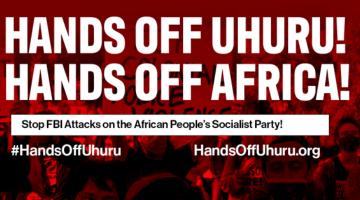 The Uhuru 3 were recently indicted by the federal government, continuing a historical pattern of connecting revolutionary Black organizations and movements to an outside malign state actor to destroy…
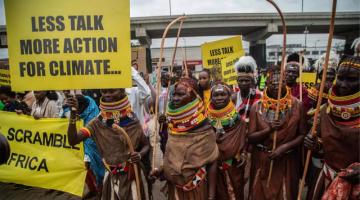 Carbon and biodiversity offsets are the latest imperialist weapons used against African people and their nations. Self-determination is the key to ecological health for the continent.
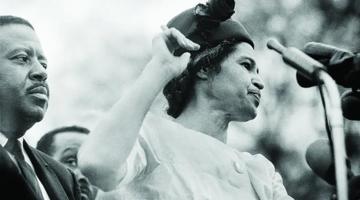 Internationalism is the path toward Black liberation. Black people must resist the push to silo our movements and move in this spirit of Rosa Parks - with fearless integrity.
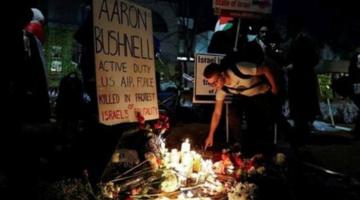 Aaron Bushnell's act of self-immolation is a symbol and a call for people around the world to break their silence and fight for a free Palestine.
 In the time between the two imperialist wars, the spirit and politics of Pan-Africanism grew. African Americans continued to organize and built movements to resist rising fascism.


