Living for Change: The Jena 6 and Black Leadership
by Stephen Ward
"Statements
from young people saying that they were changed forever through the Jena
protest highlight the central importance of transformation in black
leadership."
This article originally appeared in the Michigan Citizen.
Many people view the September 20 march in Jena as a
re-kindling of the spirit of the civil rights movement. With thousands of
peaceful marchers, nationally recognized figures (Al Sharpton, Jesse Jackson,
and Martin Luther King III), and the bright lights of the national news media,
the march did appear to be in the mode of the 50s and 60s.
But this should not lead us to view the Jena 6 case as simply a continuation of
1950s racism or to suggest that "nothing has changed." To do so not only
disrespects the efforts of those who made monumental contributions to our
struggle and to our society during that period, but also ignores the unique
circumstances and great challenges of our time.
The aim of today's struggles should not and cannot be to reproduce the protests
of the civil rights era. Those struggles were designed to draw the nation's
attention to the brutal injustice of Jim Crow segregation, mobilize African
American communities, and force the federal government to secure the rights of
black citizens - with the underlying goal of full access for black people into
the institutions of American life.
"The blatant injustice in the Jena 6 case is a manifestation of
a 21st century criminal justice system that over-polices and criminalizes black
youth."
What are the goals of today's protests? White supremacist ideas and practices
still confront us, but the world in which we live and the forces against which
we struggle today are in many ways different. Despite obvious similarities, the
blatant injustice in the Jena 6 case is not a reflection of 1950s Jim Crow
injustice. Rather, it is a manifestation of a 21st century criminal justice
system that over-polices and criminalizes black youth. It is not, then, a
matter of access to the system, but a need to transform the system.
Nostalgia for the 1960s can also be disempowering for young people who are
searching for models of activism and organizing. It tends to re-inscribe the
primacy of charismatic leaders like Sharpton and Jackson who take their place
at the front of the march, draw the cameras and provide the sound bites. This
type of leadership is designed for public spectacle, not serious movement
building. Their talents and commitments notwithstanding, Sharpton and Jackson
remain stuck in a mode of protest politics that is increasingly out of line
with current realities and challenges.

Which brings us to the wide and impressive participation of young African
Americans in the Jena 6 mobilization. To uncover and nurture the emerging black
leadership that I believe is inherent in this mobilization, we need to ask
young people why so many of them were moved to protest the injustice in Jena.
There are obvious answers - outrage at the unfair treatment of their peers; a
basic sense of fairness, etc. But to engage them in a substantive discussion of
this question is to seek a deeper understanding of how black youth see the
world and their relationship to it and invite them to share their visions for
changing the world.
We should also ask young people what participation in the march meant to them.
They have already begun to tell us. For example, Michigan Citizen readers will
recall that Amber Jeffries, a seventh grade student at Nsoroma, wrote that her
participation in the protest "was life changing" (September 30, 2007).
University of Michigan students who participated in the protest organized a
program titled "From Jim Crow to Jena 6" on Sept. 26 to share their experiences
and discuss the meanings of the case. They also described their participation
as a powerful, life changing experience.
"We need to ask young people why so many of them
were moved to protest the injustice in Jena."
The Jena 6 case can help to do this if we use it to foster an interdisciplinary
dialogue and a substantive, sustained discourse (and mobilization) within black
communities around the criminally unjust system - as well as the crisis of our
schools (the Jena 6 case, after all, began within the context of a school). In
this way we can begin to imagine and engage in struggles to transform these
systems so that they work for our youth.
Stephen Ward teaches at the University of
Michigan and is a member of the Boggs Center board.

 Students in France are engaging in mass protests. Hundreds of them have been arrested and injured by police, and many schools are closed. Annick Metefia joins us from Paris. She is a member of the…
 Ajamu Baraka of the Black Alliance for Peace joins Dimitri Lascaris on BettBeat Media for a conversation about something Western publics have not yet come to terms with — the fact that resistance to…
 Progressive candidates rarely remain so after winning public office. Zohran Mamdani is no exception, but his capitulation to New York zionists angered his supporters, and the people he hoped to…
 “Between October 2 and October 8, 1937, between 15,000 and 40,000 Haitians and Black Dominicans were slaughtered by Dominican troops…”
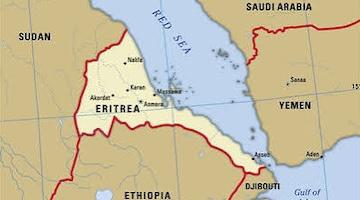 Ethiopia and Eritrea are on the brink of a war that could further destabilize the Red Sea, disrupt oil tanker traffic, and drive gas prices even higher.


