Media Consolidation and the Black Grass Roots: Why the Search for Radio Airtime is Full of Static
by Eric Easter
Jesse Jackson could not repeat his 1988 electoral
victories in southern primaries in today's consolidated media environment.
Black radio isn't what it used to be.
 This article originally appeared in EbonyJet.com.
Jesse
Jackson won the majority of Southern states in his 1988 presidential bid, a
major victory in the history of politics. Jackson had a good message, was a
Southerner and was riding on strong momentum and a solid campaign organization
that had his 1984 race for practice.
But that's
not why he won. He won because of Black radio.
Silently,
Jackson amassed a small team of radio professionals whose job it was to capture
snippets of speeches and pronouncements on tape and feed those clips as news
"actualities" to the dozens of Black radio stations that dotted southern states
like South Carolina, Louisiana, North Carolina and Mississippi. To supplement
the strategy, Jackson often started his days calling into drive-time DJs,
monopolizing their valuable morning shows with political talk for minutes on
end.
It was the
radio version of a surgical strike that gave Jackson the ability to touch
communities effectively without ever having to step foot in the state.
And often, all it took to make it happen was a call to the disc jockey, the
news director, the program director or the Black owner of the radio station.
Most importantly, it cost him nothing.
Could a
smart 2008 presidential candidate who wants the Black vote make a play for the
grassroots on radio the same way Jackson did?
The short
answer is no. And there are several reasons why, including the nearly total
elimination of news on commercial radio, the rise of syndicated programming and
the major culprit, media consolidation.
"Of the few
stations listed as "urban" in South Carolina, almost all are owned by Clear
Channel or other conglomerates."
A
grassroots organizer trying to use radio as an earned media tool in South
Carolina, for example, would have a very hard time of it. Of the few stations
listed as "urban" in South Carolina, almost all are owned by Clear Channel or
other conglomerates who program the channels almost entirely with syndicated
content. That means no news director, program director or owner in the corner
office who could even make the snap decision to, say, throw Obama on in the
afternoon drive to answer calls from listeners.
With
syndication, the power to reach the Black community via radio has been put in
the hands of a few major syndicated radio personalities - Steve Harvey, Tom
Joyner, Michael Baisden, Russ Parr, Donnie Simpson and a handful of
others. That would be fine, except that breaking into a few minutes of
local radio is vastly different from trying to vie for time in the intricately
planned programs of shows like Joyner's. Cutting into time that sponsors
have paid for is nearly impossible. It also eliminates the local angle.
That leaves
Joe Madison's show on XM and the handful of small stations still led by Black
owners as the only vehicles left for broad, non-advertising based, spontaneous
grassroots outreach - stations like WVON in Chicago and Percy Sutton's WLIB.
But while it's a sorry situation for Black radio, at least in the way that it
used to be vitally local, the net result of this state of affairs is not all
bad. Maybe.
"It eliminates the local angle."
In order to
reach Black voters effectively now, candidates are forced to spend actual
money, either through advertising or, God forbid, actually re-routing the
campaign bus to the Black neighborhoods they might ignore if they could reach
them through other means.
But will
that happen in the 2008 race? Doubtful. The major campaigns are already showing
that they are only willing to do what they always have done, which is rely on
popular Black "surrogates" to show up when the candidates cannot (or will
not). And their hired media buyers will do the usual as well, which is
employ the "two week-strategy" - which means buying Black media only when it's
two weeks away from a primary as a "get out the vote" strategy.
In other
words, the more things change the more they stay the same.
Eric Easter is Chief of Digital Strategy for
Johnson Publishing Company. He writes on media, tech and politics for
ebonyjet.com. eeaster@ebony.com
To comment on this story visit its page on the Black Agenda Blog.

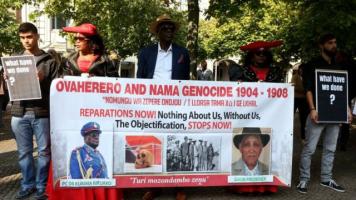 European nations refuse to acknowledge their crimes committed against colonized people. Germany's genocide against the Namibian people is just one such example of unconvincing apologies and refusals…
 In this week’s segment we focus on two states, Venezuela and Eritrea, while we continue paying tribute to the late Glen Ford, co-founder and the driving force behind Black Agenda Report.
 Booker Ngesa Omole is the National Vice-Chairperson and National Organizing Secretary of the Communist Party of Kenya, and a member of its National Central Committee.
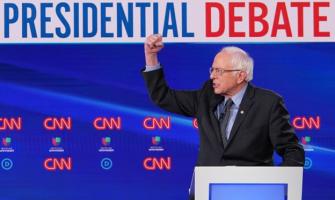 Glen Ford analyzed a 2019 Democratic Party presidential debate and points out that support for U.S. aggression towards Venezuela and other nations is a bipartisan project.
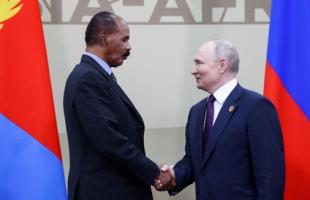 On July 28 Eritrean president Isaias Afwerki spoke to Vladimir Putin at a summit with other African leaders. Afwerki explained why African nations see Russia as an ally, and why they are mistrustful…


