Stop and Search in Britain: Police Racism,
Then and Now
"The police called it, ‘Operation PNH - Police Nigger Hunt.'"
This article originally appeared in Socialist Worker (UK).

‘We have
chosen as a society to put the civil liberties of the suspect, even if a
foreign national, first. I happen to believe this is misguided and wrong. I
believe this is a dangerous misjudgment."
So said
Tony Blair in a parting shot at civil liberties before stepping down.
The British
police already have the power to stop and search people. But they have no right
to ask for their identity and movements. Blair and home secretary John Reid
want to give the police the power to seize any documents and search people
without reason.
The new
power would give police an automatic right to stop and question anyone in
Britain. It would be an extension of the Section 44 power currently in force as
part of Labor's "anti-terror" legislation. This is currently in force across
the whole of London. These proposals would mean a return to the hated "sus"
laws (from "suspected") that made it "illegal for a suspected person or reputed
thief to frequent or loiter in a public place with intent to commit an
arrestable offense."
"The law was used as a form of physical and verbal harassment."
The law
came from the 1824 Vagrancy Act, which was passed to stop destitute soldiers
coming back from the Napoleonic wars begging on the streets.
The police
could stop and search, and arrest, anyone on the basis of a suspicion that they
might commit a crime. People could be convicted on the testimony of the
arresting officer. Most people stopped were never charged with any offence -
the law was used as a form of physical and verbal harassment.
Systematic
The "sus"
laws became a systematic method of racist harassment of black people by the
police during the 1970s. African-Caribbean people were just 6 percent of
London's population. They accounted for 44 percent of those arrested under the
"sus" law in the late 1970s.
In 1977,
some 14,000 people were stopped and searched in Lewisham, south London, alone.
Over 200 Special Patrol Group police - an elite unit - armed with pick-axe
handles and Alsatian dogs, raided 60 black homes in the area. The police called
it, "Operation PNH - Police Nigger Hunt."
What changed the situation was resistance. On 10-11 April,
1981 Brixton, in south London, rebelled. Police struggled to crush the uprising
against racist brutality and poverty. Over 7,000 police officers did eventually
regain control.
"African-Caribbean people accounted for 44 percent of
those arrested in London under the ‘sus' law."

The police
had launched a massive operation in Brixton four days before the riot. They
poured in 100 extra plainclothes officers as part of "Operation Swamp 81." At the same time they were refusing to
seriously investigate a fire in New Cross Road, a few miles away, which had
killed 13 young black people three months before. In four days the police
stopped 943 people in Brixton and arrested 118, over half of them black.
Then on
Friday evening, 10 April, the police bundled Michael Bailey, a 19 year old
black man who was bleeding from a stab wound, into a police car. No ambulance
was called. A crowd gathered.
The police
car did not move. So people
freed him and the police attacked them. Running battles continued for hours.
Plainclothes
and uniformed police stepped up the repression the following day. They arrested
a 28 year old black man who was waving at a friend in Atlantic Road. "Black and
white people went over to try and help, but in the end six policemen threw him
in a van," said an eyewitness. "By now everyone was angry." Police steamed into
the crowds of Saturday shoppers.
The Brixton
riot was not an isolated incident. Twelve months earlier 2,000 people - two
thirds black, one third white - had rioted in St. Paul's, Bristol, after a
police raid on a club. There were several minor clashes with the police in
other areas within weeks. They included a demonstration of skinheads in
Sheffield, who ended up charging through the streets shouting, "Brixton,
Brixton!" Then on 3 July police racism triggered riots in Southall, west
London, and in Toxteth, Liverpool.
They spread
over the next seven days to Moss Side in Manchester, Leicester, Handsworth in
Birmingham, Brixton, Leeds, Bolton and scores of other places. Toxteth and Moss
Side were on the scale of Brixton three months earlier. Liverpool's black
population was concentrated in Toxteth.
Violence
The 1981
riots drew the mass of white youth to identify with black people who were at
the sharp end of police violence. A rioter called Jono told Socialist Worker
after the Toxteth riot, "We hate the police. It's easy as that, isn't it? They
come in and push us around. This isn't black against white. How could it be?
Look, we're together."
It is only
when people have fought back against police racism that anyone in power has
been forced to acknowledge it. The uprisings forced the Tory government to hold
an inquiry headed by Lord Justice Scarman. He declared that there was no
institutional racism in the police, merely a few "rotten apples". But the "sus"
laws were abolished and replaced with powers under the 1984 Police and Criminal
Evidence Act (Pace).
"Another key focus of state racism is Islamophobia."
Pace said officers needed "reasonable suspicion" that an
offence had been committed. The law is still used to harass people with stop
and search, but less than the "sus" laws Blair wants to bring back.
The 1999
Macpherson Report into the murder of black teenager Stephen Lawrence did
recognize the "institutional racism". The effect of Macpherson was a brief
decline in the use of stop and search. The "war on terror" has increased the
number of stop and searches to over that of the pre-Macpherson level.
Draconian
laws are brought in to give confidence to the police and to take confidence
away from ordinary people.
In the
1970s, the racist drive from the top was against African-Caribbeans. Now
another key focus of state racism is Islamophobia. While African-Caribbeans still suffer intense harassment from the
police, the harassment of Muslims has increased dramatically. However, the
solution is the same - resistance from ordinary people, black and white, can
help to defend our liberties.
Legislation to increase attacks on blacks and Muslims
Labor
deputy leader candidate Peter Hain has warned that Britain must take care that
its anti-terror legislation does not alienate whole communities. He said,
"We've got to be very careful that we don't create the domestic equivalent of
Guantanamo Bay, which was an international abuse of human rights, and acted as
a recruiting sergeant for dissidents and alienated Muslims and many other
people across the world." However, he
seems less bothered that the draconian law proposed by Tony Blair already
exists in Northern Ireland, where he is secretary of state.
In
February, even the Metropolitan Police Authority found that the police's use of
special anti-terror stop and search powers were doing "untold harm" to
communities in London, particularly Muslims. But the harassment of thousands of
people goes far wider than that.
In 2004-5 there were 839,977 stop and searches recorded by
the police under Section 1 of Pace. Overall African-Caribbean people are six
times more likely to be searched than white people and Asians twice as likely.
Asians are 30 percent more likely than whites or African-Caribbeans to be
searched under the terror legislation.
"African-Caribbean people are six times more likely to be
searched than white people and Asians twice as likely."
Overall
there has been a gradual decline in the number of white people stopped and
searched since 1997-8. For African-Caribbean and Asian people, the numbers of
stop and searches are broadly similar to levels recorded ten years ago.
The police
have recorded a 37 percent increase in what they call "suspicious
reconnaissance" of potential targets in the first four months of 2007. As
Socialist Worker reported last week, this means people being arrested for
taking photographs of public buildings and tourist sites.
The police
are also using their anti-terror stop and search powers for day to day duties.
These powers have quietly been introduced into Scotland Yard's "safer
neighborhoods" program, which allegedly targets anti-social behavior, criminal
damage and graffiti.
© Copyright Socialist Worker

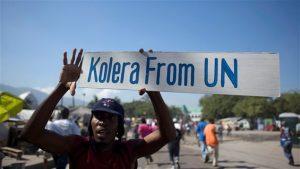 Canada is a US partner in crime in Haiti as it is in the rest of the world. Haiti cannot be a sovereign nation as long as Canada, the US and other CORE Group nations interfere in its affairs.
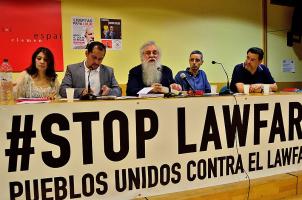 The US attacks other nations with bombs, coups, sanctions, and also by corrupting the law around the world.
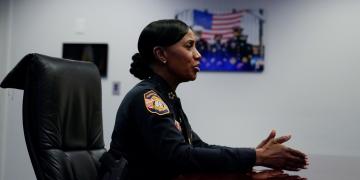 The chief of the Memphis, Tennessee police department took part in trainings in Israel. These exchanges with an apartheid state are a training ground for brutality.
 This week we learn about the destruction of a Black community in Portland, Oregon and the legal efforts at restitution, and the struggle to fight for reform of the cash bail system in Minnesota. But…
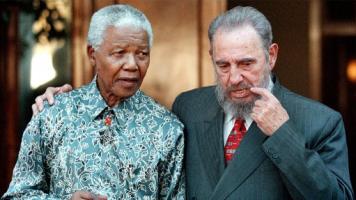 Isaac Saney is a Cuba and Black studies specialist and historian at Dalhousie University in Halifax, Nova Scotia, Canada.


