by Kamau K. Franklin
Although much of the negative reaction to the late Manning Marable’s new bio of Malcolm X revolves around the book’s rehashed allegations of Malcolm’s homosexuality, the recasting of the slain leader’s core political beliefs is more disturbing. “Marable’s backers say he wants to ‘humanize’ Malcolm” – as if the “Black Panther of a Man” is not human enough. In Marable’s telling of the story, Malcolm is finally reduced to merely another “anti-racist social justice soldier” – a character with a striking political resemblance to the biographer.
An Ivory Tower Assassination of Malcolm X
by Kamau K. Franklin
"The media's the most powerful entity on earth. They have the power to make the innocent guilty and to make the guilty innocent, and that's power. Because they control the minds of the masses." – Malcolm X
“Marable’s unsubstantiated claims are actually meant to create controversy in order to sell books.”
I am pleased that Karl Evens and Zak Kondo, two biographers of Malcolm X, are speaking up and offering accurate critiques of Manning Marable’s new twisted biography of Malcolm X. They are defending Malcolm’s legacy, as Karl Evens put it, as “a Black Panther of a Man.” Manning’s book is a second assassination along the lines of Bruce Perry’s previous hatchet job and George Breitman’s attempt to move Malcolm from his ideological positions. In Marable’s bio we get a two for one attempt to move Malcolm from being a powerful black nationalist into a more academy friendly anti-racist social justice activist. Dangerous to no one but perfect for a liberal left academic establishment.
The only two books on Malcolm I can remember receiving in-depth New York Times reviews where Manning's and Bruce Perry's. Both were applauded by the Times, and both were meant to reinvent Malcolm and undermine his stature as the fountainhead of modern Black Nationalism. Breitman began the legacy of attempting to re-position Malcolm with his commentary on Malcolm’s shift to the socialist camp by picking individual statements and extrapolating their “true” meaning, which of course tended to be close to the writers ideological position. In Perry’s bio Malcolm sets his own house on fire, he introduces the first claim of Malcolm’s newly discovered sexual habits and tells us how psychologically unbalanced Malcolm was. Now with Marable we get a Malcolm who is more of an anti-racist social justice seeker. Marable’s backers say he wants to “humanize” Malcolm by making suggestions and unsubstantiated claims about Malcolm’s marriage and sexuality. Really, does Malcolm need to be “humanized? Is it not Malcolm’s humanity as exhibited by his personal struggles as a young man followed by his transformations that resonates with many of us?
“In Marable’s bio we get a two for one attempt to move Malcolm from being a powerful black nationalist into a more academy friendly anti-racist social justice activist.”
Marable’s unsubstantiated claims are actually meant to create controversy in order to sell books, but more importantly as a way to undermine Malcolm’s standing in the Black Nationalist community. Marable, whose own politics always had an anti-nationalist bent, was a founder of the Black Radical Congress which led to a split in the group. Marable continued to call meetings of his BRC, literally serving hors d'oeuvres and wine while he organized the masses. Marable’s sad attempt to reposition Malcolm is such that by the end of the book Malcolm’s views are extrapolated to what he would believe if he was around today, which is closer to (surprise, surprise) Manning’s views and ideological beliefs.
Like many young black people I read the Autobiography of Malcolm X and it opened my eyes to the history of white supremacy in America, and to the ideas of Black Nationalism as the way to move forward. It made me want to investigate not just Malcolm’s life but capitalism, imperialism, African history and the history of Africans in America. This is not a unique experience for those who read the Autobiography (The book is so popular in the Black community that it is usually just called “the Autobiography”). Many people trace their political awakening to reading the Autobiography.
I have never met anyone who has said the Autobiography made them think of Malcolm in a conservative light. If that was Haley’s “liberal republican” attempt then he failed miserably. The Autobiography targeted in particular young brothers from the streets, working class sisters and brothers who after reading it wanted to find out more about political and economic structures in our community and how white supremacy impacts those communities from both the inside and out. In other words it radicalized people like few texts have in the modern era. Marable’s book is an attempt to take that away. If Marable’s book becomes the new lens through which a new generation learns about Malcolm, he loses his street swag, he loses his indomitable spirit and his political compass. Manning’s new construction of Malcolm takes him from the streets and his black nationalism and makes him a committed radical anti-racist.
“If Marable’s book becomes the new lens through which a new generation learns about Malcolm, he loses his street swag, he loses his indomitable spirit and his political compass.”
Marable received a good paycheck from his sponsors in the ivory tower to present us a Malcolm who would ultimately see the election of Barak Obama as part of Malcolm’s legacy. However no one that worked with Malcolm in his last days, that I have spoken to or heard speak, has ever made that claim. But today it seems safe to attempt to turn Malcolm into an anti-racist social justice soldier, one that can be embraced by middle class college educated people of all races. That is not Malcolm’s legacy. That is the legacy of overpaid ivory tower radicals who never refused a paycheck from their white institutions, who have never sided with Black Nationalists because most of their liberal friends (and bosses) would disown them. They could never give a different direction than more pressure on the Democratic Party as the most viable strategy.
When biographers replace their own ideology and wish list for their subjects they are no longer scholars but propagandists who speak through their subjects. The attempt to kill Malcolm again by “making him human” then re-packaging his ideas into the author’s version of a “mature” person is the most disdainful.
Marable claims Obama is part of Malcolm’s legacy. Really? Malcolm supported the bombing of Africa? He supported the continued embargo on Cuba? Free-trade zones? (Malcolm may not have yet been a socialist, but he was clearly anti-capitalist). Reliance on the two party system to solve the problems of African people in the United States? Malcolm spoke about black self-determination, not integration. Malcolm worked openly and actively to improve the collective lives of Black people, devise closer links to Africa and to bring the United States government up on charges before the United Nations, as he said not to bring the case to the criminal (civil rights) but to bring the criminal to court (human rights). This is our Malcolm, the real one.
Activist attorney Kamau K. Franklin is a leading member of the Malcolm X Grassroots Movement. He is the former co-chair of the National Conference of Black Lawyers and a past member of the Executive Committee of the National Lawyers Guild. He can be contacted at kamauadeabiodun(at)yahoo.com.

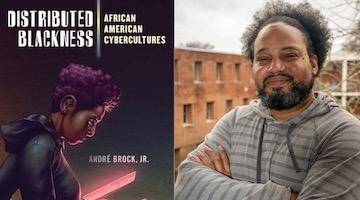 The online aggregation and coherence of Blackness online, absent Black bodies, is what inspired the author’s book.
 The very physical category of femaleness was articulated by feminists and non-feminists alike as the sole property of whiteness in the 19th century,
 Seventy years after the civil preparedness film Duck and Cover, it is long past time to reckon with the way white supremacy shaped U.S.
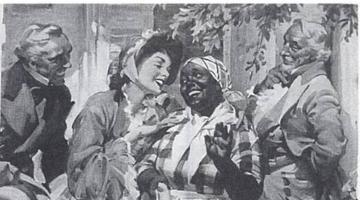 Textbooks are a battleground in which the humanity and status of black Americans are contested
 Amazon will not stop squeezing every drop from workers until those workers have more power.


