by BAR managing editor Bruce A. Dixon
I remember Fred Hampton. For the last year of his life, which was the whole time I knew him, he was Deputy Chairman of the Illinois Chapter of the Black Panther Party. Fred was a big man whose inexhaustible energy, keen insight and passionate commitment to the struggle made him seem even larger still. We called him Chairman Fred. Chairman Fred was murdered by the FBI and Chicago Police Department in the pre-dawn hours of December 4, 1969. He was just 21 years old. Fred’s family and comrades mourned him for a little while and have celebrated his life of struggle, service, intensity and sacrifice ever since.
For such a short life there is much to celebrate. A gifted communicator and natural leader, Fred was organizing other high school students at the age of 15. Though a brilliant student, Fred passed up the chance to attend some elite college, the straight road to some lucrative and prestigious career. Inspired by examples from the civil rights movement to anti-colonial struggles in Vietnam and Africa, Fred chose instead to live and work on the West Side of Chicago and devote all his talents and energies to ending the oppression of woman and man by man, helping to organize and lead the Black Panther Party in Chicago.
Chairman Fred led by example. He had high standards and challenged all those in his orbit to get up as early, to read as much, and to work and study as hard and as productively as he did. I never saw anybody meet that challenge for long, but he made us want to keep trying. Fred sought out principled critiques of his own practices, and taught us the vital role of constructing, receiving and acting on such criticism in building a sound organization.
Fred assumed a lead role in organizing the party’s Breakfast for Children program, in which we solicited donations of food and facilities and provided or recruited the labor to serve free hot breakfasts to children on the way to school in some of the city’s poorest neighborhoods where local authorities assured us that no hunger problem existed. Not long afterward the city of Chicago began using federal funds to provide hot breakfasts to children in lower income neighborhoods across the city. Fred worked with the Medical Committee for Human Rights to open the Black Panther Party’s free medical clinic on the West Side of Chicago where authorities again solemnly declared there were no shortage of such services. And again, not long afterward the Chicago Board of Health was persuaded of the need to open a network of clinics providing free and low-cost services in the city’s poorer areas.
Fred reached out to work with the Young Lords Organization in Chicago’s Puerto Rican community, and to a group of white working class youth who called themselves the Young Patriots. He made time to speak to and with student groups in high schools and colleges all over Chicago and the surrounding area. He organized community surveys to get snapshots of the actual and perceived needs of some neighborhoods. 1969 was well before the epidemics of powdered and crack cocaine put large and permanently corrupting sums of money into the hands of gang leaders. Fred was instrumental in crafting a principled approach not just to individual members but to the rank and file and leaderships of black Chicago’s two major street gangs to put aside their differences and work for the good of the entire community. His efforts met with some initial success, and earned him some extra special attention from the FBI.
There was much more, really an awful lot going on for a young man of 20 or 21, all the more amazing as most members of the organization he led were a year or two or three younger than Fred. Despite arrests and threats of imprisonment or death hanging over him, Fred persevered and challenged us to do the same. He was impatient with injustice, as the finest young people of every age always are. Fred was animated, almost consumed by a love for our people and for all of humanity and determined to do whatever it took to end the exploitation of woman and man by man.
Times do change and the mechanisms of oppression evolve into new forms. Political organizations and strategic visions crafted for the needs of one era do not make the grade in another. If Fred was alive today he’d be a grandfather in his sixties. It’s impossible to know exactly how he’d be doing but there is no doubt that Fred would still be teaching and learning and inspiring, still tirelessly organizing and struggling in the great cause of human liberation.
Chairman Fred called us to a lifetime of service to humanity. If we weren’t doing something revolutionary, Fred told us many times, we should not even bother to remember him. So, forty years on and counting, we continue to work hard to be worthy of his memory.
This is Bruce Dixon, for Black Agenda Radio. Find us on the web at www.blackagendareport.com .

 The migrant crisis in New York City is a multifaceted issue, rooted in a complex interplay of domestic and international politics and policies.
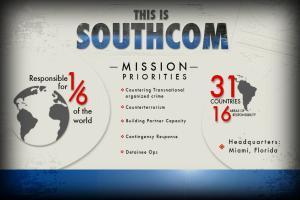 It doesn't matter if China and Caribbean nations may want to have friendly relations and economic cooperation. Washington wants nothing of the sort and undermines what could be mutually beneficial…
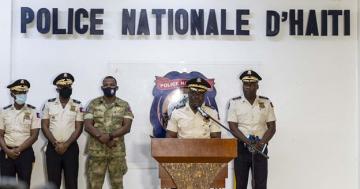 Kenya has chosen its side. That nation has agreed to give cover for the next occupation of Haiti by providing a Black face for imperialism.
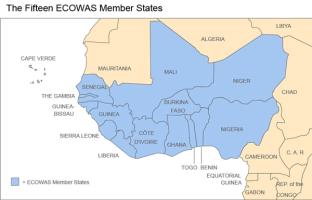 U.S. and African puppet regime threats against Niger and all African states must be condemned.
 As the U.S. and France move to interfere in the Sahel region of West Africa, Niger, Guinea and Mali have spoken up to defend their sovereign rights and declare their determination to be free from…


