 by Mohamed Hassan
Eritrea is among the targets of the U.S. imperial offensive in the Horn of Africa. Under American pressure, the United Nations Security Council imposed sanctions on Red Sea coast nation, claiming Eritrea aids fighters resisting the U.S.-backed puppet regime in Somalia. Washington’s goal is “to control the Middle East and access by Africa to the Indian Ocean.”
Who Demonizes Eritrea and Why?
by Mohamed Hassan
“Eritrea holds out against the imperialist powers to pursue an independent policy.”
The Security Council of the United Nations has voted to impose sanctions on Eritrea. This decision is based on a mendacious campaign that accuses the country of giving military support to Somali rebels. The sanctions are in truth aimed at strengthening the strategic interests of certain superpowers in the Horn of Africa. While Eritrea is unfairly paying the price for its independence, demonstrations in her support are expected throughout the world. (Source: michelcollon.info)
Thirty four minutes. That is the time it took the UN Security Council to decide on Eritrea's fate. The Council effectively passed Resolution 1907/2009 imposing sanctions on this small country in the Horn of Africa. But this decision is based on fake information and a campaign of lies waged principally by the United States, the United Kingdom and Uganda. Only China abstained, while Libya voted against.
Eritrea is accused of providing arms and ammunition to armed groups in Somalia and of maintaining conflicts with its neighbous in Ethiopia and Djibouti. It is obvious that the Security Council members who voted to impose sanctions knew nothing about the history of Eritrea nor the situation in Somalia. The Asmara government, on the other hand, has repeated endlessly to the United Nations that it has not provided arms to Somali groups. Not only does it not have the means to do this, but it has on top of that put forward proposals for the resolution of the crisis in Somalia, e.g., to open up dialogue for the purpose of reconciling all the parties involved in the country, without foreign interference.
The UN took no notice but instead accused Eritrea. But it was not Eritrea who created the problem in Somalia. It is not she who invaded that country nor violated the 1992 arms embargo. Who are those who are really responsible then (1)? None other than those who today steer the Security Council.
“It was not Eritrea who created the problem in Somalia.”
The Horn of Africa is for Washington a strategic region where it seeks to establish a military base. Its aim? To control the Middle East and access by Africa to the Indian Ocean. Ethiopia and Djibouti are on the U.S. side. But Somalia has not had a government for the last 20 years and the country has been plunged into chaos. When the Islamic Courts movement managed to bring peace to the country in 2006, the Ethiopian army, supported by Washington, invaded Mogadishu. Since then the situation has gone from bad to worse. Then there is Eritrea which holds out against the imperialist powers to pursue an independent policy.
It is precisely for this reason why it is under fire today. The Asmara government does its best, with the limited means at its disposal, to protect its people from being plundered and bullied by colonial powers. The country's economy relies mainly on a developing agriculture, and the government gives great importance to raising educational standards, while the infrastructure network is relatively well developed. In addition, the country has important deposits of gold, copper, gas and oil which have not yet been exploited. These raw materials are whetting the appetite of neo-colonial powers. But Eritrea is following its own model of development and wishes to dispose of its wealth as it considers best, to become an example for the region.
The US is seeking therefore to marginalize Eritrea. This is why they caused unfair sanctions to be imposed on this country. But the members of the Security Council ought to take into account all the facts and the evidence available in order to find a peaceful solution to the problems in the Horn of Africa. Demonstrations in Europe, the US and Australia are planned for the purpose of appealing to the Security Council to review its decision (2). The countries of Africa need peace. They don't need arms dealers, invasions or sanctions.
Mohamed Hassan is a member of the Horn of Africa Committee in Europe
Notes

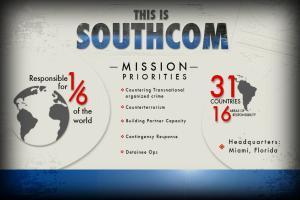 It doesn't matter if China and Caribbean nations may want to have friendly relations and economic cooperation. Washington wants nothing of the sort and undermines what could be mutually beneficial…
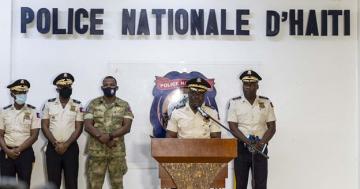 Kenya has chosen its side. That nation has agreed to give cover for the next occupation of Haiti by providing a Black face for imperialism.
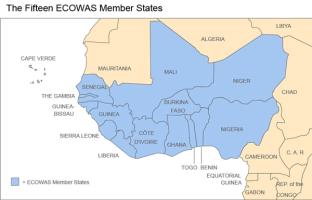 U.S. and African puppet regime threats against Niger and all African states must be condemned.
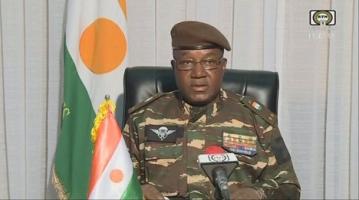 As the U.S. and France move to interfere in the Sahel region of West Africa, Niger, Guinea and Mali have spoken up to defend their sovereign rights and declare their determination to be free from…
 A hotel workers strike in California exposes anti-Black hiring practices, and the predation of the "gig" economy.


