 by Charo R. Walker
The entire African diaspora owes Haiti much more than simple gratitude for establishing the model of Black resistance to slavery and dehumanization – it owes Haiti a vigorous defense against its oppressors. “We need to let the Haitian people re-gain control, be owners of their own destiny.”
Defending Haiti
by Charo R. Walker
“If they put their hands on Haiti, they need to have to fight Africans all over the world.”
Africans born in Haiti have for too long been neglected by the wider African community. This was the underlying tenet in remarks made by Chairman Omali Yeshitela of the Black is Back Coalition for Social Justice, Peace and Reparations at the February 20th National Rally and March in Defense of Haiti, in Miami.
Since Haiti’s hard fought emergence onto the international stage in1804, Haiti has had to continually fight to preserve its existence. The United States and France, in particular, have, for decades, intervened in Haiti’s political affairs resulting in ongoing instability in that island nation. Most recently, in 2004 Haiti became occupied by United Nations forces -- MINUSTAH -- following the kidnapping of President Jean-Bertrand Aristide by the United States military.
In the wake of the January 12th catastrophe, the initial response of the United States was to step up the occupation of Haiti by deploying over 10,000 troops to bring “order” there. Along with the hurried escalation in the militarization of Haiti, non-governmental organizations have descended upon Haiti under the guise of “international aid and assistance.”
Aware of the imperial powers’ move to use the earthquake as a cover to gain total control over Africans in Haiti, the Black is Back Coalition held a National Rally and March in Miami, Florida to strengthen the voices in the African community crying out against the current and historical abuses of the Haitian people at the hands of Europe and North America.
“She was shocked and angry when she arrived at the Port-au-Prince airport and saw stacks of food just sitting there.”
Marlene Bastian, a leading Haitian activist, who spoke at the Miami rally said that she was shocked and angry when she arrived at the Port-au-Prince airport and saw stacks of food just sitting there when most Haitians hadn’t received any assistance or help. Meanwhile Haiti has become, as she described it, like a “war zone” teeming with soldiers and tanks.
“What’s going on in Haiti [the occupation] is wrong,” Bastian shouted, “we need to let the Haitian people re-gain control, be owners of their own destiny.” This is especially important as Haiti begins to re-build, she pointed out. Bastian also demanded that all countries -- the US, France, and Spain -- that owe Haiti money, give the monies back.
Kwame Afu, one of the founding members of the National Coalition of Blacks for Reparations in America (N’COBRA) challenged the crowd to recognize the problem in Haiti and the whole world; the problem of US-led White, Western, Capitalist, Imperialism.
Chairman of the Black is Back Coalition for Social Justice, Peace and Reparations, Omali Yeshitela, first, apologized to our brothers and sisters in Haiti for “getting here so late.” Haiti, he reminded us, was the vanguard for the emancipation of black people in the world and lamented that Haitians, “have been carrying this struggle by themselves for too damn long.”
“The [Haitian] people have never known a single day of peace, they have always resisted, they are resisting even at this moment. That’s why the United Nations and United States are there today,” said Chairman Yeshitela. He was quick to add, however, that all is not lost since people are now actively resisting imperial domination which is the cause of Haiti’s problems and the problems of oppressed people’s the world over.
“Haiti cannot succeed alone. Haiti is a part of the African world… If they put their hands on Haiti, they need to have to fight Africans all over the world,” declared the Chairman.
“Haiti was the vanguard for the emancipation of black people in the world.”
Though organizers had hoped for a larger turnout, the power of the mobilization was immense. As the march weaved through Little Haiti with the Pan-African flag and Haitian flag out in front, chants like “Hands Off Haiti, Hands off Our Babies!”, “US out of Port-au-Prince, Black is Back for independence!”, and “No more US troops, Pay us back our stolen loot!” bellowed in the streets.
People from the community joined the March while others, as a sign of solidarity, blew their car horns and raised clenched fists in the air.
The fact that the March had to be confined to the sidewalk because police authorities refused to grant a permit for use of the streets failed miserably in dampening the momentum.
Perhaps the most significant outcome of the rally and march was that it let our brothers and sisters born in Haiti know that we have not forgotten them; that we stand united with them and are ready to not only assist them in their time of need but to also bring pressure on the countries responsible for the naked aggression and violence there.
The mobilization has also begun the much needed process of removing the wall that separates English speaking Africans from Creole speaking Africans so that we can build a united African movement capable of restoring Haiti to its rightful place.
Charo R. Walker is a BlackFood.org News Reporter and member of the Media Committee of the Black is Back Coalition for Social Justice, Peace and Reparations.

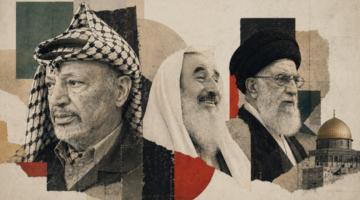 From Gaza to Tehran, from the politics of resistance to the limits of regional diplomacy, a pressing question has resurfaced amid the 2026 war: why was Palestine not explicitly placed at the center…
 In this week’s segment, we talk about the latest iterations of immigration enforcement and their connections to racist public policy, mass incarceration, and the settler colonial foundations of the…
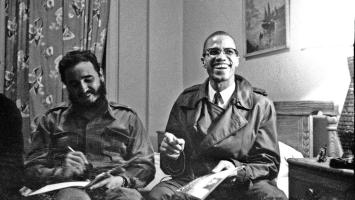 Our guest is Dr. Rosemari Mealy. She is the author of "Fidel and Malcolm: Memories of a Meeting," which analyzes the significance of the 1960 meeting between Fidel Castro and Malcolm X. She has lived…
 The Trump administration is accelerating policies meant not just to deport undocumented people, but to restrict every avenue of legal immigration from the Global South. Abraham Paulos is Deputy…
 In this episode of El Taller, hosts José Luis Granados Ceja and Kurt Hackbarth sit down with Ajamu Baraka, national organizer and spokesperson for the Black Alliance for Peace, a former vice-…


