The same fearless, insightful news media that misrepresents Wall Street's raid on the U.S. Treasury as somehow necessary to save the economy has a story to tell about how the harm to hundreds of thousands of current and retired auto workers will be minimized by incorruptible public officials and knowledgable bankruptcy judges. Only it's not true. The wages of auto workers will be permanently cut, their hours lengthened, their benefits cut. And those who worked 25 or 30 years on the line, counting on lifetime medical care and a dignified retirement have already been sold out.
Chrysler's Plan? Send Pay, Retirement Benefits and Standards Down the Drain
originally published in Labor Notes
by Larry Christensen
The media consensus is that union auto workers escaped the government-imposed restructuring of their industry basically unharmed, exchanging a few dings for control of the companies. Nothing could be further from the truth.
Chrysler retirees—like me—were assured in 2007 that our retiree health care benefits, funded through the Voluntary Employee Beneficiary Association trust, would last 80 years.
Now we lose all dental and vision coverage as of July 1, and an independent analyst says the VEBA, our entire health coverage, will last only six years.
We are supposed to be reassured by the fact that the VEBA will own 55 percent of the equity in Chrysler. But what good is owning a company after the value has been taken out? Chrysler’s former owner Daimler has already written its 20 percent stake in Chrysler down to zero on its own books.
PUNISHING WORK
The turnaround plan will bring union auto workers much closer to the level of non-union workers. It will widen the two-tier wage structure introduced in the 2007 contract, guaranteeing that auto plants will fill up with second-class, disposable jobs. All workers hired for the next six years will start at $14 an hour and remain there at least until 2015. If that wasn’t bad enough, the rules limiting use of temporary part-time workers are relaxed.
The company will keep pushing out higher-wage workers, and those with less than 20 years’ seniority will receive lesser and lesser amounts of supplemental unemployment pay. It will become harder to refuse reassignment to a distant plant.
The deal will make life on the assembly line worse. Active workers, already working at punishing speeds, will see their relief time cut back. After two hours of work they will get 13 minutes break instead of 16; after another 1.5 hours another 13 minutes rather than 16. Their attendance procedure will be more strict. Their seniority right to bid on individual jobs is canceled, replaced by only the right to change work teams.
The dates of two of their vacation weeks will be dictated by the company. No overtime premiums will be paid until the 41st hour worked in a week—in other words, 12-hour days at straight time will soon prevail, especially for skilled-trades workers.
It gets worse. The deal includes a wage freeze through 2015 and the loss of all supplemental pay such as cost-of-living adjustments, Christmas bonuses, and productivity bonuses. All of these were substitutes for what used to be, in the dim distant past, yearly 3 percent base pay raises.
Chrysler also achieved its long-sought goal of completely collapsing skilled-trades classifications into electrical and mechanical only.
FAREWELL TO THE BALLOT
But the most hateful item in the deal cancels workers’ right to decide on their own contracts until September 2015.
The 2011 contract will be decided by top-level negotiations and then, if necessary, by binding arbitration—where the arbitrator is directed to take into account the labor costs of the non-union transplant car companies in the U.S., such as Toyota.
It is an awesome thing to watch a Democratic president enforce such terms on us, while having unconditionally bailed out undeserving banks with hundreds of billions of dollars.
As Canadian Chrysler workers have said, the active workers must vote with “a cannon to their heads” thanks to the collusion of the government, companies, and banks—and a UAW leadership that leads us ever farther from the militant attitudes of those who built our union under far more difficult circumstances.

 …
… This week’s featured author is Kemi Adeyemi. Adeyemi is an Associate Professor of Gender, Women and Sexuality Studies and Director of The Black Embodiments Studio at the University of Washington.…
 Jacqueline Luqman was a panelist on the February 16, 2023 webinar Why and How to End the War in Ukraine, which was sponsored by Chicago Area Peace Action. These were her remarks.
 Ajamu Baraka argued that the Ukrainian crisis was a “manufactured crisis” primarily created by the miscalculations of policy-makers in the U.S. and Western Europe who were blinded by the prospect of…
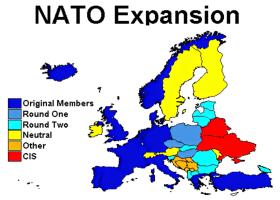 According to Dr. Gerald Horne, greed and shortsightedness convinced the U.S. that it could achieve the strategic objectives of undermining German economic power by controlling the European market,…


