Zimbabwe: Once Again, No Easy Victories
by Joseph Jordan, PhD
"We are required to speak out directly against the
violations of human rights that have marked the rule of President Robert Mugabe
over the past few years."
On 27 August 1980, I was a graduate student in African
Studies at Howard University. That particular moment was quite different and
much more significant than any other I'd experienced during my studies. I
waited impatiently, along with many others who had also pushed and clamored for
space in the auditorium. Finally, the source of our excitement took the stage.
Prime Minister Robert Mugabe, leader of the Zimbabwe African National
Union-Patriotic Front (ZANU-PF) and the newly independent nation of Zimbabwe
arrived and received a standing ovation as he approached the dais. But he drew
the most enthusiastic response when he noted that Black Americans had supported
and worked for the freedom of Zimbabwe. He followed that pronouncement with
words I have never forgotten: "Come home, therefore".
In one movement all in attendance
jumped to their feet and the shouts and cheers were deafening. Mugabe was at
home with his extended family and, in our eyes, he was a hero.
Now, almost 27 years later, Mugabe and his
ZANU-PF party still rule Zimbabwe, but
much of the gloss of the revolutionary struggle has long been dulled by the
difficult work of nation-building and by troubling news of increasing
government repression and intolerance of dissent. Out of Zimbabwe's struggle a
new nation and national identity has been established, ostensibly on the rule
of law and on the idea of the inviolability of the human rights of its people.
Today, however, even the most stalwart supporter of Zimbabwe's government
should be compelled to speak out given the latest evidence and reports of
unprovoked violence on the part of its police and the military.
"In our
eyes back in 1980, Mugabe was a hero."
Mugabe's and ZANU-PF ‘s rule and leadership
recalls the old question of succession in the African state and the tendency,
in some cases, for rulers to cling to power long after their leadership has
been shown to be ineffective. Disturbing and credible reports continue to pour
in from human rights agencies that have monitored the day to day situation in
Zimbabwe. Those reports highlight random beatings and intimidation of persons
who are members of, or suspected members of, the opposition.
Many have been reluctant to criticize Mugabe and
argue that old enemies in the country and western nations long dissatisfied
with the path Zimbabwe has taken are the source of most of the criticism. Yet
the evidence is mounting and has, for at least the last year, been clear and
unequivocal.
Most will certainly point to conclusions of the
special emergency summit by the Southern African Development Community (SADC), a 14-nation regional alliance of which
Zimbabwe is a member, reached in March in Tanzania. The communiqué from the
summit rebuffed the most radical calls for Mugabe's ouster and directed President
Thabo Mbeki of South Africa to continue to mediate between Mugabe and
opposition forces.

Yet, Philip Alston, a United Nations
Special Rapporteur joined the growing list of human rights officials to call
Mugabe to task. He called on Zimbabwe's government to immediately halt the use
of lethal forces on members of opposition forces. Alston
identifies several specific
cases: "the killing of Gift Tandare, and the shooting of Nickson
Magondo and Naison Mashambanhaka at point blank range." He states, "Mugabe owes the Zimbabwean
people a speedy and impartial inquiry into these and other instances of violence
and intimidation." Morgan Tsvangirai, leader of the opposition Movement for
Democratic Change (MDC) and a recent victim of in a police beating, has
announced his support for Mbeki's mediation and has indicated willingness to
trust his leadership.
"The Zimbabwe Congress of Trade Unions (ZCTU) has begun
to organize mass stay-aways of workers to bring more pressure on the
government."
Another test for Mugabe and ZANU-PF looms ahead as the
Zimbabwe Congress of Trade Unions (ZCTU) has begun to organize mass stay-aways
of workers to bring more pressure on the government to address wage and other
issues. These actions are likely to further test the already strained relations
between the government and civil society.
What is the appropriate response of the solidarity
community? What responsibility do we have, and to what historical processes do
we tie our response?
First, we must be sure that our response should be a measured one that
acknowledges the difficulty of the transition to stability after centuries of
colonial rule. Second, we must recognize
that we have a greater responsibility to honor our covenant with the people of
Zimbabwe.
It is these articles of faith that require us to
speak out directly against the violations of human rights that have marked the
rule of President Robert Mugabe over the past few years.
Perhaps it was our fault that we did not maintain the
intensity of contact first established during those long years of the armed
struggle. Maybe we could have been more materially involved. It would be easy to dismiss our critique as
misguided at best, and complicit with western (i.e., US, Great Britain) powers
that have long shown disdain for Mugabe's rule. Neither of these is as
important as the protection of the rights of Zimbabwe's people.
It would be both unethical and disastrous to remain
silent. As responsible and committed
activists we must press ZANU-PF and President Robert Mugabe to restore the full
protection of all agencies of government to all of Zimbabwe's people without
qualification. If we remain silent we break
the covenant we entered 27 years ago in a small auditorium in Washington, D.C.
Dr. Joseph Jordan is Senior Policy Advisor, TransAfrica
Forum and Director of the Sonja Haynes
Stone Center for Black Culture and History at the University of
North Carolina at Chapel Hill.
To contact Dr. Jordan, email Joia Jefferson Nuri at jnuri@transafricaforum.org.

 Proposed changes to 2030 Census questions on race and ethnicity would improve fairness and accuracy.
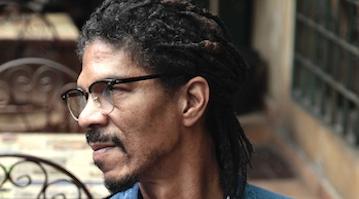 Kevin Alexander Gray was a contributor and good friend to the Black Agenda Report team. His passing is a huge loss to BAR, and to the Black liberation movement.
 A human cause of covid-19 is possible, but anti-China rhetoric is war propaganda, not scientific evidence.
 An inspiring interview with Sylvia Woods highlights the role of Black women in labor organizing and demonstrates that Black women should always be at the forefront.
 History teaches that the greatest threat to peace today is the United States. No other nation creates dangers as great as those emanating from the U.S. commitment to the doctrine of Full…


