A Black Agenda Radio commentary by executive editor Glen Ford The conviction of eight Black South African policemen in the grizzly murder of a Black cab driver represents a break from the culture of impunity that surrounds the cops. South Africa’s police are deeply implicated in government corruption, political assassinations of poor people’s and labor organizers, riots against foreign workers, and the massacre of 34 miners, at Marikana, three years ago.
A Rare Conviction of Killer Cops in South Africa A Black Agenda Radio commentary by executive editor Glen Ford A South African court found eight Black policemen guilty of murdering a Mozambican taxi driver by handcuffing him to a police van and dragging him two hundred yards behind the vehicle. Then, the cops beat the already badly injured man to death at the police station.
A cell phone camera video of the dragging of the victim, Mido Macia, went viral on the internet, back in February of 2013. The grizzly crime is reminiscent of the murder of James Byrd, Jr., by three white racists in Jasper, Texas, in 1998. Byrd was tied to a pickup truck by his ankles and dragged three miles to his death on a country road. One of the Texas racists was executed.
The murder convictions of the eight South African police are unusual – as they would be in the United States – because South African cops also operate under a culture of impunity. Just six months before Mido Macia was killed by cops in the city of Daveyton , east of Johannesburg, police massacred 34 workers on strike against a platinum mine at Marikana, ushering in a new phase of opposition to the increasingly corrupt and brutal African National Congress regime. Those killings were also caught on camera, but none of the cops has been punished, and a government commission of inquiry into the August 2012 Marikana bloodbath concludes only that the police acted on a “defective” plan, but that they murdered no one.
“Political assassinations of labor and poor people’s organizers are common.”
South African police are as feared, today, as under the apartheid regime that slipped into history in 1994. And, just as under white rule, the main victims of police violence are the poor and powerless. The South African police now serve the Black-led ruling party, the ANC. Therefore, not only do they protect the interests of the wealthy corporations that still dominate the economic life of the nation, the police are also the enforcers of the African National Congress’s public services patronage system. The ruling party’s critics say desperately needed housing, utilities and other government services are distributed on the basis of loyalty to the ANC. This has contributed to South Africa being widely described as the “protest capital of the world ,” with the highest levels and frequency of protests – thousands of demonstrations every month, most of them involving demands for housing and other basic services.
Political assassinations of labor and poor people’s organizers are common, in South Africa. Many activists suspect the police are directly implicated in the killings and cover-ups. In recent years, the police have often tolerated or encouraged mob attacks against Africans from elsewhere in the continent, especially Zimbabweans and workers from neighboring Mozambique, like Mr. Macia, the murdered taxi cab driver. The violence against African foreigners is a sad irony, since not so long ago the white regime considered all Black people in South Africa to be foreigners, with no rights of citizenship and no protection from civilian or police violence.
For Black Agenda Radio, I’m Glen Ford. On the web, go to BlackAgendaReport.com.

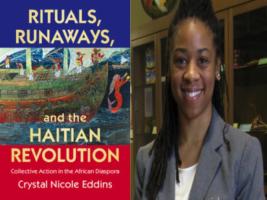 In this series, we ask acclaimed authors to answer five questions about their book. This week’s featured author is Crystal Eddins. Eddins is Assistant Professor of Africana Studies at UNC Charlotte.…
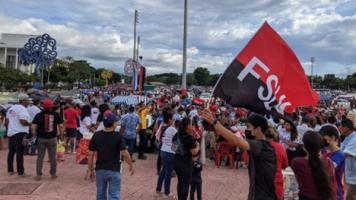 Genuine peoples holidays are hard to come by in the U.S. But in Nicaragua the ongoing revolutionary process is widely celebrated.
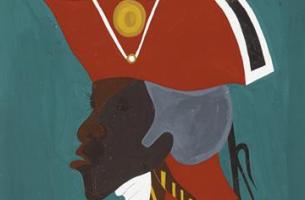 In 1929, Black radical Cyril Briggs penned an essay on Toussaint L’Ouverture and the Haitian Revolution. For Briggs, both provided inspiration for the fight against the U.S. occupation of Haiti. We…
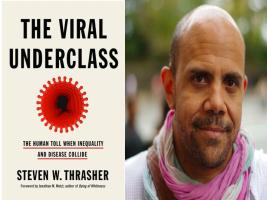 This week’s featured author is Steven W. Thrasher. Thrasher holds the inaugural Daniel H. Renberg chair at Northwestern University’s Medill School, the first journalism professorship in the world…
 The ineffective and unpopular UN Mission to Haiti must end.


