A Black Agenda Radio commentary by executive editor Glen Ford Malcolm X “made it legitimate and virtuous to engage in full-throated, soul searching, icon-searing debate” about the internal workings of the Black American polity, setting the stage for the most productive decade in African American history. He “wielded his ‘House Negro’ analogy like a sword, shaming and delegitimizing those Blacks who indentify with and serve oppressive institutions.”
Malcolm X Would Wage Righteous Struggle Against Black America’s “House Negro” Leaders A Black Agenda Radio commentary by executive editor Glen Ford “Malcolm broke with the taboos against criticizing Black leadership within ear or eye range of white people.”
Malcolm X would have been 90 years old on Tuesday if he had not been assassinated at the age of 39, on February 21, 1965. His impact on Black America, the African Diaspora, and on human history, is inestimable, but I believe Brother Malcolm’s greatest contribution to the struggle for human dignity lay in his unrelenting critique of the political structures and behavior of Black America. Malcolm X made it legitimate and virtuous to engage in full-throated, soul searching, icon-searing debate about the past, present and future of those who were then called Negroes. Most importantly, he did not give a damn if white people heard all the Black-on-Black commotion, or not – because they were not his audience, even when his arguments were broadcast
Malcolm broke with the taboos against criticizing Black leadership within ear or eye range of white people, which in the late Fifties and early Sixties was viewed as airing dirty linen in public. Malcolm’s position was that many of these Black leaders were actually creatures of the white power structure and its media. He questioned their loyalties and very legitimacy, and challenged Black folks to choose their own leaders, who would fight uncompromisingly for Black interests.
Malcolm took on the so-called “Big Six” – the NAACP, the National Urban League, CORE, SNCC, Dr. Martin Luther King’s SCLC, and the legendary A. Philip Randolph – who had gained the cooperation of the Kennedy administration to hold the 1963 March on Washington. Malcolm was not impressed. He called it the “Farce on Washington cream in the coffee
“He questioned their loyalties and very legitimacy.”
There is no doubt that Malcolm was a Race Man. But, when it came to his analysis of Black America, he was a “class” man, too. His elevation of the “Field Negro” over the fawning, obsequious “House Negro burning house
What would Malcolm say, if he were returned to us? His critique would begin with the present sorry state of the Black America, where the House Negro has held sway for the past two generations, with disastrous results. But he would also hear the voices of his great grandchildren stirring among the Field Negroes of Ferguson and Baltimore, and he would say
For Black Agenda Radio, I’m Glen Ford. On the web, go to BlackAgendaReport.com.

 The following is a manifesto in the full sense of the word; a Black anarchist’s proposal for a sweeping approach to a nation and world without capitalism.
 The US bid for sanctions against Eritrea was rebuked by the UN Security Council, so the imperial bloc had to settle for European sanctions against the fiercely independent African government.
 $13 billion aircraft carriers, $10 pencils and $500 hammers, renamed “portable hand-held transcribing devices” and “impact fasteners;” so war-profiteer pimps—war
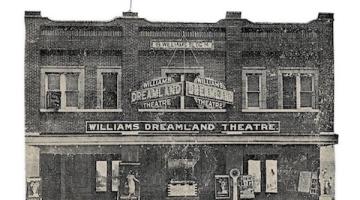 In 1921 thousands of whites attacked the Black population of Tulsa, Oklahoma with machine guns, airplanes, fire and pure hatred, killing at least 300.
 More policing rarely results in justice for anyone, and only puts Black, Indigenous, and other communities of color (BIPOC), including Asian people, at risk for more violence.



