A Black Agenda Radio commentary by executive editor Glen Ford
The New York Times cannot serve the truth and Power, too – so truth is jettisoned. While Barack Obama’s team deployed its imperial powers to help eject Egypt’s elected president from office, “the Times depicted the Obama administration as totally unruffled by the turmoil in Cairo – as if the U.S. had little stake in the outcome.”
The U.S. was a Passive Observer in Egypt – If You Believe the New York Times
A Black Agenda Radio commentary by executive editor Glen Ford
“Susan Rice advised him that the coup was about to begin.”
One consumes U.S. corporate media at the risk of one’s sanity. Schizophrenia, for example, appears to be the permanent mental state at the New York Times , which cannot figure out which global reality is operative on any given day. Last week, the Times almost simultaneously painted a picture of two different and contradictory worlds – or, at least, two very different Obama administrations. On Friday, June 5, in the wake of the military coup against Egyptian President Mohamed Morsi, the Times depicted the Obama administration as totally unruffled by the turmoil in Cairo – as if the U.S. had little stake in the outcome. The Times headline proclaimed
By Saturday, July 6, the article had been replaced
Morsi rejected the offer. His top foreign policy advisor stepped out of the room to call the U.S. ambassador to Egypt, Anne Patterson, and tell her so. But, when he came back, he said he’d been on the phone with Susan Rice, Obama’s national security advisor, in Washington, who advised him that the coup was about to begin.
“If there are contradictions in the narrative, they can always be papered over with more lies in the next edition. ”
So, of course, the U.S. was deeply involved in the events that were swirling in Cairo – it would have been bizarre beyond belief if the superpower had, indeed, been “ambivalent” or “aloof” about the fate of the Arab world’s most populous country. What is amazing, is the ability of an organization as large as the New York Times to accommodate two opposite realities within its own pages, and pass off both as the truth, without shame or even visible embarrassment.
The New York Times and its corporate colleagues are not in the business of providing reliable information, but of rationalizing and sanitizing the behavior of those in power. If there are contradictions in the narrative, they can always be papered over with more lies in the next edition.
However, the lies told by the Times and its ilk cannot alter the reality of U.S. decline; they can only make Americans oblivious to the facts. The United States will get the kind of civilian front men it wants in Egypt: international corporate citizens like economist el-Hazem Beblawy, as interim prime minister, and Mohamed ElBaradei, the darling of the global rich, as a vice president. But the U.S. is also now dependent on Muslim fundamentalists as the foot soldiers of imperialism in Syria and North Africa, even as it double-crossed its Muslim Brotherhood friend, former president Morsi. And the Arab royals of the Persian Gulf have their own plans for the region. The superpower isn’t as super as it used to be – but you won’t find out why in the New York Times .
For Black Agenda Radio, I’m Glen Ford. On the web, go to BlackAgendaReport.com.
BAR executive editor Glen Ford can be contacted at Glen.Ford@BlackAgendaReport.com .

 This week’s featured authors are Alyosha Goldstein and Simón Ventura Trujillo. Goldstein is Professor of American Studies at the University of New Mexico. Trujillo is Assistant Professor in the…
 The ongoing conflict in Ethiopia's Tigray region has been fueled by support from the United States. It is yet another proxy war which has brough great suffering to thousands of people.
 Had it been fully implemented the Hawkins-Humphrey full employment bill would have been a boon to U.S. workers. Any talk of reviving it is now moot, as the industrial economy of the 1970s has been…
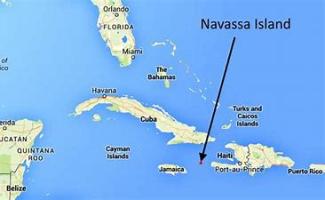 The U.S. mined a million tons of guano on a Haitian island without paying a cent to the Haitian authorities. Other countries have sold the product for hundreds of millions of dollars.
 The late Nehanda Abiodun was an African American revolutionary who exemplified the movement to end national oppression and the criminalization of a people.


