by BAR managing editor Bruce A. Dixon
News reports this week tell us that African Union peacekeeping troops are on the way to the Central African Republic. But why are more men with guns the only aid African nations seem willing or able to offer one another? Why not doctors and medical schools, why not farming cooperatives, teachers and schools? And why is the US equipping and training the armies of more than 50 African nations?
Are African Union Peacekeeping Troops Really The Answer?
by BAR managing editor Bruce A. Dixon
Back in the late 1970s and early 80s, in Nicaragua, Mozambique and Angola, Uncle Sam unveiled one of the era's most potent weapons of mass destruction against local revolutions in poor and underdeveloped nations. In Nicaragua they called themselves “contras” the counter-revolutionary army. The US supplied and equipped contras avoided combat with the national army, instead focused exclusively on raiding day care centers, schools, farmers' markets, health care facilities, irrigation, water and power works --- classic terrorism calculated to make ordinary economic and social life, and national development impossible.
In Mozambique and Angola, Africans had thrown off brutal Portuguese colonial rule, and were engaged in a regional war of resistance against the apartheid regime of South Africa. There the US supplied and equipped contra armies of RENAMO and UNITA followed the same brutal, cowardly course, and introduced a new wrinkle. They kidnapped children, and after forcing them to watch their parents, siblings and neighbors put to death, used them as child soldiers in wide-ranging terror campaigns that depopulated large areas of the countryside.
When the apartheid regime of South Africa fell in the 1990s, these forces lost their outside suppliers and were forced to come to the negotiating table. But the ghastly precedents had been set. In the 1980s Yoweri Museveni shot his way to power in Uganda with an army that included child soldiers, which were also seen in the 1990s Liberian civil war and other places. Both sides in the Rwandan civil war used child soldiers, and by the late 1990s an ever-shifting cast of local militia groups, sometimes fighting with and sometimes against the armies of Rwanda, Uganda, Angola, Kenya, Burundi, Namibia and Zimbabwe virtually depopulated the Eastern Democratic Republic of Congo, killing seven million people since 1996, while ensuring that the country's raw materials, its timber, gold, diamonds and coltan, the strategic mineral used in every computer, aircraft and cell phone on earth, continued to flow mostly to the West.
And what is the Western-administered cure for the scourge of nameless militias of brutalized child soldiers? It's more men with guns, actual grownups and better trained --- peacekeeping forces of the African Union, airlifted and supplied by the masters of disaster, the same United States that trains the military of every African country except Libya and Eritrea.
You see the problem here. Men, and sometimes children with guns can start or stop a civil war. But economies and societies are built with teachers, with health care workers, by engineers, artists, and construction workers. The African Union is sending peacekeeping troops this week to the Central African Republic, but it can't send the teachers, the health care workers, the engineers and such to build hospitals or medical schools or to usher in universal free public education and health care,in the Central African Republic. The African Union can't do this for the Central African Republic because they can't do it in their own countries either --- their own governments are devoted mostly to extracting resources, rent and debt payments from their own lands and people to the west, and their outsize military establishments trained by the US are the guarantors of that anti-social contract.
Until the African Union and its member states are free enough themselves to send not just men with guns to places like the Central African Republic, but the doctors, teachers, artists and engineers it takes to build vibrant civil societies in the places that need them most, it fails to fulfill the reason for its existence.
For Black Agenda Radio, I'm Bruce Dixon. Find us on the web at www.blackagendareport.com.
Bruce A. Dixon is managing editor at Black Agenda Report. He lives and works near Marietta GA and is a member of the state committee of the Georgia Green Party. He can be reached via this site's contact page, or at bruce.dixon@blackagendareport.com.

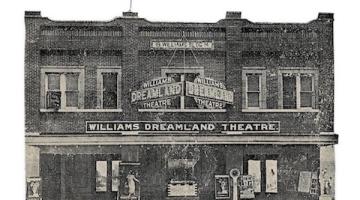 In 1921 thousands of whites attacked the Black population of Tulsa, Oklahoma with machine guns, airplanes, fire and pure hatred, killing at least 300.
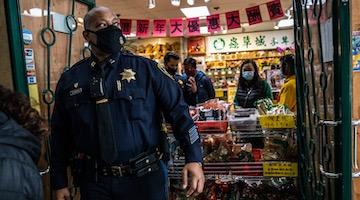 More policing rarely results in justice for anyone, and only puts Black, Indigenous, and other communities of color (BIPOC), including Asian people, at risk for more violence.
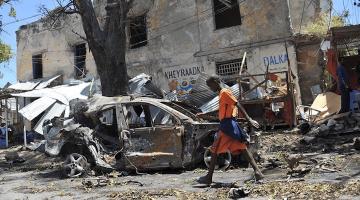 “Bombing Somali civilians is one of AFRICOM’s main projects,” writes Mohamed Haji Ingiriis, a young Somali historian.
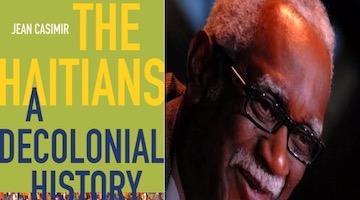 The worldview animating Haitian masses today is leading to a social context ungovernable within the framework of prevailing economic neo-liberalism.
 This book challenges the myth that 1994 was the turning point in South Africa -- because the liberation process is unfinished.


