A Black Agenda Radio commentary by Bruce A. Dixon Comedian Lily Tomlin once said that no matter how cynical you get, it's impossible to keep up. CNN's latest installment of “Black In America” with its focus on the “tragic mulatto” proves her right. CNN's version of history erases the actual origin of North America's “one drop rule.”
CNN's Black In America: What Happens When Popeye's Teaches Chickens History & Current Events A Black Agenda Radio commentary by Bruce A. Dixon Letting CNN explain to us what it means to be black in America is about as smart as chickens choosing Popeye's to teach their history. To nobody's surprise, the latest installment of CNN's “ Black in America” spoke more to white perceptions of blackness and black history than it did to actual black experiences. This episode's focus on what Zora Neale Hurston called “the tragic mulatto” revisits what's always been chiefly a white obsession, rather than any central fact of African American life, and offers a fake history of the origin of the so-called “one drop rule” which makes anybody with detectable African ancestry in the US considered black.
The one-drop rule's actual origins go back to the 1600s. The slave trade was carried on wind powered sailing ships coming mostly from West Africa and Angola. The shortest hop with the prevailing winds was to Brazil, where 40% of those surviving the Middle Passage landed. The West Indies were a short trip as well. Slaves were so plentiful and cheap from Brazil to St. Kitts to Jamaica and Haiti that masters found it economical to work them to death in 3 to 5 years and buy new ones, which they did for 3 centuries.
But the slave ports of North America were a much longer journey, and against the wind. So many slaves and crewmen perished that few slave ships even tried to make it directly here from Africa. Scholars estimate that only 4 or 5% of Africans taken from the continent made it to North America, and half those were dropped in the West Indies to recuperate and brought here later. Consequently slaves in North America were too expensive to be worked to death every few years; slavemasters in places like colonial Virginia needed a self-reproducing slave population. Unlike Brazilian and West Indian slavemasters who often gave privileges and sometimes freedom to the children they made upon slave women, North American slavemasters from the mid-1600s began enforcing a one-drop rule so they could profit from the sale of their own children whom they made upon enslaved African women.
Thus the one-drop rule, was a legal doctrine in the great North American tradition, to safeguard the ruling class's investments in enslaved human capital. Unlike the Caribbean, light-skinned descendants of Africans didn't necessarily get any special privileges here. Mistresses distressed at the sight of pickaninnies who looked like their husbands, brothers, fathers and overseers typically separated them from their mothers and sold them away.
There were many Haitians who took the wrong side in the revolution and the struggles immediately afterward, who fled to New Orleans. Most of them were light-skinned and brought their sense of entitlement with them. But their experience and their influence though significant, was and has been the exception for the black experience in the United States, not the rule.
By failing to mention, let alone examine the origin of the one-drop rule, CNN's programming on its effects and ramifications fails to pass any reasonable test for historical accuracy or relevance to life as it's lived by most of us in black America. But what can you expect when you rely on Popeye to teach chickens history and current events?
For Black Agenda Radio, I'm Bruce Dixon. Find us on the web at www.blackagendareport.com .
Bruce A. Dixon is managing editor at Black Agenda Report, and a member of the state committee of the Georgia Green Party. Contact him via this site's contact page or at bruce.dixon(at)blackagendareport.com.

 Three years into Israel's genocide in Gaza, the consequences of a decision driven by siege, settlement expansion, and assaults on Al-Aqsa are still unfolding.
 In this week’s segment we hear about the right-wing politics of the anti-migrant movement in South Africa, ANC failures, and upcoming elections in that country. But we begin with the first and only…
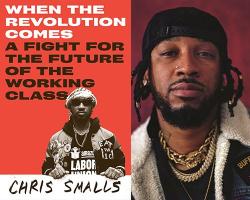 Chris Smalls discusses his memoir, "When the Revolution Comes: A Fight for the Future of the Working Class," published by Penguin Random House. He is the first and only union leader to successfully…
 Our guest is Nairobi based political writer and strategist Clinton Nzala. He joins us to provide an update and an analysis of the South African anti-migrant March and March movement, which is…
 The Hague Group’s goal is to “. . . take coordinated legal and diplomatic measures against Israel’s violations of international law.” But international law was never a reality.


