A Black Agenda Radio commentary by Glen Ford
After ten years of escalating police aggression on the streets of New York, a broad range of political actors have combined for a Silent March Against Racial Profiling, this Sunday. Under Mayor Bloomberg’s stop-and-frisk regime, “every young Black and brown man in New York is treated as if he is walking contraband, and that he is ‘too hot’ to allow to walk about freely.” In practice, the policy is little different from racist South Africa’s apartheid pass system.
A “Silent March” Against the Police Stop-and-Frisk State
A Black Agenda Radio commentary by Glen Ford
“There is little to distinguish the daily racial regime in New York City from the apartheid pass system of white ruled South Africa.”
Before 9/11, it seemed that racial profiling was on the rocks. After years of successful litigation and agitation, it was no longer acceptable in polite white society to defend police departments that accosted Black drivers and pedestrians for no legally justifiable reason. Prominent Republican politicians denounced racial profiling in no uncertain terms. Then, the Twin Towers came down, the Constitution flew out the window, and racial profiling became the de facto law of the land, once again. Arab-looking people – whatever that means – caught hell like they had never before experienced on the streets of the United States. But, in hindsight, we now know that the return of aggressive and unapologetic racial profiling had its heaviest impact on…the usual suspects: Black people.
The fabulously wealthy Michael Bloomberg won election as mayor of New York just two months after September 11th, and immediately declared that Black and brown pedestrians had no rights that his police were bound to respect. In 2002, Bloomberg’s cops scooped up a little less than 100,000 people. Last year, the total was almost 700,000. In practice, there is little to distinguish the daily racial regime in New York City from the apartheid pass system of white ruled South Africa, where non-whites were made to produce identification papers to justify their presence in those areas of the country designated for whites. Apparently, under Mayor Bloomberg, all of New York City is white people’s territory, because Black and brown folks are stopped for no good reason in every section of town.
“Bloomberg declared that Black and brown pedestrians had no rights that his police were bound to respect.”
Mayor Bloomberg last Sunday delivered his first speech in ten years dedicated solely to explaining his stop-and-frisk policies. Bloomberg chose a Black Baptist Church in Brownsville, Brooklyn. Back in the early years of the 20th century, Brownsville was nearly 100 percent Jewish, and registered the highest murder rate in the city. Today, Bloomberg and his flunkies like to claim that there’s a kind of “silent majority” of Black folks, especially in high crime areas, that support routine police violations of African American civil and human rights. But there’s little evidence of that. Instead, the broad-based makeup of this coming Sunday’s Silent March Against Racial Profiling, starting in Harlem, demonstrates that even the more passive and malleable elements of the Black misleadership class – such as the NAACP and the easily bought Rev. Al Sharpton – feel compelled to raise the banner against stop-and-frisk.
Mayor Bloomberg defended his perpetual, race-based police dragnets as a form of preventive policing, similar to preventive war. Although relatively few guns have been confiscated over the years, Bloomberg insists that’s because guns have become “too hot to carry.” What that really means, of course, is that every young Black and brown man in New York is treated as if he is walking contraband, and that he is “too hot” to allow to walk about freely. He is the crime, about to happen.
And, isn’t that always the story, in the U.S.A. White people always claim that their crimes against Black people are defensive in nature. Who knows what chaos might break out if Black people were really free.
For Black Agenda Radio, I’m Glen Ford. On the web, go to BlackAgendaReport.com.
BAR executive editor Glen Ford can be contacted at Glen.Ford@BlackAgendaReport.com.

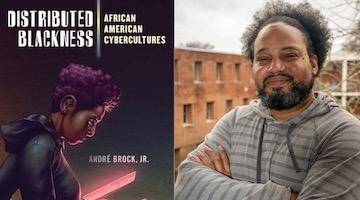 The online aggregation and coherence of Blackness online, absent Black bodies, is what inspired the author’s book.
 The very physical category of femaleness was articulated by feminists and non-feminists alike as the sole property of whiteness in the 19th century,
 Seventy years after the civil preparedness film Duck and Cover, it is long past time to reckon with the way white supremacy shaped U.S.
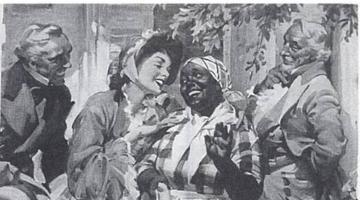 Textbooks are a battleground in which the humanity and status of black Americans are contested
 Amazon will not stop squeezing every drop from workers until those workers have more power.


