A Black Agenda Radio commentary by BAR editor and columnist Jared Ball
Mumia Abu Jamal’s life and work is testament to the need to put political prisoners at the top of the agendas of movements for change. “Political prisoners have much experience with the legal system, the police, the entire apparatus of surveillance and incarceration, all of which is essential knowledge for those now entering political activism for the first time.” Besides, “We wouldn’t do half bad by replacing some of the Dysons, Simmons and Sharptons with folks like Ashanti Alston, Mutulu Shakur and Russell ‘Maroon’ Shoats.”
Political Prisoners: Lessons for Occupationists and Us All
A Black Agenda Radio commentary by BAR editor and columnist Jared Ball
“We need to encourage a renewed focus on the politically incarcerated because we are likely to see those ranks increase.”
After this week's rally
There are at least three reasons for aggressively including the politically incarcerated: 1) Their experience, 2) their analysis and 3) the standard they establish for the rest of us. Their experience as conscious actors for liberation, as activists, journalists and soldiers needs to be studied and incorporated by the emerging campaigners in and out of these occupations. Their analyses having gone through decades of political struggle can only help shape the evolving activities here and around the world. And as long as they remain locked up political prisoners serve as permanent reminders of an absence of real change. Especially now as the current president worsens denying
To the first point, political prisoners have tremendous reservoirs of knowledge regarding struggle with the state. They have decades worth of time to reflect on their successes and failures, on what did and did not work and why. Political prisoners have as much experience with the legal system, the police, the entire apparatus of surveillance and incarceration, all of which is essential knowledge for those now entering political activism for the first time. Mumia has himself penned a number of books, including a recent one dealing particularly with jailhouse lawyering
“As long as they remain locked up political prisoners serve as permanent reminders of an absence of real change.”
Secondly, the analyses that come out of all this experience are essential. Who better to guide us through the web of radical thought and organization than political prisoners? Who better than they to offer guidance in grappling – on an organizational level – with issues of race, class, gender, sexuality and radical implementation of radical theories? And especially for this still largely White occupation effort, there is simply no reason for people like Michael Moore and Naomi Klein to speak on their behalf while Claude Marks, David Gilbert and Laura Whitehorn are still here. And while these folks should and do speak to the rest of us we wouldn’t do half bad by replacing some of the Dysons, Simmons and Sharptons with folks like Ashanti Alston, Mutulu Shakur and Russell “Maroon” Shoats.
And again, lastly, their standard of commitment, action, study and continued incarceration allows political prisoners to serve even further as liberation guideposts. Let theirs be the standard upon which we determine success and upon which we judge ours or their actions. And let their lack of freedom be genuine reminders of our own.
So even in death former political prisoner Safiya Bukhari
For Black Agenda Radio, I’m Jared Ball. On the web find us at BlackAgendaReport.com.
Dr. Jared A. Ball is the author of I Mix What I Like! A Mixtape Manifesto and is an associate professor of communication studies at Morgan State University in Baltimore, MD. He can be reached via IMIXWHATILIKE.ORG .

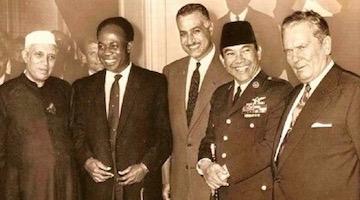 Following up a yearlong, citywide study of the works of WEB Dubois, the Philadelphia Saturday Free School kicks off “The Year of Gandhi,” June 14 and 15, at the Church of the Advocate.
 The premier organization pushing for Black reparations holds its 30th annual convention, June 20 – 23, in Detroit. HR 40, the House Reparations Study bill, now has a companion measure in the U.S.
 "As the state has been hollowed out as a result of neoliberalization - who is going to suffer the most?
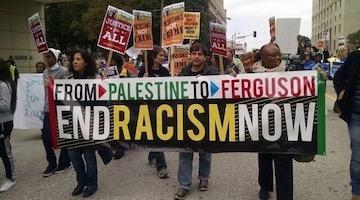 Alicia Garza and her crew conducted what they claim is the biggest survey of Black political opinion ever -- but failed to ask a single question about foreign policy.
 If the British really oppose Trump’s policies they should dump their own government, which backs Washington to the hilt – and then they should apologize to the world for Britain’s crimes.



