A Black Agenda Radio commentary by Glen Ford
The Pentagon has methodically insulated its wars from most of U.S. civil society. “For the United States, war has devolved to a matter of contracts, a multi-trillion dollar cash cow for corporations, a self-perpetuating financial bubble that feeds the planet’s most dangerous and nonproductive, useless classes.” The mercenary is the ideal corporate warrior.
Obama Continues to Privatize America's Imperial Wars
A Black Agenda Radio commentary by Glen Ford
“The mercenary war is a simple commercial transaction – a private affair between employee and management.”
It is now beyond question that civilian military contractors – mercenaries – are permanently embedded in the structure and longterm planning of the United States Armed Forces. In recent years, about half the U.S. personnel in the combined South Asia theaters of war – Afghanistan and Pakistan – have been civilians, according to Pentagon figures. The one-to-one ratio of military to civilians – a percentage that would have been unthinkable prior to the invasion of Iraq – may become even more lopsidedly mercenary with President Obama’s troop escalation in Afghanistan. The Congressional Research Service estimates that as many as 56,000 civilian contractors may accompany the 30,000 uniformed troops scheduled for deployment to Afghanistan. That’s a ratio of almost two-to-one civilian to military. The Afghanistan/Pakistan theater has become the modern world’s first large scale corporate/civilian war.
The official statistics on civilians in the war zones do not include covert operations, or “black ops,” which have been steadily increasing since President Obama took office, especially in Pakistan. The Pakistani military is extremely sensitive to the influx of thousands of American mercenaries. Much of the Pakistani press and public believe the Americans are sneaking in mercenaries to threaten the Pakistani state and seize its nuclear arsenal, which is likely one reason the Pakistanis have systematically delayed the processing of American travel documents. The mercenary outfit formerly known as Blackwater is one of the most hated names in Pakistan.
For the United States, war has devolved to a matter of contracts, a multi-trillion dollar cash cow for corporations, a self-perpetuating financial bubble that feeds the planet’s most dangerous and nonproductive, useless classes.
“Those who are most likely to be killed in U.S. wars are from families and towns that are least likely to complain.”
Ever since the near disintegration of the U.S. military in Vietnam, the rulers of the United States have schemed to make war an activity that directly touches only a small proportion of the population. In 1972, the all-volunteer system made it possible for the Pentagon to socially engineer the demographics of the military. In the post-9/11 era, as any viewer of PBS News Hour can observe, the troops most likely to die are small town whites and Latinos – demographics that are not prone to political protest and, at any rate, wield little power in American society. To put it bluntly, those who are most likely to be killed in U.S. wars are from families and towns that are least likely to complain, and are in no positioned to protest effectively, anyway. Recent brown immigrants and white kids from nowheresville are precious to the Pentagon precisely because they present so few political problems.
Mercenaries are even better – ideal. The vast majority have already been trained in the combat arms. They are separate from the military chain of command, which can always disavow their crimes with no prejudice to the honor of the uniformed services. Most importantly, the mercenary war is a simple commercial transaction – a private affair between employee and management, and none of the general public's business. Notions of democracy, shared national culpability, citizen's obligations to one another and to the human species – none of this enters the equation in corporate war-making. It is pure killing for profit – or pure profit for killing – on an industrial scale.
BAR executive editor Glen Ford can be contacted at Glen.Ford@BlackAgendaReport.com.

 Revisiting a powerful account of the psychology of colonialism and neocolonialism by Haiti’s Jean Price-Mars.
 A Belly of the Beast documentary follows Afro-Cuban journalist Liz Oliva Fernández as she explores the Cuban American community and its relation to the long-running embargo on her country.
 "Hey, Mr. Tangerine Man…" is the latest from BAR's Poet-in-Residence.
 The international liberation struggles of colonized people in nations like Haiti, Palestine, as well as Indigenous nations on land stolen by the U.S., are inextricably linked to the struggle for the…
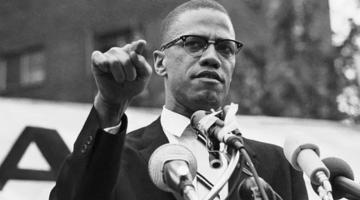 The contributions of Malcolm X to African liberation cannot be understated.


