by Danny Haiphong
The author traces his development as a “self-identified Asian-American” actively engaged in revolutionary politics. “It became clear that neither reactionary racist ideas nor the conditions that produce them could be eradicated without a transfer of power from the capitalist class to the oppressed.” Imperialism is in deep crisis. However, “there remains a great need to combat the politics of fear and open up room for debate and internal struggle” among those working to overturn the system.
Know Thyself? Why Individual and Internal Political Struggle Is Necessary in A Movement
by Danny Haiphong
“Internal and individual political struggle is necessary in any movement that seeks to win over the masses.”
I am no stranger to racism, white supremacy, and capitalist exploitation. The conditions of exploitation have shaped my existence from cradle to the present. I know what it is like to fear dislocation due to capitalist-imposed indebtedness and hate oneself because of the racism inherent in everyday life in the US. I am no stranger to racist abuse from white people of all classes for "Asian" characteristics. I have watched friends die at an early age and my father work long hours just to stay afloat as my mother continues to deteriorate from the psychosis of colonialism. These conditions pushed me into the fight for social transformation and revolution.
I joined the fight in college after a friend, an Afro-Dominican student, was wrongfully charged with a hate crime in the aftermath of a fight at a local bar. In typical racist fashion, the college and town demonized the student and suspended him before any judicial proceedings had taken place. Numerous articles were written to dehumanize the student as a “thug” from the “inner-city.” The incident forced me to reflect on my own experiences with racism as well as those my peers growing up. What I needed to know was how my social location related to the broader foundation of US society. The answer would reveal how I could fight to transform a society that had labeled me a "chink" and a "gook" at a young age.
I first escaped to NYC where I worked for a labor union and took classes with workers. A new environment and a deep study of class politics, I believed, would give me clarity on my place in the struggle. New York City was the site of Occupy Wall Street. Occupy Wall Street connected economic inequality to the policies of Wall Street bankers. But the movement was without organization. It was difficult to work inside of the amorphous gathering without training, ideology, and guidance. After a frustrating semester, I found guidance in Huey Newton's To Die for the People. Newton explained that the social relations of capitalism and racism were intertwined and dictated by the same motive forces of profit and exploitation. This analysis spoke to my frustrations with Occupy Wall Street’s spontaneous character and its lack of an analysis on racism and war.
“What I needed to know was how my social location related to the broader foundation of US society.”
Newton’s Marxist-inspired writings led to more research. I soon found myself unapologetically ascribing myself to revolutionary politics. Conversations with Dhourba Bin-Wahad and radicals from around the country gave me confidence in my path. It became clear that neither reactionary racist ideas nor the conditions that produce them could be eradicated without a transfer of power from the capitalist class to the oppressed. Revolution became my life purpose. Black Agenda Report and various local organizations became avenues from which I could put my revolutionary politics to the test.
This short personal summary is meant to provide a backdrop as to why internal and individual political struggle is necessary in any movement that seeks to win over the masses. To do so, we must identify, and place ourselves, among them. “Politics over personalities” is a slogan often used by radicals as an objection to the seductions of American individualism. However, the individual must always be paid close attention to throughout the struggle. Individual human development is shaped by the driving forces of society. In the case of the US, that means the ideology of imperialism, racism, and sexism are deeply interwoven into our humanity. This makes division and disunity inevitable in the development of a revolutionary movement. How movement forces deal with it is what matters.
The Importance of Internal Political Struggle
The Black Radical Tradition Conference, held on the weekend of January 7th, was one of the first attempts of the young movement against police brutality to struggle with its own internal contradictions. Organizers from the conference wrote a post-conference statement that detailed an incident of protest conducted by a group of conference attendees. The statement condemned the protest as antithetical to the principles of the conference. Asantewaa Nkrumah-Ture followed up the statement with suggestions for how the activists could reconsider their political orientation and approach to disagreement.
The protest at the Black Radical Tradition Conference highlighted the political splits within the movement. There has yet to emerge a united ideology and path in the struggle against racism and capitalism in the US. Some activists have inevitably pushed forward a politics of white privilege, identity, and safe space as the primary weapons of liberation. Others have disagreed with this trend and attempted to criticize it from the left. What will inevitably determine how the movement develops is the methods and means utilized to resolve division in the movement.
It has been my experience in leftist circles that there remains a great need to combat the politics of fear and open up room for debate and internal struggle. The Black Radical Tradition Conference made progress in this regard. At the conference, participants explored the political and historical roots of the Black Liberation movement. Socialism and anti-imperialism were put on the table and discussed. Conflict arose between the conference organizers and a section of the movement. The dispute was addressed in a political manner. Conference organizers firmly stated their position on the matter. It remains to be seen where such a struggle will lead, but it represents the first step in confronting the contradictions in the nascent struggle against racism and police brutality.
“Spaces must be created to allow both old and new actors in the movement to wage an internal struggle over the ideology and direction of the movement.”
BAR Editor Bruce Dixon's Organizing 101 series provides guidance on how to take political efforts from short bursts of spontaneity to long range organization and struggle. Disagreement and political differences are inevitable outcomes of organizing around common political objectives. Human development is a manifestation of the social relations of history and politics. If one doesn't know someone's history and how it relates to where they are now, any discussion that involves political disagreement is bound to lead to disunity and ill feelings. Spaces must be created to allow both old and new actors in the movement to wage an internal struggle over the ideology and direction of the movement. How else can the movement draw the necessary lines and develop leaders that can sustain lifelong struggle?
This author has been approached several times throughout the course of three years on Black Agenda Report's position on Barack Obama, the Black Lives Matter Movement, and how the author's racial composition (i.e. self-identified Asian American) denies entrance into the political debate surrounding these issues. But these are extreme times. Black Agenda Report’s work consistently reflects the urgency of the moment. The political and economic system of imperialism is in a deep and protracted crisis. Its continued existence threatens to send the world into a world war like none other in the past. And in many ways, the suffering oppressed people on these shores and beyond has never been greater. It is beyond time to ask the hard questions, start the difficult conversations, and conduct an internal struggle for the direction and organization of the movement.
Danny Haiphong is an Asian activist and political analyst in the Boston area. He can be reached atwakeupriseup1990@gmail.com. His work can also be found athttp://gianalytics.org/en/authors/danny-haiphong and has been published in CounterPunch, Center for Global Research, and TruthOut.

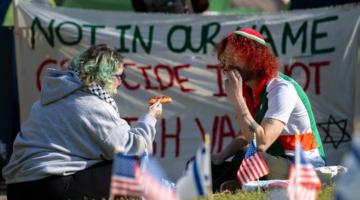 Eight student activists in Michigan face decades in prison for advocating that their university divest from genocide. It is clear the goal of the indictment is to terrorize the Palestine solidarity…
 In this week’s segment, we discuss U.S. control over Venezuela and its resources, and the Venezuelan people's response to their loss of sovereignty. But we begin with a report on the police killing…
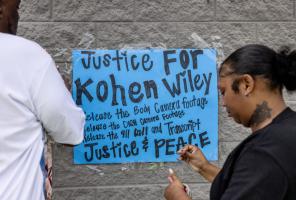 Our guest is attorney Jaribu Hill, executive director of the Mississippi Workers Center for Human Rights. She reports on the police killing of 1-year old Kohen Wiley in Senatobia, Mississippi and on…
 On January 3, 2026, the U.S. conducted a military attack against Venezuela and kidnapped president Nicolas Maduro and his wife, First Combatant Cilia Flores. Since that time interim president Delcy…
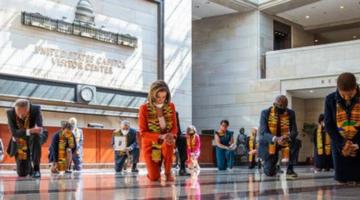 The democrats’ backtracking on what they dismissively refer to as “wokeness” is the newest iteration of their political trickery as once again they give the appearance of supporting what they…


