Saudi Arabia has formed a 14-state coalition to stop Ansar Allah, which has threatened to blockade its oil tankers in the Red Sea.
On July 18, Iran fired a ballistic missile at a US base in Saudi Arabia, its first direct strike on a US military installation in the kingdom in four months.
Two days later, on July 20, Yemen’s Houthi movement declared a naval blockade against Saudi Arabia, opening a new front tied to the broader U.S.-Iran conflict, threatening to further slow the flow of oil, and further escalate the price of gas and everything that gas-driven vehicles deliver to wholesalers, retailers, and doorsteps all over the world. Those of us who love Palestine love Ansar Allah, known as the Houthis, but this is rough and likely to get a lot rougher.
Ten days after the Ansar Allah declaration, in the Saudi capital, Riyadh, a new 14-nation military coalition announced that it had become the Multinational Maritime Defense Alliance (MMDA) to protect freedom of navigation and secure trade and energy routes across the Red Sea, the Bab al-Mandeb Strait, and the Gulf of Aden.
Its permanent leadership headquarters will be in Riyadh.
Its permanent leadership? The Saudis.
Its commander? Royal Saudi Naval Forces Rear Admiral Abdullah bin Salem Al-Shehri.
Signatory nations? Bahrain, Bangladesh, Comoros, Djibouti, Egypt, Jordan, Kuwait, Nigeria, Pakistan, Qatar, Saudi Arabia, Somalia, Sudan, Turkey, and the Yemeni Presidential Leadership Council, which of course means the UN-recognized government of Yemen, led by Chairman Rashad al-Alimi, officially based in the temporary capital city of Aden, not Ansar Allah, who control the constitutional capital of Sa'na.
In September 2025, the Arab Gulf States Institute reported that this Yemeni Presidential Leadership Council was teetering on the verge of collapse. “The Council,” they wrote, “created under Saudi and Emirati sponsorship to unify Yemen’s diverse anti-Houthi factions, is now deeply divided over power sharing, decision making, and control of resources.”
What are the politics of the MMDA?
What is the political nature of this new formation? Are the Saudis now looking to establish dominion over the Red Sea? They are already the region’s wealthiest, most powerful monarchy, and put more simply, they have the most to lose; this Houthi blockade could cost them half their GDP in oil sales. Saudi Arabia has been able to continue to export most of its oil thanks to an East-West pipeline transporting it from its refineries in Riyadh to its Yanbu terminal on the Red Sea coast, but it needs transport from there through Red Sea shipping lanes into the Bab el-Mandeb Strait and the Gulf of Aden to the Arabian Sea and the Pacific Ocean.
Ansar Allah have disrupted these routes before and now they’re vowing also to disrupt the Red Sea lanes that Saudi Arabia uses to transport its oil north through the Suez Canal to the Mediterranean and the Atlantic.
The MMDA can in no way be said to be a pro-Israel, coalition. In fact more of its members than not—including Saudi Arabia—are among the 29 UN member states who still do not recognize Israel as a legitimate sovereign nation. Whether the Saudi King cares about Palestinians or not, his people do. Recognizing Israel, much less allying with Israel, would be politically suicidal for the Crown Prince. The same would be true for Somali President Hassan Sheikh Mohamud.
Some analysts are calling this a Sunni Muslim coalition, but it seems to exist solely for defensive purpose, presumably because its members see further disruption of the region’s oil trade as both regionally and globally destabilizing.
Another US proxy force?
Is the MMDA allied with the US? Is it another US proxy force designed to defend US hegemony? It does seem to be the successor to Operation Prosperity Guardian, the US military campaign to stop Ansar Allah after they began their attacks on Israel-connected cargo traffic in the Red Sea. Those attacks forced ships to either reroute around the Cape of Good Hope at far greater fuel cost or continue transiting through the Red Sea at far greater insurance cost.
Prosperity Guardian intercepted some of Ansar Allah’s fire, but it failed to stop them altogether or to fully restore commercial confidence in the Red Sea.
European and regional powers, with the sole exception of Bahrain, declined to collaborate by putting their forces under US command. Regional powers were especially loath to do so as Israel pounded Gaza with US weapons. As Giorgio Cafiero wrote in Responsible Statecraft, “Arab societies are so enraged about Israel’s indiscriminate bombing, forced starvation, and displacement of millions of Palestinians in Gaza, that the governments in the region do not want to be seen as complicit by openly siding with Washington, which is clearly funding and arming Israel’s operations.”
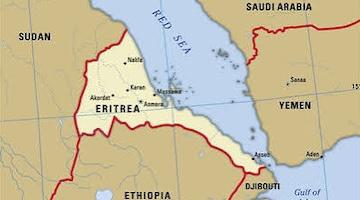
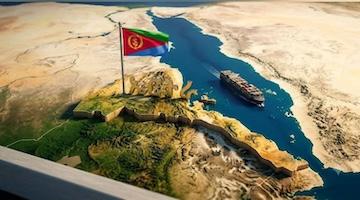
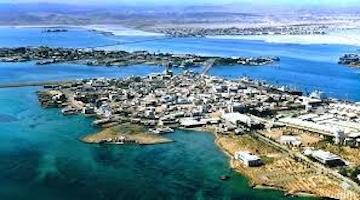
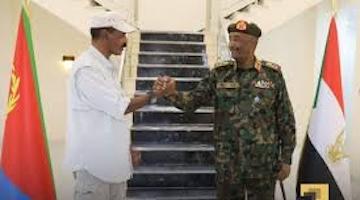
One nation notably absent in Riyadh and among the 14 signatories to the agreement is Eritrea, one of the six nations actually bordering the Red Sea—Egypt, Sudan, Eritrea, Djibouti, Saudi Arabia, and Yemen (if you count Yemen as one nation, divided for now). It has not made a statement as to why it did not join the MMDA, but historically it has preferred bilateral treaties to large multilateral organizations likely to be dominated by the interests of one or more powerful nations.
Eritrea is also directly across from Yemen on the Red Sea and it has no known oil resources, so it could become the nation most directly engaged in the defense of Saudi Arabia’s interests to the detriment of its own people in what is most essentially an escalation of the US/Israeli War on Iran.
Eritrea and its leader, President Isaias Afwerki, have always expressed steadfast solidarity with the people of Palestine.
Ann Garrison is a Black Agenda Report Contributing Editor based in the San Francisco Bay Area. In 2014, she received the Victoire Ingabire Umuhoza Democracy and Peace Prize for her reporting on conflict in the African Great Lakes region. She can be reached at ann@anngarrison.com. You can help support her work on Patreon.


 In this week’s segment, we discuss student protests by Black and brown youth in France against austerity measures and race-based inequality in the education system. But we begin with a discussion of…
 Brazil's incumbent president Lula da Silva finished second behind Flavio Bolsonaro in the first round of the presidential election. Because neither man received at least 51% of the vote, a run-off…
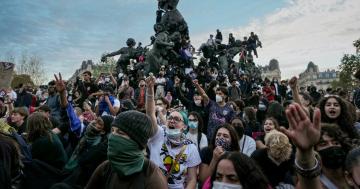 Students in France are engaging in mass protests. Hundreds of them have been arrested and injured by police, and many schools are closed. Annick Metefia joins us from Paris. She is a member of the…
 Ajamu Baraka of the Black Alliance for Peace joins Dimitri Lascaris on BettBeat Media for a conversation about something Western publics have not yet come to terms with — the fact that resistance to…
 Progressive candidates rarely remain so after winning public office. Zohran Mamdani is no exception, but his capitulation to New York zionists angered his supporters, and the people he hoped to…


