Black Agenda Report
Black Agenda Report
News, commentary and analysis from the black left.

  • Home
  • Africa
  • African America
  • Education
  • Environment
  • International
  • Media and Culture
  • Political Economy
  • Radio
  • US Politics
  • War and Empire

Revisiting Black Nationalism and the National Question
Ken Morgan
24 Jan 2018
🖨️ Print Article
Revisiting Black Nationalism and the National Question

“Economic disparities, police brutality, inequalities et al. go together with capitalism.”

I was privileged to learn from and work with Harry Haywood. Most if not all readers of the Black Agenda Report know his legacy and history in the black struggle. If not, please do check him out.

He viewed blacks as an oppressed nation in the Black Belt South and an oppressed minority in the North. The black struggle demanded its independence for true liberation. Haywood said that the merits of black nationalism required “an independent course for the movement; to shake off the dead hand of liberalism, paternalism, gradualism, and dependency.” It needed a revolutionary program consistent with sentiments of the black masses. Haywood's view necessitated that the black independent struggle for self-determination is necessary to connect with the revolutionary working-class movement to bring about U.S. socialism -- and to end black oppression.

Haywood said that it was not enough to just talk about whether you desire integration or separation. Both maintain their issues.

Black nationalism isolated and detached does not bring about black liberation. Turning money over to the black community that originates and stays in the black community is a pipe dream if you understand imperialism. Developing black businesses as a way forward is yet another empty basket.

“Different groupings and formations today have adopted pieces of Haywood’s worldview.”

Black community organizing with only the aim of making things better is temporary at best. The movement to end police brutality is an example.

Malcolm X got it right. Economic disparities, police brutality, inequalities et al. go together with capitalism. Malcolm still did not say what must replace it. He was moving on that track.

On the integration end, there continues to be a trend that wrongly places the black petty bourgeois at the helm. Dissing Trump and voting for Bernie Sanders draws us no closer to black liberation. How many of us think that we will obtain true equality through these methods?

We in the black left still grapple with trying to put black liberation on a proper course using black nationalism. Different groupings and formations today have adopted pieces of Haywood’s worldview. I suggest that we thoroughly examine Haywood’s premise, and emulate it according to today’s current environment.

Yes, building black anti-capitalist, anti-imperialist, and anti-racist formations put us in the right direction. Getting together to do joint work around common goals remains essential, but is limited.

It looks like we have to help to build or re-build the revolutionary working class movement. That is, if Harry Haywood’s view is followed. As the most oppressed and the vanguard of the working class movement, we learned our lessons. Why not apply them?

Dr. Morgan can be reached at kmorgan2408@comcast.net.

#Black Liberation Movement

Do you need and appreciate Black Agenda Report articles? Please click on the DONATE icon, and help us out, if you can.


Related Stories

The Unknown History of Black Uprisings
Keeanga-Yamahia Taylor
The Unknown History of Black Uprisings
01 July 2021
Historian Elizabeth Hinton’s book reveals that, in the late sixties and early seventies, there were hundreds of local rebellions against white viol
Rock-A-Bye Baby: The Anesthetizing Effects of Political Concessions
 joshua briond
Rock-A-Bye Baby: The Anesthetizing Effects of Political Concessions
01 July 2021
The response to Black rebellion are all distinct types of “reforms” to politically sedate Black surplus populations and sustain white settler-capit
BAR Book Forum: Cisco Bradley’s “Universal Tonality”
Roberto Sirvent, BAR Book Forum Editor
BAR Book Forum: Cisco Bradley’s “Universal Tonality”
16 June 2021
Jazzman William Parker’s work is a bold art of resistance to capitalism, colonialism, racism, and the runaway train that is our present-day America
“New Bones” Abolitionism, Communism, and Captive Maternals
Joy James
“New Bones” Abolitionism, Communism, and Captive Maternals
09 June 2021
Joy James uses poet Lucille Clifton's image of “new bones” to reflect on a series of revolutionary anniversaries in 2021 and the nature of pol
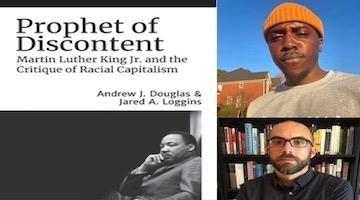
The authors set out to reconstruct King’s critical theory of racial capitalism.
Roberto Sirvent, BAR Book Forum Editor
BAR Book Forum: Jared A. Loggins and Andrew J. Douglas’ “Prophet of Discontent”
06 May 2021
The authors set out to reconstruct King’s critical theory of racial capitalism.
Reaching Beyond “Black Faces in High Places”: An Interview With Joy James
George Yancy
Reaching Beyond “Black Faces in High Places”: An Interview With Joy James
03 February 2021
White supremacist culture is a permanent site of predatory consumption, extraction and violation.
Return to the Source: Democracy is Dead
Editors, The Black Agenda Review
Return to the Source: Democracy is Dead
20 January 2021
By what stretch of the imagination can the US be a democracy when ordinary citizens have virtually no influence over what their government does?&…
Caste Does Not Explain Race
Charisse Burden-Stelly, PhD
Caste Does Not Explain Race
06 January 2021
The celebration of Isabel Wilkerson’s Caste reflects the continued priority of elite preferences over the needs and struggles of
Freddie Gray and Why the Wealth of Sports Franchises Matter
Gustavus Griffin
Freddie Gray and Why the Wealth of Sports Franchises Matter
06 January 2021
A significant portion of sports franchise wealth can be traced directly to the oppression and displacement of Black and Brown bodies.
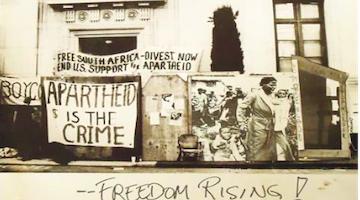
Racial Capitalism, Black Liberation, and South Africa
Editors, The Black Agenda Review
Racial Capitalism, Black Liberation, and South Africa
16 December 2020
The phrase racial capitalism first emerged in the context of the anti-Apartheid and southern African liberation struggles in the 1970s.

More Stories


  • Empire’s Fleeting Leadership in Its Yard
    Farooque Chowdhury
    Empire’s Fleeting Leadership in Its Yard
    16 Jun 2022
    The U.S. effort to control the narrative at the Summit of the Americas ended as a diplomatic and foreign policy disaster. The imperative to dominate blew up in the collective faces of the Biden…
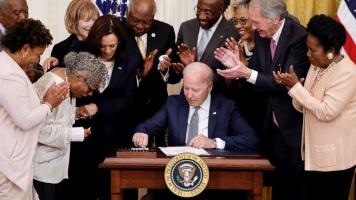
  • The Problem with Juneteenth
    Margaret Kimberley, BAR Executive Editor and Senior Columnist
    The Problem with Juneteenth
    15 Jun 2022
    Juneteenth was a people's holiday with deep meaning for the descendants of enslaved people. But the declaration of an official federal holiday has turned it into an opportunity for corporate…
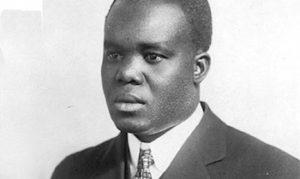
  • Hubert Harrison, Tribune of the People: Part Two, The Voice of Harlem Radicalism
    Sean I. Ahern
    Hubert Harrison, Tribune of the People: Part Two, The Voice of Harlem Radicalism
    15 Jun 2022
    Hubert Henry Harrison was one of the foremost Black socialist and nationalist thinkers of the early 20th century. He was known as "the father of Harlem radicalism." This is the second of of a…
  • EXCERPT: On the Pan-American Congress, José Martí, 1889
    Editors, The Black Agenda Review
    EXCERPT: On the Pan-American Congress, José Martí, 1889
    15 Jun 2022
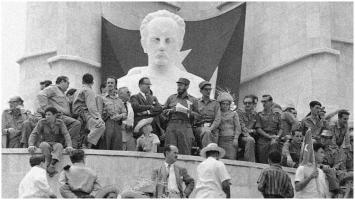
    José Martí’s account of the 1889 Pan-American Congress offers lessons for last week’s failed Summit of the Americas.
  • The Trend Toward a Multipolar World is Defined by Class Struggle
    Danny Haiphong, BAR Contributing Editor
    The Trend Toward a Multipolar World is Defined by Class Struggle
    15 Jun 2022
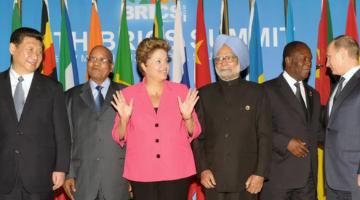
    The emerging multipolar world is the result of struggles for national sovereignty and self-determination, which are connected with the world wide class struggle.

  • Load More
Subscribe
connect with us
about us
contact us

