“To seize control of the political economy of the Midwest is to seize control over the political economy of imperialist America.”
Since the end of the nineteenth century, Labor Day – a day marking the historical achievements and social contributions of workers and the trade union movement – has been celebrated on the first Monday in September. To commemorate Labor Day, The Black Agenda Review has reprinted the essay “The Midwest and the League,” by Jim Jacobs, of the Detroit Organizing Committee of the League of Revolutionary Black Workers.
First published in “Our Thing is DRUM!,” a pamphlet issued in 1972 by the New England Free Press, Jacobs’ essay offers a stunning account of the historical conflict between labor and capital—and of Black workers and white power – as this conflict played out in the geography of the US Midwest, the imperial and industrial heartland of the United States. Jacobs describes the rise of Detroit as the center of the US automobile industry while prophesying its decline, as disinvestment, deindustrialization, and, ultimately, an attack on labor – in particular, the racist attack on Black labor – force the city to the edge of political-economic crisis by the early 1970s.
At the same time, “The Midwest and the League” is also a story of Black mobilization and resistance: of the work of the League of Revolutionary Black Workers to raise the consciousness and organize Black folks against US capitalism, internal colonialism, and imperialism. While the League may no longer exist, the lessons of their strategy remain. And their motto, ''Fight, Fail, Fight again. Fail Again. Fight On to Final Victory,” remains as relevant as ever.
Jim Jacobs’ “The Midwest and the League” is below.
The Midwest and the League
Jim Jacobs
Stretch a line on a map of America from Buffalo, New York, through Pittsburgh, Wheeling, Cincinnati, Louisville, St. Louis and finally Kansas City, then north to Des Moines, Minneapolis, then east to Milwaukee, Flint, Detroit, and Cleveland.
This is the Midwest, the industrial heartland of America. Over forty percent of the people in this area work in the basic manufacturing industries–auto, steel, machine products, rubber, electric – that are the foundation of America's economic wealth. To seize control of the political economy of the Midwest is to seize control over the political economy of imperialist America.
The establishment of the American tool box in the midwest is not accidental. Within the soil of this area lie the essential materials (coal, iron ore, limestone) for the production of steel- the basic component of any industrial society. Moreover, the Midwest possesses a fine system of rivers and lakes, making transportation of heavy, bulky items relatively inexpensive. The opening of the St. Lawrence Seaway ten years ago gave many of the industrial cities on the Great Lakes (principally Buffalo, Cleveland and Detroit) direct ties with overseas markets and guaranteed that the industrial production of middle America will continue to be imperialist in scope.
To build this industrial empire the capitalists brought waves of displaced peasants from eastern and southern Europe (Poles, Slovaks and Italians) to the Midwest to work in the mines and mills. Settling in areas of town called Hunkeyvilles, they formed the human backbone of the new industrial cities. These immigrant workers were exploited to an unprecedented degree. In the Pittsburgh steel district in 1910 the average wage for 84 hours a week in the mills was less than $12.50 a week. Packingtown workers in Chicago took home less than $6.30 weekly.
Midwestern workers responded to the greed and inhumanity of industrialism- with the most militant and bloody struggles in labor history. Here occurred the Homestead and Pullman strikes, the 1903 Packinghouse strike, the great 1919 Steel strike, the Flint and Akron sit-downs, the Republic Steel massacre, and countless other struggles. It was in the Midwest that the CIO was forged in the mining, steel, auto and rubber industries. Despite the presence of America's most militant labor unions, oppressive working conditions continue to exist, and provide the material basis for the struggle between labor and capital.
In many respects, Detroit is the archetypal Midwestern city. Although it was originally a regional commercial center, with some manufacturing, the city's growth and prosperity coincided with that of the automobile. The auto industry began in Southeastern Michigan because of its centrality to the steel and carriage-making industries. With the application of mass production techniques, principally by Henry Ford, the auto industry boomed in the early twentieth century. From 1910 to 1920 Detroit's population increased from 465,000 to 993,000. Whole cities – Hamtramck where the Dodge brothers built a plant in 1913, and Dearborn where Henry Ford began construction of the massive River Rouge complex – sprang up organized solely around auto production.
The weathervane of our modern imperialist economy has been the automobile. The automobile combines large amounts of steel, rubber, plastic, and glass, and utilizes many technologically complicated components such as the radio, air conditioner, and stereo-tape deck. With an emphasis on styling and planned obsolescence, the auto mobile, unlike a home, must be continually repurchased, perhaps fifteen to twenty times in a lifetime. Finally and perhaps most important, the automobile industry is the largest consumer not only for steel, rubber, and oil industries, but also for the construction and housing (highways, urban renewal, suburbs), repair, and emerging plastics industries. More jobs are related to the auto industry than any other industry in the American economy.
The centrality of the auto industry to the American economy gives the labor-capital struggles in Detroit vast significance. A majority of the first auto workers were Polish and Italian immigrants. Working in auto plants meant long hours, constant repetitious work, and the prospect of long periods of unemployment for the majority of the workforce. This was particularly true from 1920 to 1930 as a few giants (GM and Ford) emerged while literally hundreds of small car manufacturers failed.
The automakers recognized the potential rebelliousness of their workforce and employed every possible tactic to prevent the organization of workers. Huge spy systems were established in the plants. At one time the Chrysler corporation employed four separate labor spy agencies – three to watch the workers and one to watch over the other three agencies! Ethnic rivalries were inflamed (especially Italians versus Polish) and a central blacklisting office was maintained. In the vanguard of the employer struggle to keep the unions out was Henry Ford, who used black workers in the Rouge foundry and cultivated ties with the small but growing Detroit black community in order to maintain a reserve army of black workers to break any organizing drive.
Despite these and many other actions by management, the UAW was organized beginning with the Flint sit-down strike in 1937 and ending in 1941 with the establishment of collective bargaining for 130,000 hourly employees at Ford's Rouge plant. During the strike blacks, afraid of losing their jobs, remained in the plant, but many·did not work.
In the thirties and forties, large segments of the UAW were controlled by radical and communist leadership. Local 600 of the Rouge plant, the largest of the UAW locals, was for many years in the hands of the Communist Party. Many locals remained fiercely independent, obtaining better contracts than those negotiated by the international. The rise and consolidation of power on the international level by Walter Reuther smashed these radical worker insurgencies and left the UAW with a social democratic political ideology. Under Reuther's control the UAW struggled for the betterment of workers' lives, arguing that both labor and capital had a common stake in the present order; Reuther's strategy was to win major concessions from management by guaranteeing them industrial stability for continued production and profits. He viciously smashed all communist elements within the UAW and broke the power of the more traditionally independent locals. By the early 1950s there was virtually no organized opposition of any importance left in the once faction-ridden UAW. Thus in plants where wildcats and work stoppages were very common in the 1930s and 1940s, the “class struggle” today occurs every three years at contract time.
Reuther's success in maintaining industrial discipline has meant high wages and fringe benefits for auto workers. The cost of living clause (won from GM in 1948) gave workers a buffer against inflation. Supplemental unemployment benefits (won in 1955 ) gave lay-off protection for seniority workers. Today medical, dental and college plans are open to UAW members, along with a large pension plan. These and other victories at the bargaining table assured Reuther and his successor, Leonard Woodcock, a base of supporters among the older and retired workers.
Yet the price the UAW paid for this strategy was the inability to act upon the grievances of workers on the shop floor. Working conditions eroded through continual time study and automation, overtime was mandatory, job safety, particularly in the older plants, deteriorated. Since most issues at the workplace challenge the right of management to control production, the UAW has rarely dealt with working conditions in the contracts. Instead; union officials reach "realistic" compromises with management on an ad hoc basis – until management decides to increase profits through change of conditions on the shop floor.
The same difficulties occur with the question of racism on the job. Although a vocal champion of equal rights and integration, the UAW has never systematically taken on the hiring, transfer and upgrading policies of management to ensure equal access for all. The growing disparity between UAW rhetoric and racial conditions on the job created a new challenge to the organization and ideological hegemony of the UAW leadership. The needs of the young black worker and his willingness to support organizations like the League of Revolutionary Black Workers threaten to overturn the present UAW politics and fundamentally alter the nature of industrial relations in the auto industry.
Blacks and the Automobile Industry
Black employment in the auto factories began in 1916. Most of the early black auto workers were hired by Ford to work in the Rouge foundries and steel mill. Ford was by no means a benevolent corporate giant in his hiring of blacks. While blacks could find work at the Rouge, Ford kept them from living in Dearborn, preferring to establish a suburb for blacks - which, with characteristic WASP racism, he named Inkster. He wanted blacks to break up any efforts to organize his shops. Between 1930 and 1940 the percentage of black auto workers in Michigan declined from nine to six, as the depression "opened" the jobs of black workers to many whites who needed work. By 1940, of the 269,000 workers at GM, Ford, Chrysler, Packard and the Briggs body plant, 18,000 were black (in 1940 the black population of Detroit was 149,119). Almost all blacks were either in foundry work or in the lowest paying maintenance positions as janitors and porters.
World War II brought blacks and women onto the assembly lines. As a result there were many wildcats by white workers who saw the entrance of blacks as a threat to their jobs. One particularly important racist wildcat strike occurred in June, 1943, at the Packard plant on the east side of Detroit. Only a few days later fighting erupted between blacks and whites at Park Belle Isle (not far from the plant), ending in the Detroit race riot, the largest conflict between blacks and whites until that time.
As blacks entered the plants in production jobs, the company and union reacted with dual seniority lists, assignment of jobs and the erection of other caste boundaries. In what can be viewed as a precursor of the League, in August, 1941, black laborers and foundry workers at Chrysler's Dodge main plant, where DRUM emerged in 1968, wildcatted against management and the UAW because their seniority was passed over in giving transfers to the new Chrysler Tank Arsenal in Warren. By 1948, blacks had made some significant inroads into the auto industry: Ford was twenty percent black, Chrysler twenty-two percent black, although GM, despite federal government intervention, only employed a handful of blacks in production posts.
Since World War II, blacks have streamed into the Detroit plants, and in some Chrysler factories they comprise sixty to seventy-five percent of the workforce. This influx results from two factors. First the opening of service and lower-middle class positions in Detroit gave whites an opportunity to leave the auto plants. With automation and decentralization of the automobile industry, the percentage of people employed in Detroit car factories dropped from fifty-five in 1950 to forty-four in 1960, a loss of 97,000 auto jobs. This decrease in auto employment continued throughout the 1960s. With the opening of the St. Lawrence Seaway, the ruling class planned to make Detroit a commercial and industrial center, thus opening a number o f new employment positions in white collar fields.
Second, automation of the automobile industry created new and difficult working conditions for the remaining workers. Jobs were combined through the use of power tools and new welding equipment. The years of time study and "industrial management" paid off with a more efficient use of the worker's time. Productivity per worker rose while the number of workers decreased. The easier jobs – inspection, driver, final assembly, repair – went to white workers. As so often in the history of American labor, blacks again took the jobs that whites refused to do.
The watershed for the hiring of black workers in Detroit came after the recess10ns of 1957-58 and 1960-61. Since it lies at the heart of the American economy, Detroit is very hard hit in times of economic downswing. In 1957-58 official unemployment in the Detroit metropolitan area was 19.5 percent and in 1960-61 15.2 percent. During the recession the auto makers took the opportunity to eliminate many jobs through automation. One 1961 Senate report indicated that 160,000 unemployed workers in Detroit would never see their jobs again.
For the black community in Detroit the "recession" was a "depression." During the second recession of 1960-61 black unemployment was officially at 39.3 percent. From 1955 to 1963 many plants did not hire a single new black worker. Other blacks who had seniority found themselves downgraded as whites kept their posts on the assembly lines. Male workers also demanded that local leadership not protect the jobs of women workers because they were not " heads of families."
After 1963 and particularly with the rapid economic growth during the Vietnam escalation ( 1965-68 ), the auto companies were hiring, especially Chrysler, Detroit's major employer. The Chrysler plants were primarily located in the city limits, often in black neighborhoods. The 1964-68 influx of young black workers dramatically changed the UAW membership in the automobile industry. The number of black workers in the UAW is kept secret in Solidarity House (they claim there are no figures on race compiled: the League believes about forty-five percent. of the UAW membership is black), but some other statistics suggest the profound change. In Chrysler thirty- five percent of the workers are under thirty years of age, fifty-one percent have less than five years seniority; thirty-three percent of the GM workers are under thirty and forty percent of the workers have less than five years in the shop; Ford's workforce included thirty percent under thirty years and forty-one percent under five years seniority. (All these figures are before the extensive layoffs last winter and spring, resulting in seven percent unemployment in Detroit). What seems clear is that in the 1960s, as Detroit emerged out of the recession, the auto makers placed the future of their production in the hands of young black workers.
Detroit
The activities of the League are especially significant in view of the growing crisis of corporate liberalism in Detroit. For the past twenty years the Detroit metropolitan area has been dominated by a coalition of auto companies, the Rockefeller interests (working primarily through Walker Cisler, the powerful chairman of Detroit Edison), other industrial and commercial interests (Michigan Bell, Hudson's, Bendix and Burroughs), and to a lesser extent, the UAW. Through their efforts the city was organized to produce motor vehicles. Now as Detroit becomes a commercial center, the ruling class has plans for regional development of southeastern Michigan which will utilize the suburbs for industrial development while the downtown will remain the financial hub of the area.
To develop Detroit as part of a region, corporate liberals had to respond to the growing black population (forty-seven percent black in 1970), the exodus of whites to the suburbs and the construction of new plants outside the city. They formed the Southeastern Michigan Council of Governments (SEMCOG) to outflank local political structures which might fall into black hands.
The Detroit rebellion brought chaos to these well-made plans. Auto production in the city ceased. The rebellion increased the flow of whites from the cities, and terrified local suburban officials who now want nothing to do with the city. Because the racist suburbs refused to cooperate with any organization attempting to solve the problems of Detroit, SEMCOG failed.
The combination of the rebellion plus the activities of the League has brought home to the automobile makers the new threat from the black worker. The options open to the Big Three are limited. Chrysler, for example, would be overjoyed to close down Dodge Main (which has been condemned as a firetrap since 1948); but lacking the investment capital to build new facilities, it must hold on. Ford has dismantled the Rouge operations, moving the new foundry far downriver from Detroit. Other new auto plants have been constructed in the northeast and downriver white suburban areas.
The movement of the plants to the suburbs, coupled with the increasing layoffs, has reduced the number of blacks in the auto plants. Yet, short of a long-sustained economic crisis, it is highly unlikely that whites will again re-enter the plant in large numbers. What seems more probable is that by moving plants to the suburbs, the auto makers are making it difficult for blacks to work, hoping that they will value their jobs enough to tone down their militancy.
Another tactic of the corporate liberals has been management cooperation with the union to get rid of black militants, particularly during periods of high unemployment. In the following interview Mike and Ken [note: the interview is not reprinted here, but can be found in the original pamphlet] give examples of the forms (inside and outside the plant) of harassment of League members. Last September, by publicly firing a popular shop steward in the body shop, Chrysler tried to trap the DRUM leadership into publicly calling for a wildcat which would probably have cost them their jobs. Yet for all the blacks fired there are countless more brothers and sisters waiting to take their place-some who have already been exposed to the League at Northern High (drop-out rate fifty-seven percent) or Central High (drop-out rate fifty-one percent).
Since the metropolitan government concept is failing, the key political struggle is for control over Detroit. As in all American cities, the super-structure (schools, health services, transportation) is decaying due to a dwindling tax base. Since the rebellion, the downtown area has not been redeveloped, as whites have abandoned the shopping and entertainment centers for those in the suburbs. Wayne State University 's expansion is being bitterly fought by black and Southern white groups who want to maintain their neighborhood by any means necessary. The obvious racism of the police and the courts has been under continual attack by some liberal judges and the black community. Finally, a new suburban-rural alliance in the legislature keeps Detroit from receiving sufficient state aid to solve its problems.
Given this dismal decay, the corporate liberals have chosen to decentralize the school system, placing students (sixty percent of schools are black) under white control through pairing and bused integration. This new plan threatens to bring race war to the streets of Detroit as racist whites have launched a recall campaign and urged their high school-age children to attack black students in the schools. The uproar has caused the state legislature to reconsider school decentralization
Finally, intensifying and unifying all these other problems is the national economic crisis which is particularly acute in the Detroit region. The sales of the Big Three are down, with Chrysler reporting a record loss of $29.4 million for the first quarter of 1970. The impact of the auto decline on the upcoming contract talks will be significant. While the rank and file are demanding more money, and restoration of the Cost of Living clause which Reuther gave away last year, the automakers might risk a long strike, especially if sales are low. Given this pressure, the new UAW chief Woodcock might have difficulty keeping discipline within the locals. With the League and other radicals in the shops, the UAW negotiations may become explosive.
These problems facing the corporate liberal capitalists in Detroit are similar to those of other Midwestern industrial cities. The creation of the League is the black response to the objective conditions facing the working class. No doubt in other Midwestern cities there will appear other black worker groups or caucuses, and the already existing ones will form associations with the League.
The League
The formation and growth of the League can be viewed in three stages. As the following interview makes clear, the leadership of the League has been active in the black movement for a long time. Working through various black community groups, SNCC and local nationalist groups, the League fused Marxism-Leninism with the realities of black colonial oppression. The first stage came as people like John Watson, Ken Cockrel, Mike Hamlin, General Baker, and John Williams formed the Inner City Voice newspaper in 1967. Their reasons for establishing the Voice are indicative of the theoretical understanding that guides the League's political programs and strategies. Here is John Watson interviewed in 1968 discussing the formation of the Voice:
We had studied the history of the Russian Bolsheviks and found a specific pamphlet by Lenin called “Where to Begin," written in 1903, before he wrote " What is to Be Done?". where he described the role a newspaper could play. A newspaper was the focus of a permanent organization. It could provide a bridge between the peaks of activity. It creates an organization and organizes the division of labor among revolutionaries. Revolutionaries do something, not just a meeting on Sundays, making speeches and passing resolutions. It creates the kind of division of labor needed not just for the newspaper but for a revolutionary organization….
We wanted to build an organization of black workers, black students both in high schools and colleges. and ultimately to create a black Marxist-Leninist Party, flowing from the newspaper. (''Black Editor : An Interview," Radical America, July-August 1968, p. 31 ).
From 1967 to 1968, the Inner City Voice provided Detroit 's black community with news and a political perspective.
The second stage involved worker organizations in the Chrysler plants in the summer and fall of 1968 . Shop "organizing" for the League meant something other than what white radicals understand it to mean. Most of the Inner City Voice activists had been working in plants all their lives and had close contact with young black workers. The organizational form of the RUM - DRUM , ELRUM, FRUM, UPRUM. MARUM, LARUM --was an "extra-union caucus." This meant a group of black workers would struggle within the local union as well as outside of it in the community and shops.
The third stage, one which describes the League's present form, is the diversification of activities from plant organization to work in the community. In the past eight months the League has focused on high school and community colleges, housing and welfare issues, and building political groups which provide the basis for attempts to control the political destiny of Detroit. Organizationally the League has received funds through the Black Manifesto which provides organizational resources necessary to create a black publications outfit (Black Star publication), a newspaper- the Voice - and the beginnings of a black school system.
As the League has grown so has its support within the Detroit black community. Support is based on programs which deal with the life conditions of black people and which also broaden consciousness through struggle. The strategy of the League has been to create programmatic contexts within which support of basic reforms is possible. Only the logic of a white academic radical would claim that these struggles channel blacks into the system and thus are not revolutionary. It is precisely by dealing with the most pressing issues through struggles which broaden people’s consciousness that the League wins the political trust of black people in Detroit. As Grace and James Boggs point out, one of the problems of the black movement has been an overdependence on the spontaneous eruption of the "brothers in the street" without recognition of the need to extend revolutionary political leadership in that struggle. Essentially, this is the function the League performs. They are working toward the construction of a politically conscious black movement in the shops and communities of Detroit.
The League has important political implications for white revolutionaries. Most whites tend to think of the black movement as the Panthers, and recognize only the work of the Panthers in black communities. This denies the existence of many nationalist groups which are dominant in parts of the Midwest and South. Movement blindness to black diversity makes it difficult to explain the whole of the black liberation struggle to white Americans. It also leads to unnecessary competition among black movement groups for scarce resources in the white left community. Concrete support for black liberation means that white revolutionaries have to relate to all black revolutionary groups, and to the idea of protracted struggle embodied in the League 's slogan — ''Fight, Fail, Fight again. Fail Again. Fight On to Final Victory.”
Jim Jacobs, “The Midwest and the League,” “Our Thing is DRUM!” (Boston: New England Free Press, 1972)






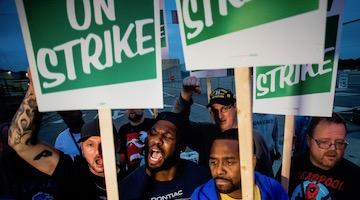
 Early last year, Governor Ron DeSantis began signing death warrants at a faster rate than ever before. What followed was the most intense period of executions the state has carried out in more than…
 Eight student activists in Michigan face decades in prison for advocating that their university divest from genocide. It is clear the goal of the indictment is to terrorize the Palestine solidarity…
 In this week’s segment, we discuss U.S. control over Venezuela and its resources, and the Venezuelan people's response to their loss of sovereignty. But we begin with a report on the police killing…
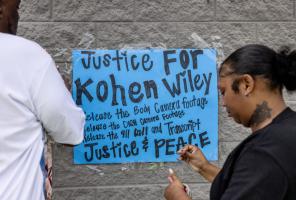 Our guest is attorney Jaribu Hill, executive director of the Mississippi Workers Center for Human Rights. She reports on the police killing of 1-year old Kohen Wiley in Senatobia, Mississippi and on…
 On January 3, 2026, the U.S. conducted a military attack against Venezuela and kidnapped president Nicolas Maduro and his wife, First Combatant Cilia Flores. Since that time interim president Delcy…


