“Long live the Grenadian revolution! Long live the militant unity and solidarity of workers internationally!”
On October 25, 1983, the United States invaded Grenada, a tiny island republic in the eastern Caribbean, approximately 21 miles long and 12 miles wide, with a population at that time of 94,948 people.
Yet despite its geographic size, to the United States, Grenada was a formidable and frightening political threat. Since 1979, Grenada had had a socialist government, the People’s Revolutionary Government, led by the charismatic Maurice Bishop of the New Jewel Movement. Grenada was friendly with Cuba and Nicaragua and the Soviet Union and had become a beacon of radical possibility for leftists across the Caribbean.
When Bishop’s government began building, with international support (including from Canada and the UK), the Point Salines International Airport, Ronald Reagan decried it as an attempt by the Soviets and Cubans to strengthen their military foothold in the region. It was actually part of an economic development plan whose origins were in the 1950s.
Grenada’s revolutionary government would soon collapse, however, due to internal political strife. This led to the arrest and execution of Bishop and seven others on October 19, 1983. Reagan, drawing on plans drawn up by Casper Weinberger and Colin Powell, saw an opportunity. The US launched Operation Urgent Fury, a military invasion of 7,600 US troops, supported by Edward Seaga’s Jamaica, and the Eastern Caribbean’s Region Security System. This would be the quick and dispiriting end of the Grenada Revolution and, with it, some have argued, the prospects for a democratic socialist alternative to US free market fundamentalism in the Caribbean.
But what remains important for the Caribbean is the fact that there was an alternative. In the present day Caribbean, neoliberalism has triumphed on the ideological battlefield, while the US is maneuvering towards a new offensive in the economic and political war for the region. Currently, as they continue to throttle what remains of the Cuban Revolution, the US has amassed 10,000 troops in the Caribbean with the apparent motive – supported heartily by the slavishly pro-US, neoliberal leadership of Guyana and Trinidad and Tobago – of deposing Venezuela’s Nicholas Maduro, destroying the Bolivarian Revolution, and assuming control of the country’s resources.
As the Caribbean faces both genocidal US gangsterism and a captured Caribbean comprador caretaker class, it is worth thinking about the alternative possibilities for the region. In 1980, Maurice Bishop gave a speech to a rally of 1.5 million people in Havana. Titled, Cuba, Nicaragua, Grenada Together We Shall Win, Bishop brought together the Cuban, Nicaraguan, and Grenadan revolutions to argue for the radical possibilities of Caribbean unity and self-determination in the face of US imperialism.” We would to well to heed his words
We reprint Bishop’s speech below.
Cuba, Nicaragua, Grenada Together We Shall Win
Maurice Bishop
Esteemed Comrade Fidel Castro
Esteemed Comrade Daniel Ortega
Beloved revolutionary comrades of free and revolutionary Cuba
I bring you today warm revolutionary greetings from the people of free Grenada. [Applause] This morning, comrades, I was addressing a rally in my own country to honor International Workers Day, and I left my country some time after 11 o’clock this morning to travel more than 1,000 miles to come to your country. But even if the distance was 10,000 miles, no force on earth could have stopped me from being here today. [Applause]
The unity, the militant solidarity which unifies our countries, our peoples’ struggles – it is this unity and this solidarity which is today making imperialism tremble, because we recognize in Grenada just as imperialists recognize, that without the Cuban revolution of 1959 there could have been no Grenadian revolution, nor Nicaraguan revolution in 1979. [Applause]
It is the Cuban revolution that has taught the peoples of Latin America and the Caribbean how to face blockades, how to defeat criminal invasions of their territories. The people of this region have looked at Girón, they have looked at La Coubre they have looked at Escambray, they have looked at assassination attempts on their leadership; they remember the October 1976 destruction of their Cuba airliner, they have seen your struggles; they have been inspired by your victories; and they have observed that even in the face of these difficulties revolutionary Cuba was able to wipe out illiteracy, prostitution, drug-taking, and unemployment. They were able to see you build socialism in your small country. They have seen your strides and achievements in health and education. They have seen that today, 21 years after your revolution, your country is able to assist more than 30 countries around the world. And countries like Grenada and Nicaragua will always feel grateful to the people of Cuba and to the Cuban revolution for their assistance with their doctors, with their teachers, and with their selfless workers.
Certainly we in Grenada will never forget that it was the military assistance of Cuba in the first weeks of our revolution that provided us with the basis to defend our revolution. [Applause] And when imperialism and reaction keep saying to us in Grenada, why do we want arms, where are the arms coming from, why should such a small country need so much arms, we always give them the answer our people have given. Whenever mercenaries or foreign aggressors land in our country, they will discover how much arms we have, whether we can use the arms, and where the arms came from as we shed their blood on our soil. [Applause]
Your revolution, comrades, has also provided the region and the world with a living legend with your great and indomitable leader, Fidel Castro. [Applause] Fidel has taught us not only how to fight, but also how to work, how to build socialism, and how to lead our country in a spirit of humility, sincerity, commitment, and firm revolutionary leadership. [Applause]
It is important to be in revolutionary Cuba at this period in world history. Today we can see another crisis in international capitalism. Today we can see them complaining that their superprofits are falling. We can see their interest rate running towards 20 percent. The school lunches they have been providing for their children, even that, they have had to reduce by over $500 million. Their workers are daily finding that jobs are disappearing. But their more than $33 billion profit on investments around the world demand that they rate new tension in the world, so that their economy, which is based on war and armament, would once again flourish.
They are also terrified by the victories of the national liberation movements in Africa, in Asia, in the Middle East, and right here in Latin America. They have looked around and they see that today the struggles of the people of the region are continuing to reach new heights. They look at El Salvador and they recognize that while yesterday it was Cuba, Nicaragua, and Grenada, tomorrow it will undoubtedly be El Salavador. [Applause]
So they have decided to step up on their arms supply and their arms race. They have decided to scuttle SALT II and détente. They have decided to spend this year more than $142 billion on arms. At the same time, the invasions which have characterized their relations with our region over the years starting with the Monroe Doctrine in 1823, they are shaping now to create new doctrines, to plan new maneuvers, to obtain new bases to strengthen and deepen their military presence in the hope that this will crush the rising wave of national liberation consciousness that is sweeping our region and the world.
Their interventions in Mexico, in Nicaragua, in Colombia, in Panama, in the Dominican Republic, in Haiti, in Honduras, all of these invasions which they have had over the years – they are now preparing once again to embark on a new campaign of terror and intimidation on the people of our region.
But sometimes it is no longer by direct intervention, sometimes they rely more on control and manipulation, on the use of threat of force, on the techniques of destabilization, on the use of diplomatic pressure, on the use of propaganda destabilization, on the policy of economic isolation. But in each case all of this is meant to lay the basis for a United States-organized or -backed coup d’etat.
In 1954, they succeeded in overthrowing Arbenz in Guatemala. In 1973, they succeeded in overthrowing Allende in Chile. But the one lesson that they have never forgotten and will never forget is that in 1961 they failed when they tried at Girón right here in revolutionary Cuba! [Applause]
Today we can hear them setting up their cries against the revolutionary process in Nicaragua and Cuba. You can hear them talking about human rights, you can hear them calling for elections even though they won’t understand our revolutions are popular revolutions. You can see them encouraging ultraleftists in our countries to take violent action against our peoples. Their propaganda has reached the point where our countries have become electoral issues in the presidential campaign in that country. And at the same time, as usual, the threats against revolutionary Cuba, the continuation of the criminal economic blockade against revolutionary Cuba, the creation of artificial crisis after artificial crisis. First the question of the Soviet troops in October last year, and now the question of so-called refugees at this point in time. All of this is part and parcel of the imperialist campaign to try to defame the Cuban revolution, to try to isolate the Cuban people, to try to lay the basis for an armed invasion or other form of intervention of your beloved country. But in Grenada we have been using a slogan and that slogan has been saying that “If they touch Cuba or if they touch Nicaragua, then they touch Grenada too.” [Applause]
Comrades, as the people who own this region, as the people who belong to these countries, it is for us to decide what we want to do with our lives in our countries. It is for us, the people of the region, to demand whether or not we want to have military bases on our territory. It is for us to decide whether or not we want other peoples’ plans to fly over our countries. And one of the most contemptuous and arrogant acts of imperialism is today to presume that in 1980 not only do they have the right to have a base in Guantánamo but that they also have a right to operate military maneuvers on the very soil of free and revolutionary Cuba.
We, the people of this region, demand that our region is recognized and respected as a zone of peace. We demand an end to all military task forces and air and sea patrols in our region. We demand that the people of the region must be free from aggressive military harassment of any military power. We demand an end to the Monroe Doctrine and to the Carter Doctrine and all other doctrines which are aimed at perpetuating interventionism or backyardism in the region. There must be an end to all attempts to use the so-called peacekeeping apparatus of the Organization of American States to military intervene in the region, to hold back progressive and patriotic movements.
We also call today that the right to self-determination for all peoples in the region must be recognized and accepted.
We today review our call for the independence of the sister people of Puerto Rico. [Applause]
We today insist that all of the people of the region in the 25 colonial countries which still exist –English, Dutch, French, or American territories – we demand the right to independence for the peoples of those countries. We demand that a principle of ideological pluralism must be respected and practiced by imperialist powers.
We must have the right to build our processes in our own way, free from outside interference, free from all forms of threats or attempts to force us to accept other peoples’ processes.
Today we insist that there must be an end to the invasions, an end to the landing by marines, an end to the gunboats, an end to the Playa Girón, an end to the slaughters and massacres of our Sandinos, our Ches, and our Allendes. [Applause]
We call also for an end to the arming and financing of counter-revolutionary and antipopular, antidemocratic or antiprogressive regimes. There must be an end to the manipulation of regional and world tension for electoral purposes. The future of the region and the future of the world, the question of world peace cannot be compromised because of any election, no matter whose election.
There must therefore be respect for sovereignty, legal equality, and territorial integrity of the countries of our region. It is clear today, comrades, that the desperate plans of imperialism can be defeated once again, once we remain organized, vigilant, [...] and demonstrate firm and militant anti-imperialist solidarity.
We look to the people of Cuba, we look to your revolution and your leadership to ensure that the revolutionary process in the Caribbean and Central American region continues to go forward with strength.
We salute you, the freedom-loving people of revolutionary Cuba. We salute your great and revolutionary leader, Comrade Fidel Castro. [Applause]
Long live the freedom-loving people of revolutionary Cuba! [Applause and shouts of “Long live!”]
Long live the Communist Party of Cuba! [Applause and shouts of “Long live!”]
Long live Comrade Fidel Castro!
Long live the Nicaraguan Revolution!
Long live the Sandinista Liberation Front!
Long live the national liberation movements!
Long live the socialist world!
Long live the Grenadian revolution!
Long live the militant unity and solidarity of workers internationally!
Cuba, Nicaragua, Grenada together we shall win! [Applause]
Adelante siempre, atrás nunca! [Forward ever, backward never]
[Ovation]

 Ajamu Baraka of the Black Alliance for Peace joins Dimitri Lascaris on BettBeat Media for a conversation about something Western publics have not yet come to terms with — the fact that resistance to…
 Progressive candidates rarely remain so after winning public office. Zohran Mamdani is no exception, but his capitulation to New York zionists angered his supporters, and the people he hoped to…
 “Between October 2 and October 8, 1937, between 15,000 and 40,000 Haitians and Black Dominicans were slaughtered by Dominican troops…”
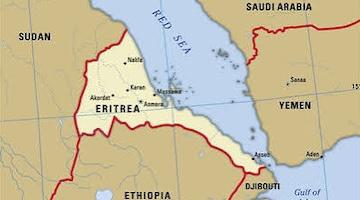 Ethiopia and Eritrea are on the brink of a war that could further destabilize the Red Sea, disrupt oil tanker traffic, and drive gas prices even higher.


