In discussions about the European genocidal expansion into the Caribbean region, the Dutch seem to always get a pass. Read this essay by Afro-Surinamese writer and resistance fighter, Anton de Kom, about the entrenched legacy of Dutch racism and colonialism in the Caribbean.
Interest in the Surninamese anti-colonial writer and resistance fighter Anton de Kom has undergone a resurgence since 2020, buoyed by both the global Black Lives Matter protests and claims for reparations for slavery from the Dutch colonies in the Caribbean. De Kom was born in Paramaribo, Suriname, on February 22, 1898, thirty-five years after slavery had been officially abolished, but during a time when Black people lived in slavery-like conditions under Dutch colonial rule. In his book, Wij slaven van Suriname (We Slaves of Suriname), De Kom documented the long history of slavery in Suriname and the degraded and repressive conditions that Black people experienced in the decades following abolition. First published in a censored version in 1934 while De Kom was living in exile in the Netherlands, We Slaves of Suriname is a fierce but poetic critique of Dutch racism and colonialism. It should be read alongside classic anti-colonial tracts such as Aime Cesaire’s Discourse on Colonialism and Frantz Fanon’s The Wretched of the Earth, especially now, as access to We Slaves of Suriname has been made easier with the arrival of a first English-language translation in 2022.
In June, 1934, De Kom published a short article titled “Starvation Misery, and Terror in Dutch Guiana” in the journal Negro Worker. It is a powerful indictment of the policies of Dutch imperial rule in the Caribbean – and of the bitter irony of the history of reparations: as was the case with the English in the Caribbean, it was white owners of enslaved Africans, and not enslaved Africans, who received compensation from the Netherlands. Similarly, the continued underdevelopment of the former Dutch colonies in the Caribbean are the result of the continuation of both slavery and colonialism under other names. De Kom (captured while fighting for the Dutch resistance against the Nazis, died of tuberculosis in a concentration camp in 1945) was among the most perceptive observers of both. While we urge you to read We Slaves of Suriname, we reprint below De Kom’s “Starvation, Misery, and Terror in Dutch Guiana”.
Starvation Misery, and Terror in Dutch Guiana
Anton de Kom
What has Dutch Imperialism achieved in Dutch Guiana in the centuries of so-called culture and civilization? The answer: The mass of natives of Dutch Guiana in the towns and on the plantations; the Asiatic workers who come to the colony as contract labourers from British India and Indonesia, are subjected to the most miserable condition of hunger and starvation.
The immigrant workers come under a contract of what is nothing but five years slave-labour. And the compensation? They are paid the princely wage of F. 1.80 for male and F. 120 for female workers per week (F. stands for guilders and has a par value of 2 ½ to the dollar. Ed.) That is for those fortunate enough to have a job.
The effects of the crisis has been the throwing out of thousands of coloured workers into the streets to starve. Arrested as vagrants and for petty crimes as a result of starvation, they are forced as prisoners to build roads and keep the streets in repair. In this way does the colonial ruling class ret public works done free of charge and keep the starving workers out of employment. There you are, another phase of the modern slavery to which the working class is subjected.
Thousands of unemployed, tramp the streets from early morning until late at night, vainly in search of work that is not to be found. Poverty and misery reigns everywhere. Hundreds of families, fathers and mothers with their children are out everywhere seeking in vain for a morsel of bread. It is hardly possible to describe the terrible state of absolute poverty and want.
Disease and death as a result of undernourishement particularly among children, are taking a heavy toll among the working population. The mortality rate among infants has jumped tremendously. Out of every thousand deaths seventy tuberculosis. More than two thousand new victims yearly from framboesia tropica. And malaria is steadily on the increase.
The housing conditions of the native toilers in Dutch Guiana is in a roost deplorable state. They are not houses, but decayed wooden hovels. In very many cases one room must serve as shelter for a family of seven persons. The roofs are generally of zinc. By day the temperature is that of a hot oven. At night it is cold and damp. Such are the conditions under which the native toilers out of whose labour is extracted huge super-profits by the Dutch Imperialists, compelled to live.
The children born prior to 1838 were slaves. And today? Now they are free. They are no longer slaves, for slavery is no [longer,] they are free. They are no longer slaves, for … Guiana is free. Free, without clothing. Free, but in rags. Just a nigger.
We remember the 16 million florins, Holland gave the white slave barons as indemnity for the emancipated slaves. These millions were given to the Bakras (whites) as a reward for the inhuman deeds they committed against the Negro slaves - our forefathers. But to the slaves and today to the free Negroes not a penny. Their only reward today is unemployment, misery and starvation.
Only through organization and struggle can the workers of Dutch Guiana succeed in bettering their living conditions and effectively fight against the exploitation and slavery imposed upon them by the Dutch colonial rulers.
Only through solidarity and joint struggle between the workers of the capitalist countries and the colonial toilers can an effective blow be dealt to the common enemy-Imperialism. Workers, organize and fight against exploitation, unemployment and starvation! Close ranks in struggle for the emancipation of the colonial toilers! Demand the independence of Dutch Guiana!
_____
The above described condition of hunger and poverty in Dutch Guiana gave rise to great unemployed demonstrations and strikes about a year ago. The reply of the colonial parasites to this mass protest against unemployment was the killing and wounding of a number of defenceless workers. Capitalist terror then came into full swing, making illegal workers organizations, prohibiting meetings and making press criticism of the Imperialist robbers a crime. The writer of this article, a native of Dutch Guiana, who took a leading part in the struggles and demonstrations of the workers was arrested, deported to Holland and forbidden to return to the colony. — Ed.
Anton de Kom, “Starvation, Misery and Terror in Dutch Guiana,” Negro Worker, June 1934.

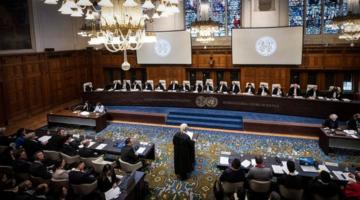 The Black Alliance for Peace is a leading member of a coalition formed to support the charge of genocide against Israel at the International Court of Justice.
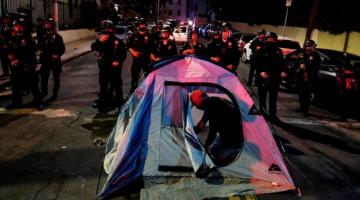 The Supreme Court will soon decide if unhoused people can be issued jail time or fines for sleeping on the streets. Black people experiencing homelessness would be disproportionately impacted.
 In this week’s segment we discuss Kenyans protesting their government’s participation in an impending occupation of Haiti, and why Flint, Michigan still has contaminated water and no justice for its…
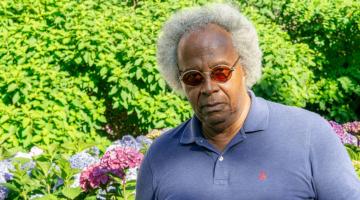 Dr. Anthony Monteiro is a Duboisian scholar and founder of the Saturday Free School for Philosophy and Black Liberation. He joins us from Philadelphia to talk about Black politics in Pennsylvania and…
 Booker Ngesa Omole is the National Vice-Chairperson and National Organizing Secretary of the Communist Party of Kenya, and a member of its National Central Committee. He joins us from Nairobi to…


