This week’s author views black aesthetics as a practice of freedom that imagines and conjures alternative social arrangements.
“Enterprise zones and elections are not an inevitable outcome of the revolutionary moment, but clues to how it was defeated.”
In this series, we ask acclaimed authors to answer five questions about their book. This week’s featured author is Anthony Reed. Reed is Associate Professor of English at Vanderbilt University. His book is Soundworks: Race, Sound, and Poetry in Production.
Roberto Sirvent: How can your book help BAR readers understand the current political and social climate?
Anthony Reed: Soundworks offers an account of black aesthetics as a practice of freedom. It does not foreground white supremacy or so-called “race relations.” Instead, it engages black aesthetics as material practices located in specific historical conjunctures. The horizon of those practices and the thinking that motivates them is not racial antagonism—I don’t think black aesthetics are primarily critical—but alternative social arrangements. In that way, like my previous book, it’s an account of the ways black people have understood, fought over, imagined, desired, and practiced freedom. Here that imagining and those practices manifest sonically.
I wanted to correct a tendency—prevalent among many scholars, listeners, critics, and others—to condescend to past conceptions of aesthetics and politics. Rather than critique, I listen for the continued reverberation of revolutionary ideals. We must be critical, but simply dismissing past understandings reflects present understandings of what’s possible. Those critiques tend to be more symptom than explanation.
“I listen for the continued reverberation of revolutionary ideals.”
Condescension also happens through a refusal to engage carefully and critically the demands art makes. Saying every deviation from a norm is resistance refuses to engage as much as calling what is unruly or riotous “noise” does. Experimental aesthetics—referring both to production and experience—can resist critical norms, challenge the line between art and non-art, create the conditions for better understanding one’s own social and political situation, give people language or feeling toward a world to be built. These are all political, but they are political in different ways. I offer my own way of sitting with the ideas, sounds, impulses and echoes of the past, attuned to continuities and discontinuities that make tradition a name for conflict rather than a canon.
What do you hope activists and community organizers will take away from reading your book?
This is primarily a book of criticism, of theory, of thinking and lingering with ideas. I think that my role as a critic and scholar is to listen and to learn from activists and community organizers, and from the communities we all care about. Organizing and activism can be lonely work, so I want to take this opportunity to underscore that my sense of the social and the concept of community that animates Soundworks owes not only to critics and historians, but equally to activists and scholars like Cathy Cohen, Angela Davis, Mariame Kaba, Ruth Wilson Gilmore, Barbara Ransby, and many others. In essays, interviews, blog posts, and other venues, I have learned much from these thinkers about what it is to care and fight for communities, where and how to direct energy and resources, and how to conceive of justice and freedom. Indeed, their work helped me to better grasp and take seriously artists’ claims to work in and for communities.
Without a sense of whom one writes for, and what world one writes toward, scholarly writing devolves into mere exercise of erudition and citation. My book offers some analyses of present phenomena and political possibilities, and I hope my conclusions help others connect some dots and clarify their sense historical processes and transitions, helps others find language to what is commonly experienced but difficult to name. I hope it gives people a clearer, usable sense of politics and both the difficulty and beauty of community and shared struggle.
We know readers will learn a lot from your book, but what do you hope readers will un-learn? In other words, is there a particular ideology you’re hoping to dismantle?
Alongside its specific arguments, I hope my book helps people imagine beyond liberalism as the ideal or only possible shape of the political. Enterprise zones and elections are not an inevitable outcome of the revolutionary moment, but clues to how it was defeated. As we appear to be in a new revolutionary moment, learning from the 1960s has renewed urgency. I hope we re-engage the critical strategic thinking of prior revolutionaries, and leave behind what we know we can’t use. Amiri Baraka, for example, emphasized the need to vote as one of several tactics, but he also reminded us that while Democrats and Republicans may ultimately represent the same class, they represent different factions within that class. Calls to vote from political elites can be demobilizing, but voting need not be conceived as the only legitimate way of engaging politics. More than that, I want to join the chorus of those who emphasize the need for a criticism that is not satisfied with dismissing those whose answers no longer seem relevant but that instead attends to what in prior questions urgently awaits new answers. I hope that this book expands our sense of what tradition, community, and politics means.
Who are the intellectual heroes that inspire your work?
First, the artists: Amiri Baraka, Jayne Cortez, Langston Hughes, Jeanne Lee, Charles Mingus, Matana Roberts, Archie Shepp, Cecil Taylor and others. I learned to think the possibilities of sound and theory from them. From Hortense Spillers’ work, especially her careful avoidance of the idea of the “slave” as accomplished fact rather than contested process, I learned to think in terms of black freedom. Robin D. G. Kelley and Hazel Carby’s work inspired me to focus on the ways people make choices in fluid historical situations. From Fred Moten and Nathaniel Mackey, I learned patient attention to the ways blackness haunts the text of theory and philosophy, and to conceive that haunting through emergent aesthetic practices rooted in black living. I have also been inspired by those for whom love of the music and the poetry is the air that make this suffocating world inhabitable, those who hear, or at least want to hear, stirrings of freedom in an improvised run or well-turned poetic phrase. Those who think of art as a space for breathing together: this book is for you.
In what way does your book help us imagine new worlds?
I’m forever haunted by Curtis Mayfield singing “we can be freer still” on his song “Power to the People.” But people don’t just wait for someone else to free them. One of the book’s running arguments is that people imagine and enact alternative social arrangements every day. The new is an experience of the possible, meaning things whose happening existing social arrangements actively suppresses or excludes. The alternatives we experiment with, our ordinary forms of care, commitment, and love – these can’t all be institutionalized and simply scaled up, but they contain the seed of the new. I hope rethinking the present as being in the wake of the Black Arts/Black Power era, whose shortcomings are well known and often rehearsed, helps us rethink alternatives and embrace visions of freedom for all.
Roberto Sirvent is a teacher living in California.
COMMENTS?
Please join the conversation on Black Agenda Report's Facebook page at http://facebook.com/blackagendareport
Or, you can comment by emailing us at comments@blackagendareport.com




 The IMF and the World Bank give the appearance of aiding Global South nations with economic relief for climate disasters, but in reality, they are burdening them with more debt.
 New York's "progressive" congresswoman panders to the Israel lobby by supporting a definition of antisemitism that will stifle free speech.
 This week, we discuss the COP29 climate summit and why the earth is still warming despite prior climate agreements. But first, we analyze the 2024 presidential election results and why Donald Trump…
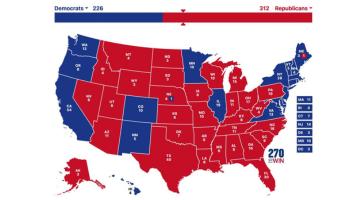 Dr. Anthony Monteiro joins us to discuss the 2024 presidential election results, why Kamala Harris failed to connect with millions of voters, and what will happen under a Trump presidency.
 Anthony Rogers-Wright provides his analysis of the latest United Nations climate change summit, COP29, now being held in Baku, Azerbaijan.


