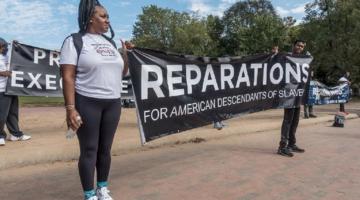
Her grassroots organization, the National Ex-Slave Mutual Relief, Bounty and Pension Association lobbied for federal legislation in support of pensions for formerly enslaved persons.
“House sued the US Treasury Department for $68,073,388.99 in 1915 based upon the money raised from enslaved people’s labor.”
Reparations or the compensation for the ills and devastation of enslavement, apartheid, racial and pigmentation oppression is a contentious topic. There is no denying enslavement took a horrific toll on the lives, psyche and physical conditions of people of African descent in this country. It is only natural that Black people would seek redress for the privation and exploitation we suffered and endured for centuries. But the oppressor is unwilling to even address the issue and they mean to keep the issue suppressed and out of public consciousness.
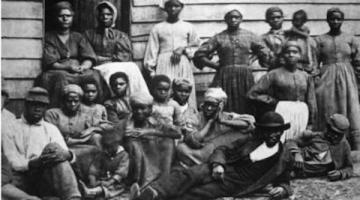
One of the first Africans in America to call for relief and restitution for enslaved Africans was Callie Guy who was born around 1861 into enslavement in Rutherford County near Nashville Tennessee. At the age of twenty-two she married William House and the couple had five children. Mrs. House worked as a washer woman and seamstress to help support her family after her husband died. According to some records Mrs. House did get some school learning.
“They mean to keep the issue of reparations suppressed and out of public consciousness.”
Mrs. House was influenced by a pamphlet she read in 1891 entitled Freedmen’s Pension Bill: A Plea for American Freedmen which intrigued her and she became hooked on the idea. She collaborated with Isaiah Dickerson to form the National Ex-Slave Mutual Relief, Bounty, and Pension Association in 1894. Dickerson had worked with a white newspaper man named William Vaughn who advocated for reparations for ex-enslaved persons. Vaughn felt reparations would stimulate the southern economy.
But House and Dickerson broke with Vaughn and went out on their own travelling throughout the South advocating for pensions for formerly enslaved Blacks as a means to support them in their current condition. House and Dickerson organized chapters on the local level throughout the South that functioned like mutual aid societies. A member of the local organization paid dues and the money was used to care for the sick, disabled and burying the dead. These were perilous times for Blacks as white violence, intimidation and oppression were becoming systematically sanctioned throughout the nation.
“House and Dickerson organized chapters throughout the South that functioned like mutual aid societies.”
On the national level the National Ex-Slave Mutual Relief, Bounty and Pension Association held conventions, elected officers, lobbied for federal legislation in support of pensions for formerly enslaved persons. House’s campaign was a grass roots movement; it received little attention or support from African-American leaders like Booker T. Washington or W.E.B. DuBois and many whites felt threatened by the prospect of Blacks seeking payment for their labor during a time when anti-Black feelings were being manipulated and shaped into white supremacist legislation and behavior.
The federal government soon began to spy on House and her movement. A disinformation campaign was waged against her and she resigned from her position as assistant secretary of the organization she helped start. Nevertheless House continued to organize chapters throughout the South and spread the word. House even sued the US Treasury Department for $68,073,388.99 in 1915 based upon the money raised from enslaved people’s labor and cotton taxes paid in the state of Texas! The lawsuit garnered wider attention for the movement and raised the profile of the organization.
“House’s movement received little attention or support from African-American leaders like Booker T. Washington or W.E.B. DuBois.”
Of course the federal district court of appeals threw the case out saying the government was immune against litigation. Her filing the lawsuit did not sit well with the white power structure especially during the Post Reconstruction era. The following year the US Post Master indicted House on charges of fraud. The Nashville District Attorney also filed charges against Mrs. House. The trial was a total farce, the evidence was weak, flimsy at best, no victims were named, there was no evidence offered that Callie House personally benefited from the money she raised, yet an all white male jury convicted Callie House of mail fraud. She was sentenced to one year and a day in prison. She was sent to the Jefferson City Missouri Penitentiary and released early for good behavior.
House’s grass roots organization and pension movement served as a template for future empowerment campaigns during an era of ruthless and virulent racism and oppression. Not surprisingly the US Government also used kangaroo courts to undermine and derail movements like the Universal Negro Improvement Association. Decades later the government upped the ante with its wide ranging COINTELPO in the latter part of the twentieth century.
Callie House made transition in 1928 but her legacy of tireless, righteous activism lives on and her torch for reparations was picked up and carried by others like Queen Mother Moore and NCOBRA.
Junious Ricardo Stanton is producer and host of The Digital Underground and The Cyberspace Sanctuary A Safe House For Your Mind. He has been a writer and community broadcaster for twenty years.
This article previously appeared in The Indypendent and Portside.
COMMENTS?
Please join the conversation on Black Agenda Report's Facebook page at http://facebook.com/blackagendareport
Or, you can comment by emailing us at comments@blackagendareport.com







 Michael Ratner and the Center for Constitutional Rights (CCR) were intimately connected to the Black Liberation Movement representing a number of activists in the crosshairs of state repression
 Brazil's indigenous people struggle against an entrenched oligarchy determined to drive them from their lands and a right wing president who is supported by the U.S.
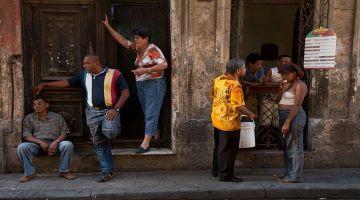 The United States has cut off channels for sending remittances to the island, leaving families who rely on the help – especially during the pandemic – without desperately needed resources.
 Economic recovery is uneven, with Black workers least likely to be employed in the wake of the covid pandemic.
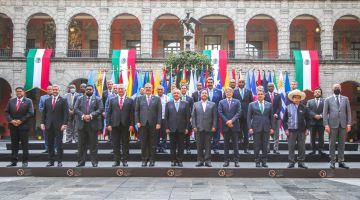 The heads of state of the regional block agreed on a 44-point declaration which addressed the strategy against COVID-19 and climate change and took a stand against the blockade on Cuba.


