Troubled White Troops on Ghetto Streets
A Black Agenda Radio commentary by Glen Ford
Those who want a downloadable MP3 copy can obtain one from our Black Agenda Radio archive page here.
"Troops with a history of counter-insurgency warfare are
not fit to patrol the streets of America, especially Black America."
The U.S. military's plans to assign 20,000 federal troops to cope
with terrorist attacks, domestic disasters and civil unrest, would inevitably
expose Americans to the habits of savagery U.S. soldiers have acquired in Iraq
and Afghanistan. The "civil unrest" mission is the most dangerous aspect of the
plan; in the United States, quashing civil unrest is practically a euphemism
for suppressing Black and other non-white populations. Above and beyond legal
questions over the authority of federal troops within the borders of the United
States, the U.S. military is totally unsuited to the mission - especially
troops that have served in combat units in America's two Asian wars. Yet these
are the very soldiers that will be assigned to keep Black folks under control.
The domestic rapid-reaction force is to be built around
combat units, most of whose troops have served at least one tour of duty in
Iraq or Afghanistan. The military newspaper Stars
and Stripes reports that "roughly four in 10 soldiers...have served more
than one deployment - and that number is growing." Most soldiers in the U.S.
Army are currently either in Iraq or Afghanistan, have previously been deployed
there, or are about to be deployed. After five years of war in Iraq and six in
Afghanistan, the U.S. military has been largely transformed into a huge
counter-insurgency apparatus. Troops with a history of counter-insurgency warfare,
in which the military makes little distinction between civilians and active
fighters, are not fit to patrol the streets of America, especially Black
America.
"300,000 American
military personnel "are suffering from mental
health problems, including PTSD."
Today's U.S. military is demographically quite different
than the Vietnam era Army, in which Blacks made up a hugely disproportionate
share of soldiers in combat arms: infantry, armor and artillery. Some elite
units were majority Black. Thirty five years after creation of the
all-volunteer military, these same combat arms units are overwhelming white and
Hispanic. History has shown us that mostly white units should not be deployed
with live firepower in Black neighborhoods. This holds true, even if a Black
man will soon be commander-in-chief.
Racism aside, the current American military is wracked with
post-traumatic stress disorders - PTSD. Waging war in urban areas is bad for
soldiers' mental health. A study by the RAND Corporation found that 300,000
American military personnel "are suffering from mental
health problems, including PTSD." That's an alarming one out of every five
troops - certainly even higher in combat units. And most soldiers avoid being
diagnosed with PTSD or other mental difficulties, for fear of ruining their
careers.
It is unacceptable that mostly white veterans of an urban,
counter-insurgency war, a significant proportion of whom have mental
difficulties related to violence, would be deployed in the ghettos of America.
This is the definition of armed and dangerous, and a formula for reenactment of
Iraq and Afghanistan experiences on the streets of urban America. The U.S.
military should not be occupying other people's countries. They are the last
folks you should want to see on the streets of our own. For Black Agenda Radio,
I'm Glen Ford.
BAR executive editor Glen Ford can be contacted
at Glen.Ford@BlackAgendaReport.com.

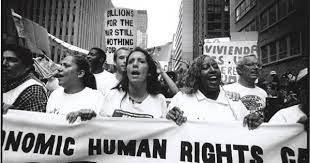 As groups prepared to gather in Washington D.C. to discuss poverty, the Poor People’s Economic Human Rights Campaign and Black Alliance for Peace say that in the spirit of Dr. King, opposition…
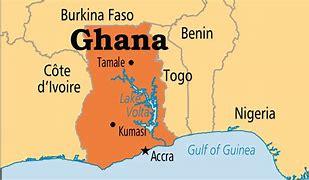 Why would the government of Ghana allow a U.S. military base on its territory? Kwesi Pratt Jr., a journalist and leader of the Socialist Movement of Ghana explains.
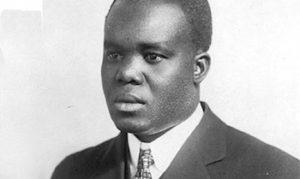 Hubert Henry Harrison was one of the foremost Black socialist and nationalist thinkers of the early 20th century. He was known as "the father of Harlem radicalism." This is the last of a three-…
 The election victory of Gustavo Petro and Francia Marquez in Colombia has implications for relations with other nations, such as neighboring Venezuela.
 The Security Council must say no to continuing interference in Haiti's affairs through the United Nations Integrated office in Haiti (BINUH). BINUH is just the latest iteration of colonial control…



