A Black Agenda Radio commentary by executive editor Glen Ford
Black voters turned out in greater proportion than whites to elect President Obama, twice. So, why are Blacks powerless to influence his administration, or government in general? Black politics has been stripped of “socially transformative content so that, no matter how large the Black voter turnout, real power remains in corporate hands.”
Black Vote Rising, Black Power Diminishing, Black Condition Worsening
A Black Agenda Radio commentary by executive editor Glen Ford
“If Black voting strength actually translates as real power, then why is the Black condition deteriorating, even as Black electoral activity increases?”
A U.S. Census report
What is the import of the relatively massive Black voter turnout in the last two presidential elections? First, we should note that African Americans were at least as enthusiastic about voting almost a century and a half ago, during Reconstruction.
The historical record indicates that Blacks flocked to the polls in huge numbers after Emancipation in those regions where they were not held back by white terrorists. In some states, Blacks made up the clear majority of voters, with some classes of ex-Confederates barred from the polls while other whites boycotted the process. Once federal troops were withdrawn from the South, in 1877, Reconstruction was systematically dismantled. However, during this brief period of intense Black electoral activity, Reconstruction governments delivered substantial citizenship goods, including establishing the first public schools in the South.
The newly freed slaves knew full well what they were voting for: a transformation of society; an end to white supremacy; the rule of law, not of one race over another; the right not only to all the services that government provided, but to social goods, such as a public education, that southern governments had not previously provided, even to whites.
“In virtually every category of well-being, the Black condition is worsening in comparison to whites.”
One hundred years after the Civil War, the masses of southern Blacks were re-enfranchised, and African Americans became majorities or strong pluralities in many of the nation’s cities. In 2008, they got a chance to vote for a Black man at the top of a major party ticket. Black enthusiasm for voting returned. But, what has been the return in terms of social goods? In virtually every category of well-being, the Black condition is worsening in comparison to whites. The bottom has fallen out of the Black economy, with household wealth shrinking to nonexistence except for a slim sliver of the Black population. African Americans make up one out of every eight of the planet’s prison inmates, their communities enveloped by an ever-tightening police state.
If Black voting strength actually translates as real power, then why is the Black condition deteriorating, even as Black electoral activity increases? Part of the answer is internal to Black America. A portion of the African American population has for the past 40 years hitched its fortunes to corporate boardrooms. Unfortunately, this selfish element also comprises most of Black leadership. This Black Misleadership Class barters Black votes in exchange for its own upward mobility. They have made a pact with the rich, who abhor the very concepts of democracy and human equality. The mission of the Black Misleadership Class is to strip Black politics of all socially transformative content so that, no matter how large the Black voter turnout, real power remains in corporate hands.
Political power is not something you add up on a scoreboard every four years; it is people pulling together to create a just society, by any means necessary. Increased Black voting levels indicate only that Blacks are interested in gaining power – not that they are wielding it.
For Black Agenda Radio, I’m Glen Ford. On the web, go to BlackAgendaReport.com.
BAR executive editor Glen Ford can be contacted at Glen.Ford@BlackAgendaReport.com .

 Orion Meadows is a non-violence trainer with Institute for Nonviolence Chicago.
 Michael Li is Senior Counsel in the Democracy Program at the Brennan Center for Justice.
 …
… Barack Obama devastated millions of people all over the world and speaks of his actions as if they were committed by someone else. It is a masterful performance by a man committed to deception.
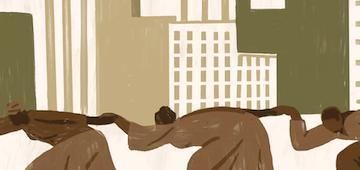 Where are multinational corporations in discussions of reparations? The late Jamaican political economist Norman Girvan provides an answer.


