A Black Agenda Radio commentary by Glen Ford
Remember 2004, when the cash-poor Democratic candidates were evicted from the campaign like vagabonds by ABC News? One measure of the impact of the Occupy Wall Street movement is that candidates will be compelled to explain to voters why they are so popular with Wall Street. This poses a special quandary for President Obama, who got the lion's share of finance industry dollars in 2008 and is determined to raise $1 billion for next year's campaign. “How can Obama claim to be ready to stand up to the 1 percent, when he's weighted down with a billion dollars of their money?”
Barack “Money Bags” Obama Can’t Run on the 99 Percent Ticket
A Black Agenda Radio commentary by Glen Ford
“The trick that President Obama must pull off this election year is to raise a cool one billion dollars, while pretending to run as a man of the people – of the 99 percent.”
President Obama has been doing his charming best to play off the huge dilemma that the success of the Occupy Wall Street movement represents for his brand of corporate Democratic politics. Obama, the phony populist who is actually far better suited to corporate boardrooms, tried to mollify demonstrators at a campaign stop in New Hampshire, this week. Obama told a high school crowd: “In the Occupy movement there is a profound sense of frustration. The American dream – seems like that’s slipping away.” But, such presidential vagaries do not begin to describe the major thrust of the Occupation movement, whose overwhelming focus is “to get money out of politics,” as progressive reporter Arun Gupta recently told Black Agenda Radio
The trick that President Obama must pull off this election year is to raise a cool one billion dollars, while pretending to run as a man of the people – of the 99 percent. That kind of money can only come from the same Wall Street mafias that bankrolled Obama from the very start of his 2008 race for the White House. By any objective standard, the First Black President is really Mr. Moneybags, a corporate politician who has repaid Wall Street’s investment in him with $16 trillion of the people’s money. And, there is no doubt, Wall Street wants him back for a second term. To paraphrase Othello, Obama has done the plutocrats some service, and they know it. That’s why he is far ahead in the electoral race that really counts in America, the quest for campaign contributions, having already raised $155 million for himself and the Democratic Party – far ahead of any combination of Republicans.
“T he First Black President is really Mr. Moneybags, a corporate politician who has repaid Wall Street’s investment in him with $16 trillion of the people’s money.”
However, after two months of Occupy Wall Street fever, Obama’s intimate relationship with rich men’s wallets may prove prejudicial to his reelection prospects. How can Obama claim to be ready to stand up to the 1 percent, when he's weighted down with a billion dollars of their money?
The very idea that taking bundles of Wall Street checks hand over fist could be a negative for an American presidential campaigner, is testimony to the strength of the movement that has emerged over the past several months. I remember well how, back in the 2004 campaign, ABC's Ted Koppel decided it was his civic and journalistic duty to evict the three poorest candidates
What a difference even a whiff of a social movement makes. Now, the corporate candidates will have to explain why they've got so much money, and what they promised to do to get it. Especially, the richest one of all, Barack Obama.
For Black Agenda Radio, I'm Glen Ford. On the web, go to BlackAgendaReport.com.
BAR executive editor Glen Ford can be contacted at Glen.Ford@BlackAgendaReport.com .

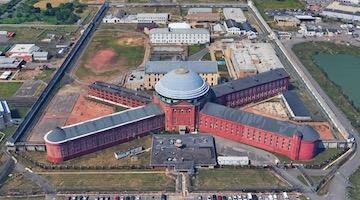 In 1990, Lawrence Bell was 14, orphaned and living in an abandoned house when three Camden cops pressured him to sign a confession of murder.
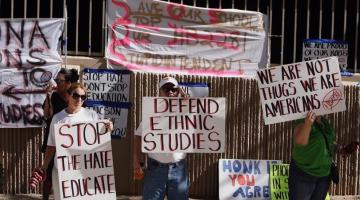 The US university is marked by the dominance of intellectual white liberalism in tension and complicity with conservative nationalism and neoliberalism.
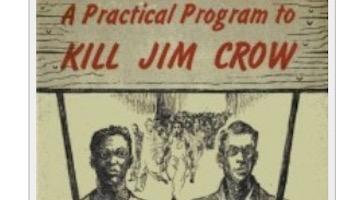 Alabama Communists helped lay the foundation for the organized civil rights movement that emerged in the late 1940s and early ’50s.
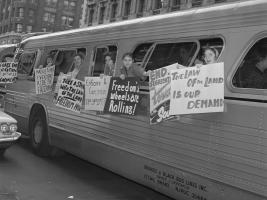 Prison and police abolition were key to the thinking of many midcentury civil rights activists.
 If there’s ever a time when a Reconstruction might actually lead to democratization and the end of American imperialism, this is the opportunity, says Robin D.G. Kelley.



