A Black Agenda Radio commentary by Glen Ford
Africa, under President Obama, is an expanding theater of war for the United States. There are few points on the African map where the U.S. military does not operate, independently, through proxies, or by agreement with local governments and militaries. AFRICOM has penetrated the armed forces of the continent to a degree no single European power could have ever aspired. Indeed, “the U.S. has so thoroughly infiltrated African armies, many, if not most, would be of no use for national defense against the Americans.”
Somalis Under Relentless Drone Attack as U.S. Tightens Military Grip on Continent
A Black Agenda Radio commentary by Glen Ford
“The overlapping entanglements have allowed the U.S. military to achieve deep penetration of the armed forces of most African nations.”
Scores of Somali civilians
For all practical purposes, the U.S. has made proxies of Ethiopia and the five member states of the East African Community: Kenya, Uganda, Tanzania, Burundi and Rwanda. The Ugandans and Burundians safeguard the airport that is the lifeline for Somalia’s puppet regime in Mogadishu, where the CIA operates a major facility. In September, the militaries of the East African Community held joint exercises with AFRICOM, the U.S. Africa Command.
Such exercises with American forces have become commonplace. The U.S. Defense Department is busily training the militaries
“Most of the militaries of the African Union already communicate with American command-and-control equipment.”
In such a web of dependency, few standing African armies are capable of defending themselves – if the aggressor is the United States. But in most cases, the U.S. would likely get its way without a fight, since the officer class of so many African militaries have direct ties with their American counterparts. The U.S. has so thoroughly infiltrated African armies, many, if not most, would be of no use for national defense against the Americans.
The Americans are almost everywhere, but the French never left Africa. Although France and the U.S. were longtime rivals in Africa, waging proxy wars against each other through their African flunkies, their joint actions against Haiti and Libya, and in bringing down the government in the Ivory Coast, signal that the French and Americans are full partners in neocolonialism.
Now President Obama has officially sent 100 U.S. Special Forces troops to Uganda
Meanwhile, the NATO attack on Libya threatens to set the whole northern tier of Africa ablaze, a pretext for further U.S. and French operations. American penetration of Africa has reached the point that any nation – such as Eritrea – that does not have a military relationship with the United States is marked for regime change. Instead of the pan-Africanist dream of a United States of Africa, we are seeing an Africa under the military thumb of the United States. For Black Agenda Radio, I'm Glen Ford. On the web, go to BlackAgendaReport.com.
BAR executive editor Glen Ford can be contacted at Glen.Ford@BlackAgendaReport.com .

 “Postal banking can be profitable through economies of scale and the elimination of profit-taking middlemen, as postal banks globally have demonstrated.”
 Black Agenda Radio for Week of March 19, 2018 U.S. Slavery Was Uniquely Capitalist
 “The United Nations is deliberately participating in war propaganda” favoring the US-backed “terrorists” in Syria, said Eva Bartlett, an independent Canadian journalist who helped
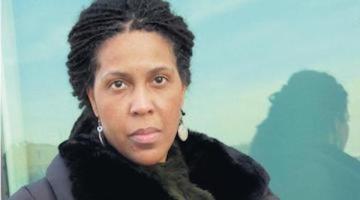 “Immigrants have been increasingly criminalized by the state in ways that are very similar to African Americans,” said Dr.
 Although US incarceration rates have been going down in recent years, at the current pace it would take 75 years to cut the prison population in half, according to Nazgol Ghandnoosh



