A Black Agenda Radio commentary by BAR editor and columnist Jared A. Ball
When Black radio was cleansed of news, ideas, controversy and every other socially redeeming quality, the mixtape filled the vacuum. But now, the corporate counter-attack is in full swing, driving the independent mixtape into the nether regions of legality. “This is about managing communication and assuring that only sanctioned forms of music can be exchanged legally and that only these handful of companies benefit from the sale of that sanctioned art.”
Of Dr. King, Mixtapes and Imperial Crackdowns
A Black Agenda Radio commentary by BAR editor and columnist Jared A. Ball
“King prefigured the state of radio today and what has now become an abusive relationship with Black America.”
In 1967 when Dr. King once spoke of the importance of radio to the Black community, he spoke to a condition that is largely the same today. He said to those gathered at the conference of the National Association of Television and Radio Announcers that, “For better or for worse, you are opinion-makers in the community. It is important that you remain aware of the power that is potential in your vocation. The masses are almost totally dependent on radio as their means of relating to the society at large. They do not read newspapers. Television speaks not to their needs but to that of middle-class America.”
Not only did King prefigure the state of radio today and what has now become an abusive relationship with Black America he also unknowingly described the state of a lesser-known aspect of Black communication which also today remains fixed in an abusive state; the rap music mixtape. In the years immediately following the April 4, 1968 assassination of Dr. King there was an increasing corporate takeover and shift in radio away from its ability to perform the movement-supportive function it held for King and others. Radio was stripped of its capacity to offer news or music and more specifically – ideas – that were not sanctioned by corporate elites. As hip-hop emerged in the early 1970s as part of a cultural response to the devolution of King’s movement it was shunned by all forms of radio, white and Black, which assured that in its infancy and freedom that it would also go unsanctioned.
Having no other outlet, the mixtape emerged to give rap music and the DJ a much needed communicative device. Cassette recordings of DJ mixes disseminated throughout the hip-hop underground helped evolve the burgeoning, if still colonized, “hip-hop nation.” The mixtape became hip-hop’s first mass medium and its “national” method of communication. Even as hip-hop and rap became commercialized, colonized, and began to pierce the mainstream, the mixtape remained, and still remains, essential to the promotion of artists and a free space for unsanctioned art and politics to exist. But they also remain illegal in their tendency to ignore copyright laws and, therefore, suffer the same militarized assaults as other so-called “contraband” even when trafficked by white men.
“The mixtape remains essential to the promotion of artists and a free space for unsanctioned art and politics to exist.”
As a recent story in the Washington {D.C.} City Paper begins, “On the evening of Nov. 23, Jeremy Beaver woke up with a shotgun in his face.” Beaver’s crime? Selling mixtape CDs out of his Listen Vision Studios. The article goes on to describe the militarized raid, a three hour “siege,” conducted by police all working at the behest of the music industry’s corporate lobbyists the Recording Industry Association of America (RIAA). In short, the RIAA claims that bootlegging and piracy are destroying their business and that of their clients who are, of course, the leading record labels, not the actual artists themselves. So the RIAA pressures Congress who in turn pressure law enforcement and voila, more criminalization of Black communication and cultural exchange. Again, even when the perpetrator is white and male it is the very idea of subverting structures put in place to limit the communicative abilities of the most oppressed that demands, as the article explains, that of a “vice squad moved through with a precision that comes from raiding drug houses and brothels.”
Now, we have previously explained the lie in those RIAA claims of loss. The record labels are doing fine, making plenty of money and finding no shortage of applicants seeking the eight-figure salaries to run them. And their parent companies are doing even better. No, this is about managing communication and assuring that only sanctioned forms of music can be exchanged legally and that only these handful of companies benefit from the sale of that sanctioned art. It is also a fine way of protecting against the unsanctioned distribution of unsanctioned ideas.
Dr. King was right about many things. He was right to connect the impact of media to the survival of social movements and he was right to connect the struggle of Black America to those of the rest of the so-called Third World. And this is why we would be right, as we witness today further imperial aggression in those parts of the world, to recognize even these assaults on mixtapes as part of that same war at home.
For Black Agenda Radio, I’m Jared Ball. Online visit us at BlackAgendaReport.com.
Dr. Jared A. Ball can be reached online at IMixWhatILike.com.

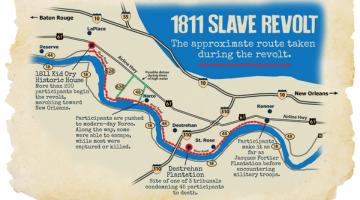 Through flight and rebellion, enslaved people created the conditions for their on liberation.
 The brutal physical assault against Théodore Luhaka by three police officers, and their subsequent acquittal, is a heartbreaking example of the long relationship between the colonizer and the…
 Protests have trailed Biden and others in his administration for months in response to the genocide in Gaza.
 The DC Crime Bill is a continuation of the assault on the Black working class, created to expand control over Black communities via surveillance, hyper incarceration, and increased brutality.
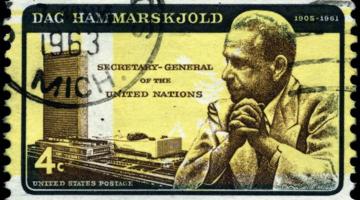 UN Secretary General Dag Hammarskjöld, was one of the architects of the Congo crisis that led to the removal and murder of the country’s first leader, Patrice Lumumba. It's time to reveal the…


