A Black Agenda Radio commentary by Glen Ford
The Black poet-author-activist Amiri Baraka has turned his pen on Barack Obama, a man he defended like a pit bull as recently as…it seems like yesterday. “Baraka kept up the abusive barrage against anti-Obama ‘rascals’ of the left, right up to the president’s assault on Libya.” But, a change of heart is not sufficient. Baraka and a bunch of other ex-Obamites need to practice some serious and public self-criticism.
Amiri Baracka and Obama – Then and Now
A Black Agenda Radio commentary by Glen Ford
“All of a sudden, Obama was ‘a negro selling his own folk, delivering us to slavery.’”
It took a savage assault on Libya by America’s First Black President and his European colonial allies – but Amiri Baraka seems to have finally given up on Barack Obama. Sorry, but I’m not one of those who is ready to say: All is forgiven, Brother Baraka. Because, although he has given Obama a tongue-lashing, in his inimitable, slashing and gutting style in the poem “The New Invasion of Africa,” Amiri Baraka has neglected to criticize himself for serving as a Left attack dog for Obama for more than three years. During that time, Amiri Baraka excoriated and defamed Obama’s “Black and progressive critics” as “anarchists,” “criminal” and whatever other insults traveled from his mind to his mouth. He said that it “is criminal for these people claiming to be radical or intellectual to oppose or refuse to support Obama.” That was back in June, 2008. He called Green Party candidate Cynthia McKinney a “pipsqueak” and disparaged as “rascals” all Blacks who did not swear fidelity to the Obama campaign. “We should be supportive of what Obama is trying to do,” said Baraka. “We should spend our energy opposing the far right and the Republicans.” Obama was not to be challenged. Instead, Baraka declared, “It is time for the left to really make some kind of Left Bloc to support Obama.”
Thus, Amiri Baraka was among those who proposed to create a left flank for Obama, in order to shut down left criticism of Obama. The theory was that Obama would help the left if the left helped him become president, with no questions asked. Which is really too stupid to be called a “strategy” – as history was very quick to demonstrate.
“Baraka excoriated and defamed Obama’s ‘Black and progressive critics’ as ‘anarchists,’ ‘criminal’ and whatever other insults traveled from his mind to his mouth.”
Amiri Baraka kept up the abusive barrage against anti-Obama “rascals” of the left, right up to the president’s assault on Libya. Then, all of a sudden, Obama was “the negro yapping” to make imperial aggression “seem right” – “a negro selling his own folk, delivering us to slavery.”
Some of us who have been wise to corporate, center-right Obama for going on eight years consider Baraka’s recent epiphany to have come far too late for redemption. Others say, better late than never. But surely, his new position is incomplete without an explanation and recantation of his politics of the last three years.
Bill Fletcher is an even worse case. Fletcher was a founder of Progressives for Obama, with the same idea as Amiri Baraka: to shut down Obama critics on the left. But, you wouldn't know that to hear him now. Fletcher claims the left's mistake was not making demands on Obama from the beginning – without acknowledging his own role in preventing any such thing from happening.
New Black Panther Party leader Malik Zulu Shabazz, who put up a spirited, although weak, defense of Obama at one of our Great Debates in Harlem, right after the election, now shouts that Obama “represents the White Man” and that his wife ought to leave him.
And there are plenty of others, too many others, who used whatever influence they had to ensure that Obama was not challenged from Blacks and progressives in 2008 and the two dismal years that followed. Failure to provide a genuine self-criticism reflects not only on their judgment – which is already discredited – but on their character. For Black Agenda Radio, I'm Glen Ford. On the web, go to www.BlackAgendaReport.com.
BAR executive editor Glen Ford can be contacted at Glen.Ford@BlackAgendaReport.com.

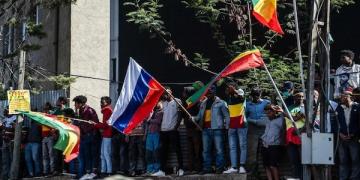 Many African nations refrain from condemning Russia's role in the Ukraine crisis.
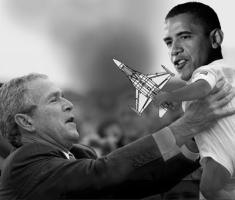 The word "whataboutism" is used to silence and insult opponents of U.S. imperialism. It should be embraced as a means of revealing what is too often kept hidden.
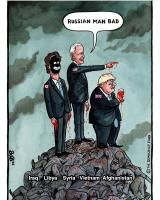 U.S. determination to be the world's hegemon created the crisis in Ukraine. The impacts are felt by working people in this country, who must look outside for solidarity and leadership as…
 International Women's Day has radical roots going back more than 100 years. Caribbean women have always played a pivotal role in political organizing.
 The American public are inundated with anti-Russian war propaganda that is worse than in the days of the Red Scare.


