A Black Agenda Radio commentary by Glen Ford
The surfacing of a 1970 open letter from 69 Black journalists “reaffirming” to the Black community that they would “not be spies for anybody,” stands in stark contrast to the current state of African American journalism. “It is almost impossible to imagine that so large and prominent a group of Black journalists would affirm their responsibility to the Black community, today, or even acknowledge that such a responsibility exists.”
A Reminder of When Black Journalism Meant Something
A Black Agenda Radio commentary by Glen Ford
“We are not the white world’s spies in the black community nor will we be used as such.”
It has been so long since there existed a vibrant, principled and effective Black journalism, few young people today have experienced it. The Black printed press is a flickering shadow of its former self, Black radio news is less than a whisper, having been made nearly extinct decades ago, and television offers a menagerie of Black news readers who don’t even write their own lines or care what comes out of their mouths. So, I felt privileged when I recently received an electronic copy of a February, 1970 advertisement in the New York Amsterdam News, a Black paper that, thankfully, still exists. The 41 year-old ad was a “message to the Black community” from 69 Black Journalists, in support of Black New York Times reporter Earl Caldwell. Caldwell had been covering the Black Panther Party for the Times for more than a year, when the FBI subpoenaed him to testify before a federal grand jury, in California. They wanted to pick his brain and his notebooks in order to build a case against the Panthers. Caldwell refused – an act of personal courage and principle.
Caldwell’s defiance of the Nixon Administration galvanized a Black press corps that had grown in both size and militancy during the previous decade and, most importantly, considered itself part of, and beholden, to the Black Freedom Movement. Their words, published in the 1970 newspaper ad, are worth hearing, today.
“The Black press corps considered itself part of, and beholden, to the Black Freedom Movement.”
“It is of the utmost importance,” the Black journalists wrote, “that our position as black men and women in the news business be reaffirmed to the black community. We do not intend to be used as spies, informers or undercover agents by anybody – period!”
The open letter continued:
“We are not the white world’s spies in the black community nor will we be used as such. We are not undercover agents for local, state and Federal law enforcement agencies, nor will we be used as such. We are not spokesmen for the black community. As black journalists we are attempting to interpret, with as great an understanding and truth as is possible, the nation’s social revolutions.”
That was February of 1970. It is almost impossible to imagine that so large and prominent a group of Black journalists would affirm their responsibility to the Black community, today, or even acknowledge that such a responsibility exists. In the intervening four decades, corporations have consolidated their hegemony over the means of communication, creating a kind of bubble of disinformation, propaganda and just plain nonsense that makes Americans possibly the most uninformed and misinformed people on earth. Serious, genuine Black-controlled news gathering has been missing for so long, most people wouldn't recognize it if they stumbled upon it. But I'm grateful to Tamara Nopper, the Philadelphia-based writer and researcher who dug and dug until she uncovered the ad supporting Earl Caldwell in the Amsterdam News, an almost archeological find from a time when Black journalism had real social force, when Black journalists saw their mission as one of service to their people, rather than climbing up a corporate ladder.
For Black Agenda Radio, I'm Glen Ford. On the web, go to www.BlackAgendaReport.com.
BAR executive editor Glen Ford can be contacted at Glen.Ford@BlackAgendaReport.com.
Tamara Nopper can be contacted at kiljakim2003@yahoo.com

 Margaret Kimberley on the CBC protecting police as a class, William Hartung on the bloated US military budget, Akile Anai on reparations and protecting the homeless in St.
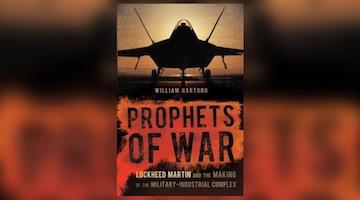 At $716 billion, the US military budget is larger than the defense spending of the next ten nations, combined, yet is mostly wasted, said William Hartung, author of Prophe
 Uhuru Movement activist Akile Anai is leading a campaign to put reparations and community development on the ballot, next year, in St. Petersburg, Florida.
 Green Party candidates won the right to challenge Democratic incumbents, one-on-one, for three California congressional seats, including Barbara Lee’s San Francisco Bay area district.
 “They won’t do anything for us and, in fact, they’ll vote alongside our enemies,” said BAR editor and senior columnist Margaret Kimberley, referring to the Congressional Black Cauc



