A Black Agenda Radio commentary by Glen Ford
“Many Black Americans expressed deep admiration, bordering on envy, for the Egyptians they saw on television.” There’s nothing strange about that; African Americans have often identified with other peoples of color that oppose domination by U.S.-backed regimes. But African American nationalism today leads Blacks to support a Black president who is hostile to their interests, while nationalism in Egypt helped fuel revolt against an Arab dictator who sold out his people.
African Americans and Egyptians: A Comparison
A Black Agenda Radio commentary by Glen Ford
“Black Americans have some inkling of what Arab nationalism must feel like.”
Now that Hosni Mubarak has been driven from office, and despite the fact that Egypt remains under the dictatorship of the military, people ask how Black Americans might follow the Egyptian people’s example. It’s not a frivolous question. Black Americans have some inkling of what Arab nationalism must feel like. Black people on the East Coast feel the pain when they see videos of African Americans being beaten by police on the West Coast. When Blacks are humiliated or disrespected in Georgia, brothers and sisters in Chicago get upset. That’s Black nationalism, whether the folks experiencing those emotions admit it, or not. It is the same kind of connection that exists between Arabs from the Atlantic to the Indian Ocean, and throughout their Diaspora. When Arabs are humiliated and made to feel powerless in Gaza or Baghdad, the shame is felt in Jordan and Morocco. Nationalism can be a great burden.
The accumulated failures and frustrations of people hundreds or thousands of miles apart, joined only by a shared identity, can weigh heavily on the common psyche. Before the January 25 Revolution, Arabs spoke dejectedly about their impotence in the face of Israeli aggression, American military and corporate dominance, and their own corrupt political leaders who had sold out their individual countries and the Arab nation as a whole. Arabs would make sweeping statements to other Arabs about the weaknesses of the Arab people. Such Arab self-flagellation sounded to me very much like Black Americans’ commentaries on our own condition, which, more often than not, consist of a litany of failures and missed opportunities – all of which are somehow assumed to be connected to our character as a people. Being an oppressed nationality can be quite depressing – except, when you win, at which point, life becomes incandescently glorious!
“Arab self-flagellation sounded to me very much like Black Americans’ commentaries on our own condition.”
Barack Obama’s 2008 election campaign – although an objective disaster that would quickly relegate African Americans to the margins of the U.S. polity and result in the worst Black political crisis since Emancipation – was a Black nationalist bacchanal, crowned by a veritable Hajj, the pilgrimage of millions to Washington for the inauguration. The corrosive sense of futility and Black impotence was suddenly transformed into a kind of triumphalism – a rare and precious sensation for an oppressed nationality and, as it turned out, the prelude to a very deep and hard fall.
The pan-Arab moment came when Tunisian dictator Ben Ali ran away from the people. That an American-backed Arab sell-out had been forced to flee from Tunis empowered Arabs in Egypt and elsewhere to believe that they could do the same – that's the magic of nationalism when it's working to your advantage. Nationalism – both Egyptian and Arab – was the glue that kept Egyptians from a range of social strata unified, at least around the singular issue of removing the dictator, Mubarak. Many Black Americans expressed deep admiration, bordering on envy, for the Egyptians they saw on television. Why can't African Americans do that, they asked? Well, here is one answer. Egyptian Arabs learned the necessity to overthrow an Arab president who had sold out their interests. However, Black Americans do not yet understand the necessity to oppose a Black United States president, who is hostile to Black American interests.
For Black Agenda Radio, I'm Glen Ford. On the web, go to www.BlackAgendaReport.com.
BAR executive editor Glen Ford can be contacted at Glen.Ford@BlackAgendaReport.com.

 Affirmative action began as a reparations program but ends as a "diversity" project which barely benefits Black people.
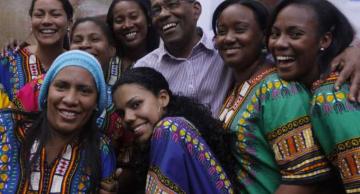 The U.S. isn't the only country with a duplicitous Black political class. The coup government in Peru has Black "leaders" who protect and defend the right wing who ousted an elected president and…
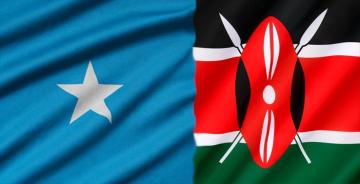 The US "war on terror" brought nothing but terror to the Horn of Africa. Kenya is a US client state which has spent years destabilizing Somalia under the guise of fighting terrorism.
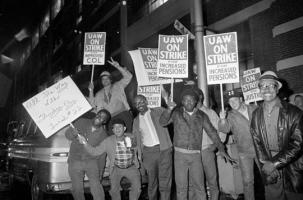 The late Mutulu Shakur and other Black radicals were responsible for improving the lives of millions of people in the U.S. The counter revolution ended that period of progress, but the political…
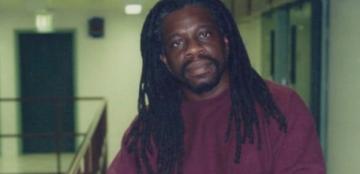 Mutulu Shakur passed away just seven months after being paroled. Like other political prisoners he was released only when he was terminally ill. The US has more political prisoners and incarcerates…


