A Black Agenda Radio commentary by executive editor Glen Ford
Fourteen Caribbean countries are suing to compel Britain, France and The Netherlands to pay reparations for centuries of slavery. However, the plaintiffs may have more modest goals in mind. The Caribbean nations “are already allowing their British lawyer to telegraph that all they really want is a nice package of aid with a ‘reparations’ bow tied around it.”
How Serious is the Caribbean Reparations Suit?
A Black Agenda Radio commentary by executive editor Glen Ford
“Real reparations means nothing less than a revolution in global power.”
Twelve English-speaking Caribbean nations, plus Haiti and the South American country Surinam, are going to court demanding reparations the lawyers tell it
By “relatively modest,” I mean that real reparations would be enough to forever sever the relationship of subservience of the former slave colonies to global systems of white supremacy and European rule. Real reparations means nothing less than a revolution in global power, because without such a revolution, those nations that became rich from slavery will maintain their position as overlords deep into the future. Ten or even fifty billion dollars in payments divvied up among the plaintiffs in a lawsuit will not change the basic master-slave relationship that has obtained since Europe embarked on world conquest, 500 years ago. Unless there is a fundamental political change within these Caribbean nations, such as occurred in Cuba, then any exchange of money will only reproduce the existing neocolonial relationships. If the leadership of Caribbean governments is incapable or unwilling to build new social relations at home, they cannot be expected to use reparations money to build true independence, internationally. I strongly suspect that what is really on the table is an “aid” package in “reparations” wrappings – which would be an insult to the ancestors and a deception of the living.
“A just settlement of the monstrous crime of slavery would up-end the current world order.”
Let me make this clear: The Europeans on both sides of the Atlantic owe their relative prosperity to the millions of enslaved Africans, and to other peoples whose lives, lands and cultures were stolen in order to build the global white empire. There is no question that the Debt must be paid if there is to be any semblance of justice in the world. But, no court sitting in The Hague, in the Netherlands, or anywhere else, is going to dispense justice on a global and historical scale. Justice means taking Europe and the United States off the throne that was built on the bones of slaves. A just settlement of the monstrous crime of slavery would up-end the current world order. Anything less is merely a pay-off to Black politicians to make the historic indictment go away.
So, I am for reparations, internationally and here in the United States. Most of the Caribbean leaders, on the other hand, are already allowing their British lawyer to telegraph that all they really want is a nice package of aid with a “reparations” bow tied around it. They signal an eagerness to settle, even before the proceedings begin.
However, something useful may come out of this. The Caribbean nations say they will conduct an intense study into the many ways that slavery has hindered their national development. This could be a very educational exercise for the people of these countries. They might learn something about the real workings of power, and use it to overthrow their useless leaders, and help start a world revolution - to bring real reparations.
For Black Agenda Radio, I’m Glen Ford. On the web, go to BlackAgendaReport.com.
BAR executive editor Glen Ford can be contacted at Glen.Ford@BlackAgendaReport.com .

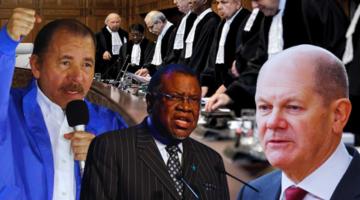 The Palestinian fight against colonialism is recognized by nations in the global south as one that mirrors their own. Solidarity and cooperation among the colonized must continue to grow on the…
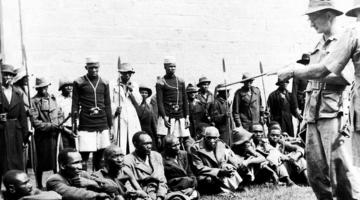 The British sought to cover up their atrocities in Africa and the Caribbean by manipulating information to obfuscate history.
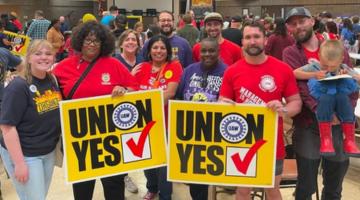 The vote by Volkswagon workers in Tenessee to unionize with the United Auto Workers union is a clear indication that it is possible to organize in the South.
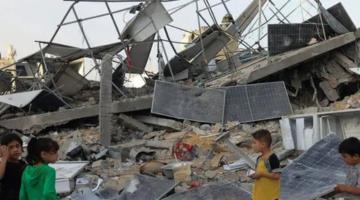 The destruction of the environment and acceleration of the climate crisis happen silently under the veil of “national security,” despite the fact that the environmental toll of war is the most…
 This week we discuss the proliferation of lies about non-citizen voting and U.S. policy toward Niger. First, we talk to Danny Haiphong about U.S. policy toward China and what we can learn from…


