Kabila ensured that the most pliable and least threatening opposition figure, Félix Tshisekedi, would be designated president.
“It was through the avarice and opportunism of the political class that Kabila has been able to retain control of so many political institutions.”
The Congolese people were determined to rid themselves of Joseph Kabila’s regime on 30 December 2018, the date of the presidential, legislative and provincial elections in the Democratic Republic of Congo (DRC). For two years the people had made tremendous sacrifices in life and freedom in a deadly battle against President Kabila, who was bent on remaining in power by any means necessary. Those means included killing, jailing and driving into exile anyone who demanded that he organize elections and step down from the presidency.
According to the DRC’s constitution, the Kabila government was supposed to hold elections in 2016 and Kabila was to leave office after serving two five-year terms from 2006 to 2016. However, when Kabila’s constitutional mandate ended in December 2016, he decided to hold on to power through fear and violence. The Congolese citizenry resisted fiercely, with faith leaders and youth leading the way.
Kabila’s opposition applied tremendous pressure through massive nation-wide mobilizations, especially at the end of 2017 and the start of 2018. After observing the determination of Congolese to rid themselves of Kabila’s predatory regime, regional powers and international players also applied pressure. By August 2018, Kabila finally relented and named a successor who would ultimately represent his newly assembled coalition in the elections of December 2018.
“Kabila planned to continue to exercise power and influence.”
Although the people were able to claim a small victory knowing that Kabila would no longer be president, they were clear that his aim was to exercise power by other means. The fact that Kabila formed a broad coalition called the Common Front for the Congo (FCC in French) and designated himself as the leader and moral authority of the FCC, was a strong indication that he planned to continue to exercise power and influence in Congolese politics even though he would no longer be president.
The conventional wisdom was that Kabila being in control of the security forces, the country's purse strings, the constitutional court and the so-called Independent National Electoral Commission (CENI), would guarantee the victory of his hand-picked candidate, Emmanuel Ramazani Shadary as president. However, the Congolese masses organized and mobilized to seize the opening that the elections provided to bring an end to the Kabila regime and usher in fundamental change.
People power
During the election campaign period, Congolese from all corners of the country turned out in massive numbers in support of the two main opposition figures, Félix Tshisekedi representing the CACH coalition and Martin Fayulu representing the Lamuka coalition. By election day, despite the myriad obstacles that the Kabila regime instituted to disenfranchise large swaths of the Congolese electorate and suppress the vote, the people were determined and driven to deliver a defeat to Kabila’s candidate and his Common Front for the Congo (FCC).
The people categorically rejected Kabila’s candidate at the polls on election day and made it impossible for the Kabila-controlled electoral commission to designate Emmanuel Ramazani Shadary as president. In an unorthodox move to hold on to as much power as possible, Kabila ensured that the most pliable and least threatening opposition figure, Félix Tshisekedi, would be designated presidentwhile his FCC platform secured super majorities in both the national parliament and the provincial assemblies.
“No one is able to cross-reference or verify the results.”
Many observers believe that Kabila struck a last-minute deal with Tshisekedi to give him the presidency. According to both the Catholic church’s observer mission and analysis of leaked election data, Martin Fayulu won the election by a landslide. The CENI has not published the final election results broken down by polling station per Congo’s electoral law so no one is able to cross-reference or verify whether the results announced by the commission on 10 January represent the actual vote.
More than two months since Tshisekedi’s inauguration as president in January, Kabila’s FCC coalition has emerged as the most powerful political force in the country. The FCC has a supermajority in the Parliament with 342 of 500 seats and has control of 22 of 26 provinces. In a recent Senate election, they captured 91 of 108 seats and the recently held gubernatorial elections have produced similar results with Kabila’s FCC securing the overwhelming majority of governorships.
Change hijacked
This is definitely not the change that the Congolese people fought and died for. They did not fight for a particular opposition party or political figure to capture the presidency while the Kabila regime retains control of virtually all other political institutions. In essence, Kabila and his coalition have merely ceded the presidency while maintaining control over the rest of the political institutions at the federal and provincial levels. The people struggled and sacrificed for fundamental change – Kabila’s coalition remaining the most powerful political force in the country does not represent a break with the past or a new chapter in the DRC.
Congo’s constitutional structure reinforces the concerns of the people at large. It is a semi-presidential system, therefore whichever party holds the majority in parliament runs the government, recommends the prime minister and secures the lion’s share of the ministries. In addition, Kabila’s FCC will run almost all the provinces and have the power unilaterally to change the constitution to entrench their power for the future.
The bind that Tshisekedi has chosen to put himself in is evident to almost everyone, except members of his party and the CACH coalition who stand to benefit as a result of having gained access to the presidency. The US government and the European Union continue to apply pressure on Kabila and members of his regime by maintaining sanctions on key figures and applying new sanctions to others.
“Kabila and his coalition have merely ceded the presidency while maintaining control over the rest of the political institutions.”
The Catholic Church has also called on Tshisekedi to distance himself from Kabila and join forces with the Lamuka coalition. The path that Tshisekedi has chosen is not a product of consultation with the people and certainly does not represent their popular will. It is a path that is a product of negotiations between the dictatorial Kabila regime and Congo’s unreliable and feckless political elites.
Irrespective of what occurs with Congo’s political class and their international allies in Europe and the US, the people must remain resolute and continue the struggle for fundamental and lasting change. It was through the will of the people that Kabila was forced to organize elections; denied a third term; and blocked from installing his hand-picked successor as president. It was through the avarice and opportunism of the political class that Kabila has been able to retain control of so many political institutions.
The Congolese people cannot rely on the current political class to deliver the change that they so desperately need and desire. A new class of leadership issued from the oppressed masses is needed to bring about fundamental and lasting change. The radical wing of the Congolese youth movement offers the best opportunity for the type of change needed to free the Congo, not only from the clutches of its predatory elite but also their neocolonial backers.
Kambale Musavuli, a native of the Democratic Republic of Congo, is the national spokesperson for the Friends of the Congo, a group that raises global consciousness about the situation in that country and provides support to local institutions there.
This article previously appeared in New Frame.



 A one-year-old baby was shot dead by police, but corporate media shield the police and their barbaric actions with a passive voice.
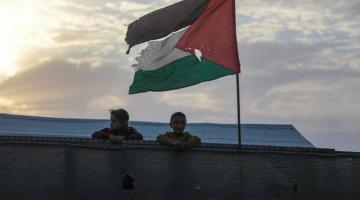 Gaza proposals obtained by Drop Site show Trump’s board attempting to force a Palestinian surrender that Israel could not achieve in war.
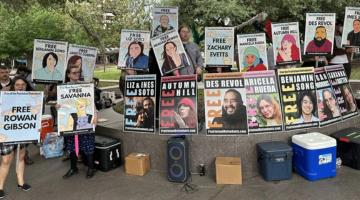 Anti-ICE activists received lengthy prison terms — including a 100-year sentence — in the first major trial of the NSPM-7 era.
 In this week’s segment, we discuss the increase in racist mob violence against Black and brown immigrants in Britain. First, we have a discussion of housing policy in New York, and why low and…
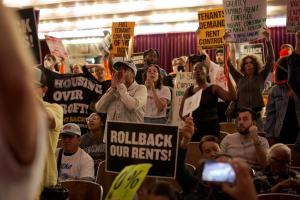 Many apartments in New York City are protected by rent regulations which determine how much rent can be charged and how much increases, if any, can be.


